Quick Summary
UGC content platforms have become a foundational layer in modern ecommerce because they solve a problem most brands still underestimate: customers trust other customers more than they trust you. The best UGC platforms don’t just help with content creation—they streamline sourcing, rights management, and deployment across the entire customer journey, from TikTok discovery to PDP optimization and post-purchase referrals.
For most brands, the decision comes down to tradeoffs. Platforms like Billo and Insense excel at scalable ugc videos and short-form video content, while enterprise tools like GRIN or Upfluence offer deeper integrations and workflow automation. Meanwhile, platforms like Foursixty sit closer to the point of conversion, turning authentic content into shoppable content that directly impacts conversion rates and revenue.
If you’re building a serious UGC strategy in 2026, the real question isn’t whether to use UGC—it’s how to operationalize it into a repeatable, high-performing system across your marketing channels.
What Is a UGC Platform for Brands?
A user-generated content platform is a marketing platform that helps brands source, manage, and deploy content created by customers or professional ugc creators. At its best, it becomes the connective tissue between social media platforms and your ecommerce infrastructure, especially across Shopify and Amazon environments where PDP content directly influences conversion rates.
The confusion usually starts when brands blur the line between influencer marketing and UGC marketing. Influencer marketing is primarily about distribution—leveraging someone else’s audience. UGC, by contrast, is about content creation and ownership. You’re not renting attention; you’re building a library of authentic content that can be reused across paid ads, product pages, email, and social commerce touchpoints.
This distinction matters because it changes how you think about ROI. A TikTok post from an influencer might perform for 48 hours. A high-performing UGC asset—say, a product demo or unboxing—can be iterated, repurposed, and embedded into PDPs, dramatically improving PDP optimization over time.
Brands that understand this shift start treating UGC not as a campaign tactic, but as infrastructure. That’s where the right platform becomes critical.
How We Evaluated These UGC Platforms
Most “best UGC platforms” lists fail because they optimize for feature comparison, not business outcomes. We approached this differently—evaluating platforms based on how they perform across the full customer journey, not just content sourcing.
We looked at five core dimensions:
- Content quality and creator network depth (are you getting high-quality, conversion-ready assets or generic social content?)
- Pricing transparency and scalability (can this work beyond your first 10 campaigns?)
- Usage rights and content rights management (critical for paid media and long-term reuse)
- Workflow and integrations (especially with Shopify, paid ads, and social media platforms)
- Speed to deploy and iterate (because real-time testing is where performance compounds)
We also factored in real-world performance metrics from case studies and campaigns. For example, brands using shoppable UGC infrastructure like Foursixty consistently see measurable impact at the conversion layer—not just engagement. Pura Vida saw a +73% increase in page views and a -34% reduction in bounce rate, with 17% of total revenue tied to UGC interactions.
Transparency note: some platforms listed here have partnerships or affiliate relationships in the broader ecosystem, but rankings are based on performance, as we don’t have any direct partnerships with them (other than ourselves).
Best UGC Platforms for Brands (Detailed Reviews)
Billo
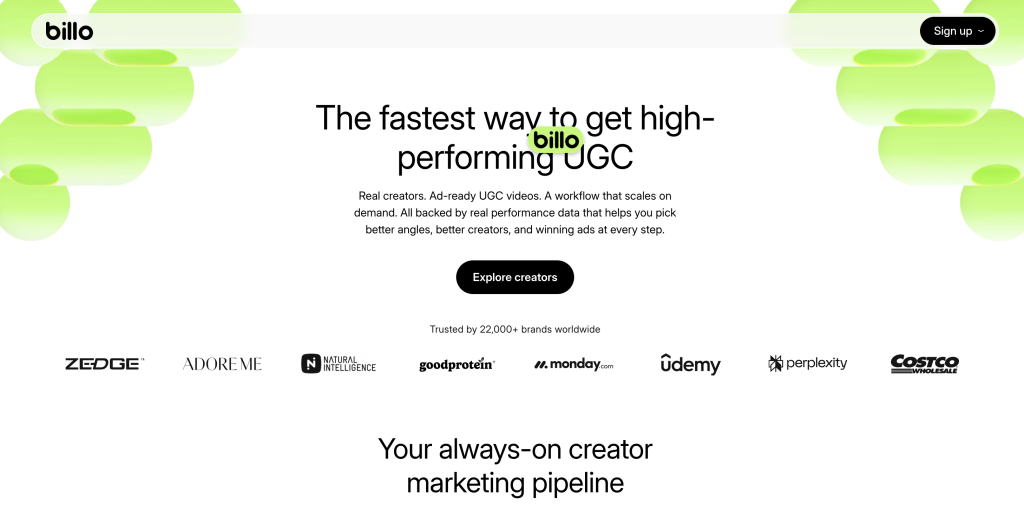
Billo is one of the most accessible entry points into UGC content creation, particularly for brands that need fast, affordable ugc videos at scale. Its strength lies in simplifying sourcing—brands can request specific formats like unboxing, testimonials, or product demos and receive content within days.
Pricing is relatively transparent, typically starting per video, which makes it appealing for brands testing UGC campaigns without committing to long-term contracts. However, the tradeoff is variability in quality content. Without a strong creative brief, outputs can feel templated rather than high-performing.
In practice, Billo works best for brands early in their UGC strategy—especially those needing volume for paid social testing across TikTok and Instagram Reels. It’s less effective for brands looking to build a premium, differentiated content library.
Foursixty (Shoppable UGC & Conversion Layer)
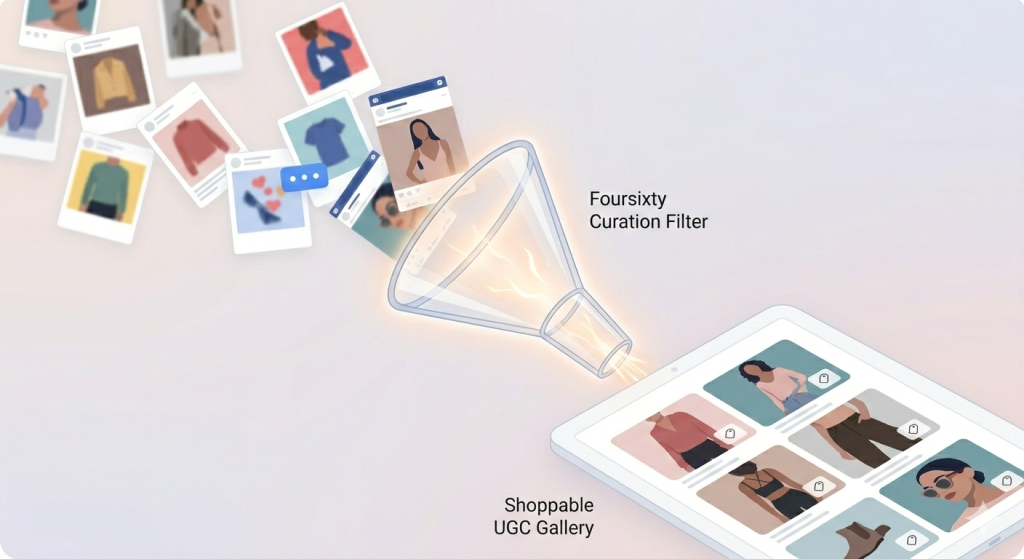
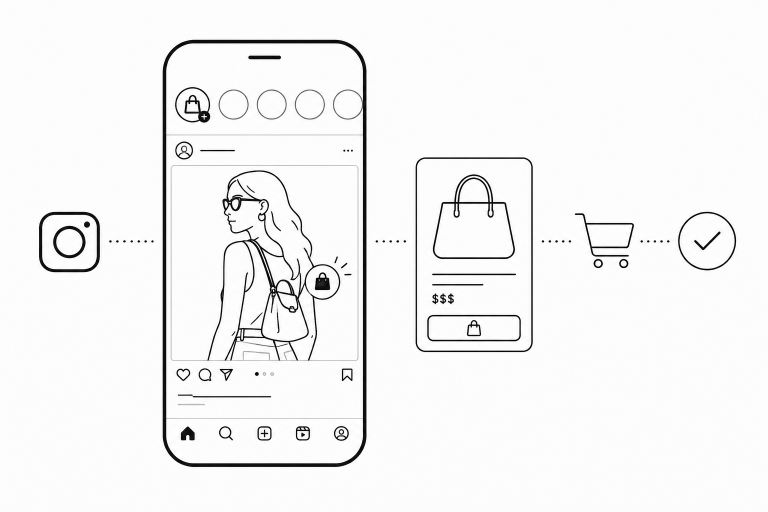
While most platforms focus on content creation, Foursixty operates closer to the point of conversion—turning UGC into shoppable posts embedded across ecommerce experiences.
This distinction is critical. Content alone doesn’t drive revenue; placement and context do. Foursixty enables brands to integrate shoppable social content directly into PDPs, homepages, and galleries, effectively bridging inspiration and purchase.
The impact is measurable.
- Frankies Bikinis attributes 19% of total orders and 23% of revenue to Foursixty-powered UGC
- MICHI achieved a 51x ROI within 30 days after switching platforms
What’s happening here isn’t just better content—it’s better alignment with the customer journey. When users can move from inspiration to purchase without friction, conversion rates increase naturally.
Give Foursixty a try now buy signing up for free!
Insense
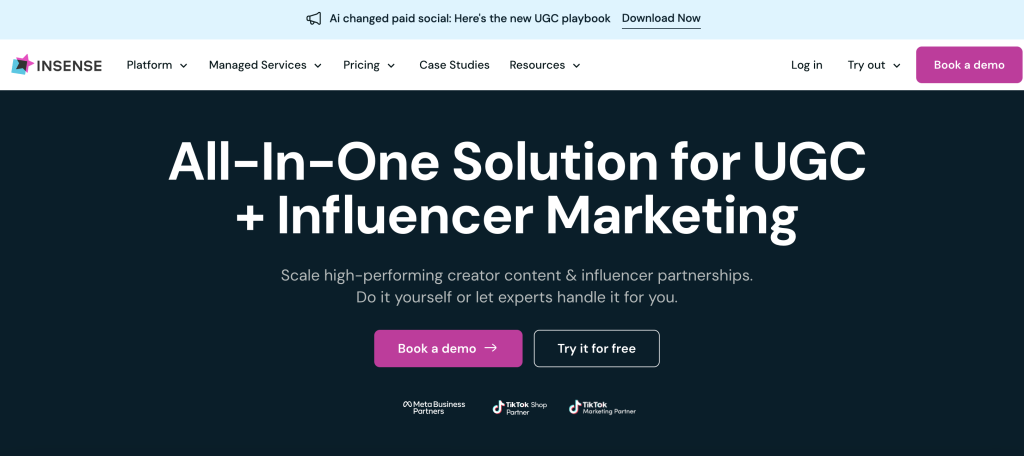
Insense sits at the intersection of UGC and influencer marketing, offering access to vetted content creators alongside campaign management tools. It’s particularly strong for brands running structured UGC campaigns across multiple social media platforms.
What makes Insense effective is its balance between control and scale. You can manage briefs, approvals, and content rights within a single workflow, which becomes critical as your marketing efforts expand. The platform also integrates well with paid media, allowing for faster iteration of high-performing creative.
The limitation is cost relative to simpler platforms like Billo. Insense is better suited for brands that already understand what type of content performs and want to systematize production.
Trend.io
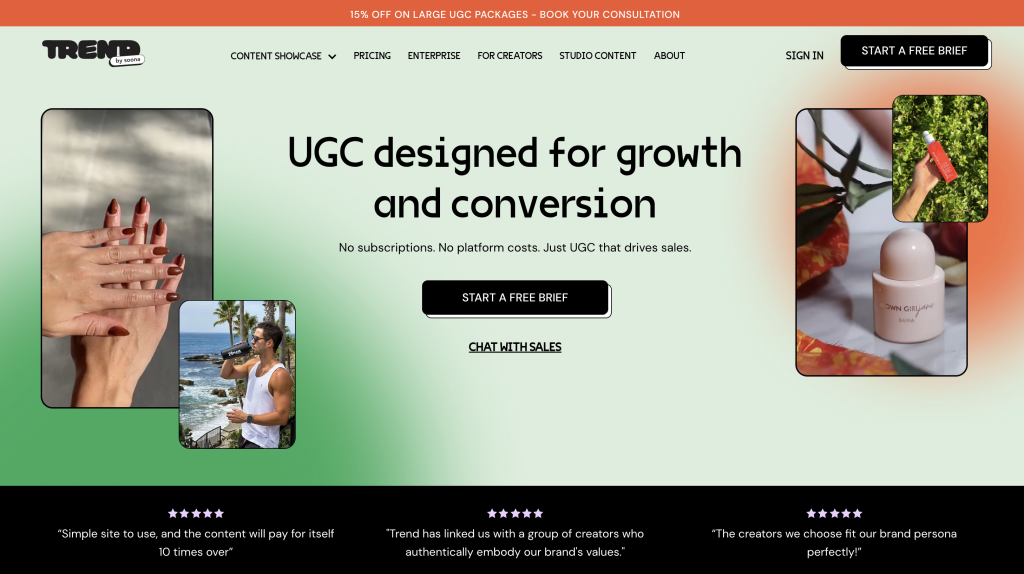
Trend.io positions itself as a premium UGC platform focused on high-quality creator content. The difference is noticeable—content tends to feel more native, less scripted, and better aligned with modern short-form formats.
Brands using Trend.io often prioritize authenticity over volume. This makes it particularly effective for PDP content and social proof, where credibility matters more than frequency. However, pricing reflects this positioning, which can limit scalability for smaller teams.
Aspire / Upfluence / GRIN
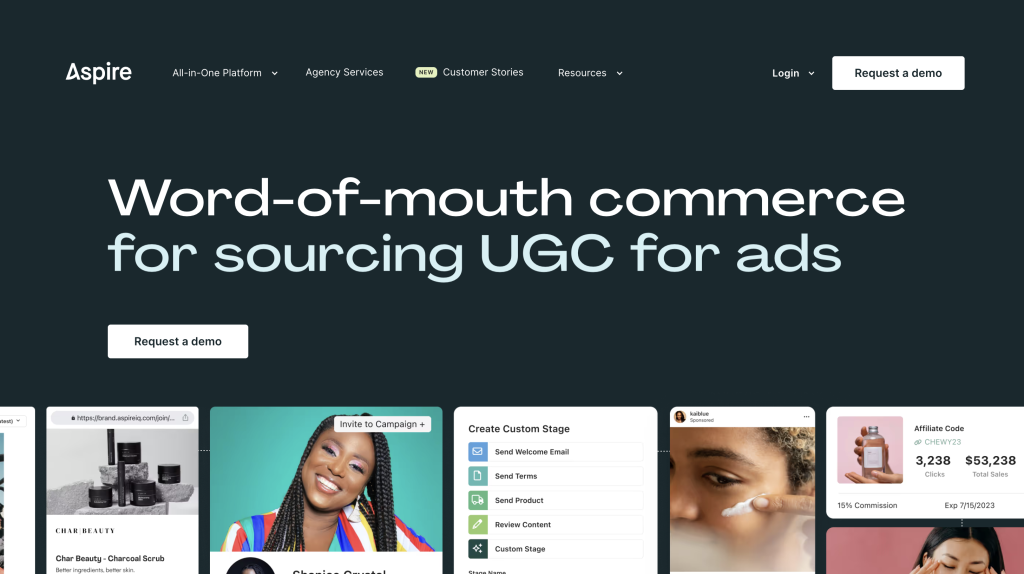
These platforms operate at the enterprise level, blending influencer marketing, UGC sourcing, and relationship management into a single system. They’re less about one-off content creation and more about building long-term creator partnerships.
For large ecommerce brands, this approach unlocks a different kind of leverage. Instead of constantly sourcing new ugc creators, you develop a network of repeat collaborators who understand your brand, resulting in more consistent, high-performing content.
The downside is complexity. Implementation, integrations, and onboarding require time, and these platforms are often overkill for brands without dedicated teams.
JoinBrands / Collabstr / #paid
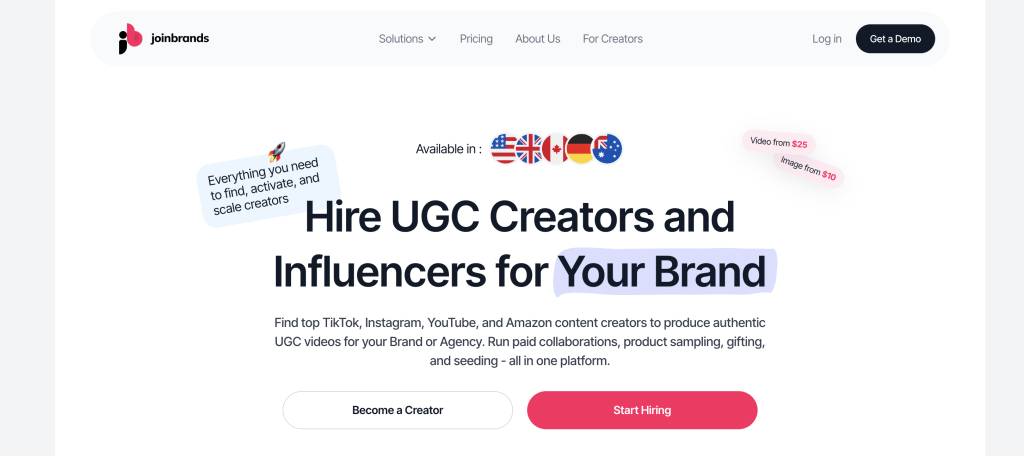
These platforms emphasize marketplace dynamics—connecting brands with creators quickly and efficiently. They’re particularly useful for sourcing niche creators or testing new formats across emerging social media platforms.
The challenge here is quality control. Without strong internal systems for briefing and evaluation, results can be inconsistent. These platforms are best used as sourcing engines, not full UGC systems.
TikTok Creator Marketplace
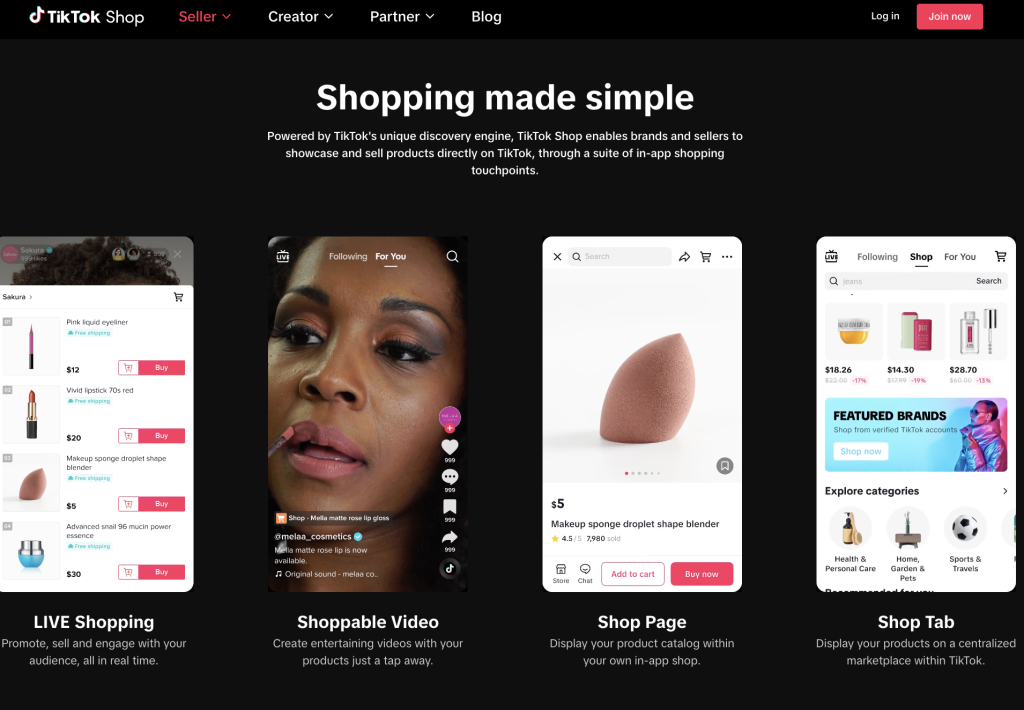
TikTok’s native marketplace deserves special mention because it reflects where social shopping is heading. It offers direct access to creators already producing high-performing short-form video content.
The advantage is data—brands can evaluate creators based on real performance metrics within TikTok. The limitation is ownership and usage rights, which can complicate repurposing content across other marketing channels.
Comparison Table (Quick Decision Tool)
| latform | Best For | Starting Pricing | Creator Network | Content Rights | Turnaround |
| Billo | Fast, affordable UGC videos | Per video | Medium | Limited flexibility | Fast |
| Insense | Structured campaigns | Mid-tier | High | Strong | Moderate |
| Trend.io | Premium content | Higher | Curated | Strong | Moderate |
| GRIN | Enterprise scale | Custom | Large | Advanced | Slow |
| JoinBrands | Quick sourcing | Low | Large | Variable | Fast |
| TikTok Marketplace | Native TikTok content | Free + creator fees | Massive | Limited | Fast |
| Foursixty | Shoppable UGC | SaaS pricing | N/A | Owned content | Immediate |
UGC Platforms vs Influencer Marketing Platforms
The distinction between UGC marketing and influencer marketing isn’t semantic—it fundamentally changes how you allocate budget and measure success.
Influencer marketing is top-of-funnel. It’s about reach, awareness, and borrowed credibility. UGC platforms, on the other hand, operate across the entire funnel, especially at the conversion layer where PDP content and social proof influence decisions.
The most effective brands combine both. They use influencer marketing to generate initial content and attention, then extract and repurpose that content into UGC assets deployed across paid ads, PDPs, and email flows.
This hybrid model is where platforms with strong integrations and rights management capabilities outperform simpler tools.
How to Choose the Right UGC Platform for Your Brand
Choosing a UGC platform is less about features and more about alignment with your operating model.
Early-stage brands often benefit from self-service platforms like Billo because they prioritize speed and affordability. Mid-market brands typically need better workflow management and creator vetting, making platforms like Insense more effective. Enterprise brands require scalable systems with deep integrations, where tools like GRIN or Upfluence become necessary.
The biggest mistake is optimizing for cost instead of output. Cheap content that doesn’t convert is more expensive than high-quality content that drives measurable ROI.
A useful heuristic:
If your bottleneck is content volume, choose a sourcing platform.
If your bottleneck is conversion rates, invest in shoppable content infrastructure.
Benefits of Using UGC Platforms
The primary benefit of UGC platforms isn’t efficiency—it’s trust. Customers are increasingly resistant to polished brand messaging but respond strongly to authentic content that reflects real experiences.
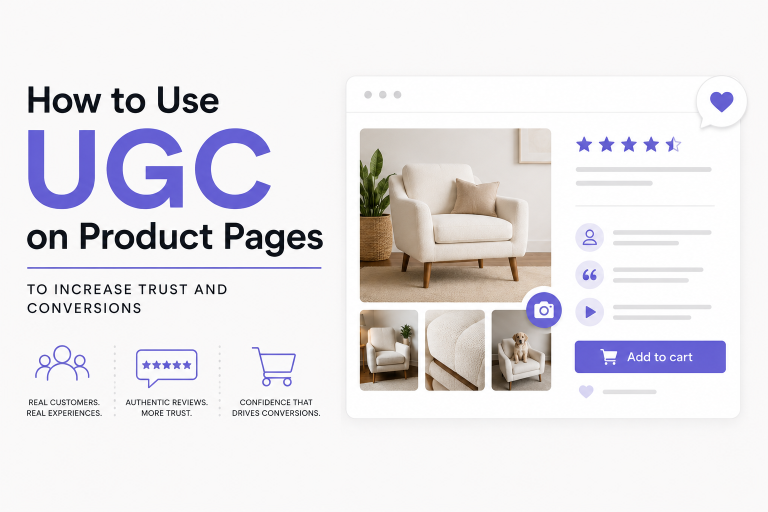
This is especially evident in ecommerce. Brands that integrate UGC into PDP content consistently see higher engagement and lower bounce rates because users are validating their purchase decisions through social proof.
The Babyboo case illustrates this well: by integrating UGC into a mobile-first, editorial shopping experience, they increased AOV by 11% and drove 15% of total revenue through the app. The shift wasn’t tactical—it was structural. They aligned the buying experience with how customers actually browse and discover products.
Common Mistakes Brands Make with UGC Platforms
The most common failure isn’t choosing the wrong platform—it’s misunderstanding how UGC works within a system.
Brands often neglect usage rights, limiting their ability to repurpose content across paid media. Others focus too heavily on influencers instead of ugc creators, leading to content that performs well socially but fails on PDPs.
Another frequent issue is poor briefing. Without clear direction, even the best creators produce generic assets that lack differentiation. High-performing UGC requires specificity—what objection it addresses, where it sits in the customer journey, and what action it’s meant to drive.
Final Verdict: Which UGC Platform Is Best for You?
There isn’t a single “best” UGC platform—only the one that aligns with your current growth constraints.
If you need fast, affordable content, start with Billo.
If you need structured campaigns and creator management, Insense is a strong choice.
If you’re operating at scale, GRIN or Upfluence provide the necessary infrastructure.
But if your focus is turning content into revenue, not just producing it, platforms like Foursixty represent a different category entirely—one that sits at the intersection of content and conversion.
Try Foursixty to enhance your eCommerce experience now!
FAQs
What are UGC platforms?
UGC platforms are tools that help brands source, manage, and distribute user-generated content across marketing channels. They connect businesses with content creators or customers who produce authentic content like product reviews, unboxing videos, and testimonials. More advanced platforms also handle rights management, integrations, and performance tracking, turning UGC into a scalable marketing system.
How do I become a UGC creator?
Becoming a UGC creator starts with understanding what brands actually need—conversion-focused content, not just aesthetic social posts. Most creators begin by producing sample ugc videos, building a portfolio, and signing up for platforms like Billo, Insense, or TikTok Creator Marketplace. Over time, consistency and understanding performance metrics matter more than follower count.
Do UGC creators get paid?
Yes, ugc creators are typically paid per asset or per campaign, depending on the platform and complexity of the content. Rates vary widely based on experience, content quality, and usage rights—especially if brands intend to use the content in paid ads. High-performing creators who understand conversion psychology often command premium pricing.
What is the best UGC app for beginners?
For beginners, platforms like Billo or JoinBrands are often the easiest entry points due to their self-service nature and straightforward workflow. They allow creators and brands to collaborate quickly without complex onboarding. However, as needs evolve, more advanced platforms with better integrations and rights management become necessary.
What is a UGC Creator?
A UGC creator is someone who produces content specifically for brands to use in marketing, without necessarily publishing it on their own social media. Their role is closer to a content producer than an influencer. The focus is on creating authentic, high-quality content that aligns with brand goals and performs across different formats and platforms.
How To Start Making Money As A UGC Creator?
Start by identifying brands that actively use UGC in their marketing strategy and create sample content tailored to their products. Platforms like Insense and TikTok Creator Marketplace provide access to paid opportunities. Over time, building direct partnerships with brands leads to more consistent income and higher rates.
Can I customize my social media feed?
Yes, many UGC and social commerce platforms allow brands to curate and customize how social content appears on their website. Tools like Foursixty enable brands to turn Instagram feeds into shoppable galleries, aligning content with brand identity and conversion goals. This customization is critical for maintaining consistency across the customer journey.
What Is a User-Generated Content Platform?
A user-generated content platform is a system that facilitates the collection, management, and deployment of content created by users or creators. It often includes features like content moderation, rights management, and analytics. These platforms play a central role in modern social commerce strategies.
What is the best type of UGC?
The best type of UGC is content that reduces friction in the buying decision. This often includes product demos, testimonials, and unboxing videos that address specific objections. High-performing UGC feels native to the platform it’s on, whether that’s TikTok, Instagram Reels, or a Shopify PDP.
What platforms use UGC?
Most major platforms incorporate UGC in some form, including TikTok, Instagram, Amazon, and Shopify-powered ecommerce sites. Dedicated UGC platforms like Insense, Billo, and Foursixty help brands operationalize this content across channels. Social media platforms themselves are increasingly becoming commerce environments through shoppable posts and social shopping features.
How do UGC platforms benefit brands?
UGC platforms help brands scale content creation while maintaining authenticity, which is increasingly difficult with traditional production. They also streamline workflow, reduce costs, and improve conversion rates by integrating social proof directly into the customer journey. Over time, this leads to more efficient marketing efforts and higher ROI.
How can businesses benefit from UGC platforms?
Businesses benefit by aligning their marketing with how modern consumers actually make decisions—through social validation and visual discovery. UGC platforms enable real-time content iteration, better PDP optimization, and stronger engagement across marketing channels. The result is a more resilient and adaptable marketing system.