Understanding how the instagram algorithm works is foundational to Instagram monetization, whether your goal is to monetize Instagram reels, grow brand deals on instagram, or scale shoppable content across social media platforms like tiktok.
In practice, creators who understand ranking factors, interaction history, and different signals consistently outperform those who chase surface-level tactics. Algorithm literacy determines how instagram content is distributed across users’ feeds, the instagram feed, instagram stories, the instagram explore page, and discovery surfaces governed by machine learning.
What Is the Instagram Algorithm?
The Instagram algorithm is a system powered by machine learning that evaluates user activity, interaction history, recency, and content quality to decide which instagram posts appear in users’ feeds.
Instagram’s stated goal is to improve user experience by showing relevant content that drives high engagement over time, not just short-term spikes. This applies to feed posts, carousel posts, instagram reels, recent posts, and stories.
See the official explanation from Instagram.
From a monetization standpoint, visibility is the gateway. Without reach, creators cannot grow instagram followers, attract their target audience, or unlock monetization features.
Why the Instagram Algorithm Is Critical for Monetization
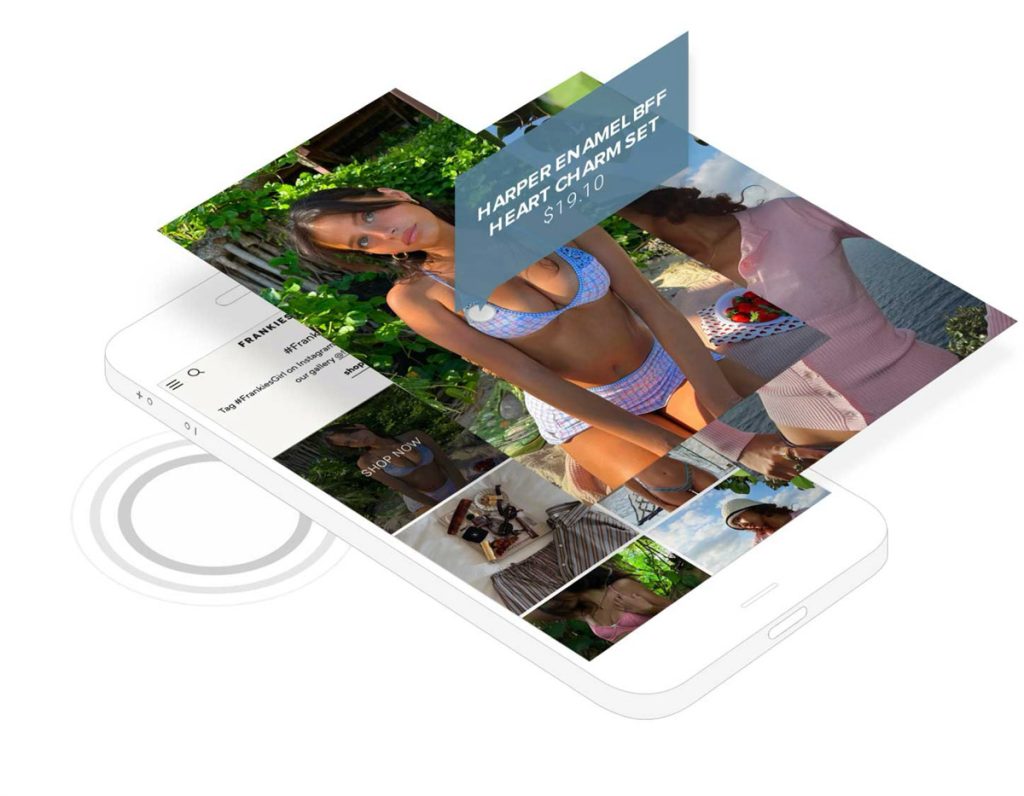
In practice, the path looks like this:
Algorithm visibility → audience growth → monetization eligibility → revenue
Creators regularly document this progression publicly:
- 0 → 1M followers in ~2 months with shared metrics and screenshots
- 6M monthly views converted into affiliate sales and product revenue
- ~$430k earned over two years from social media marketing via Instagram
Based on creator earnings data, algorithm mastery is what allows creators to move beyond vanity metrics and into repeatable income via Instagram affiliate marketing, Instagram subscriptions, and shoppable instagram experiences.
Core Ranking Signals Instagram Uses
Instagram does not use a single algorithm. It evaluates different signals depending on surface, type of content, and user context.
Engagement Signals
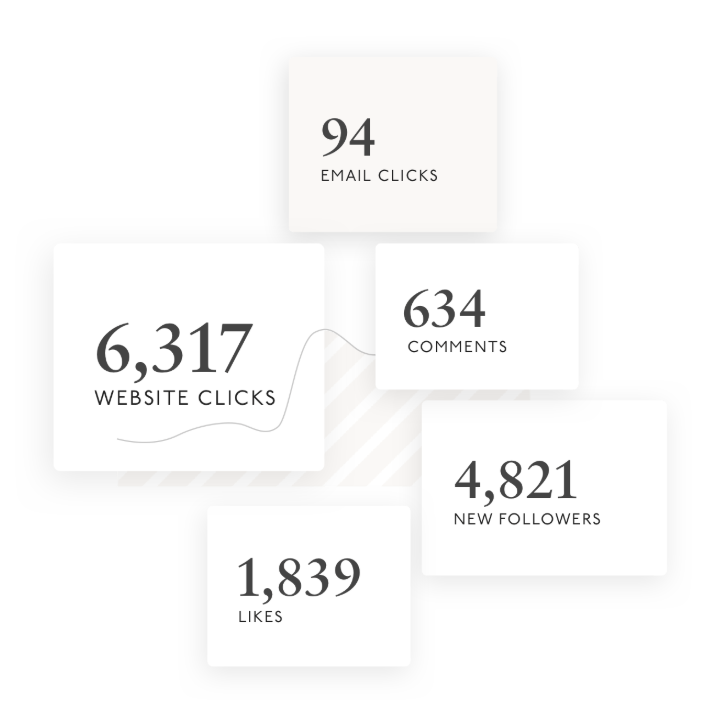
Likes, comments, saves, shares, reshare behavior, direct messages, and dms all influence algorithm ranking. Saves and shares consistently outperform likes for ranking signals tied to monetization.
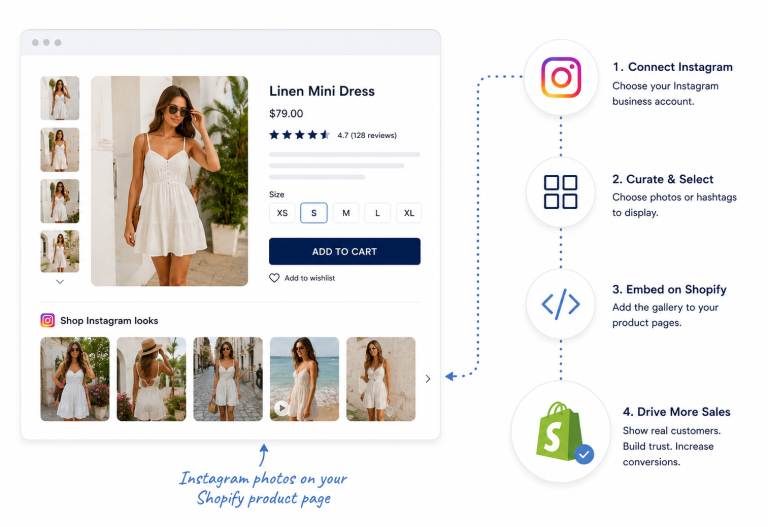
One overlooked lever in Instagram performance is off-platform reinforcement. Tools like Foursixty don’t change how the algorithm ranks content, but they strengthen the exact signals Instagram already prioritizes.
In practice, when brands use Foursixty to surface Instagram posts in shoppable galleries on their website, those posts receive additional profile visits, saves, and reshares from high-intent users. That external discovery loop drives users back to Instagram, reinforcing interaction history and extending the lifespan of instagram content beyond the initial publish window — which is critical for sustained ranking and monetization.
Watch Time & Completion Rate
Critical for instagram reels and the instagram reels algorithm. Higher completion rates correlate with broader distribution and higher content reach.
Account Interaction History
Instagram tracks how often users interact with your instagram account: profile visits, story replies, emoji reactions, quizzes, and sticker taps all factor into ranking.
How the Algorithm Works Across Instagram Surfaces
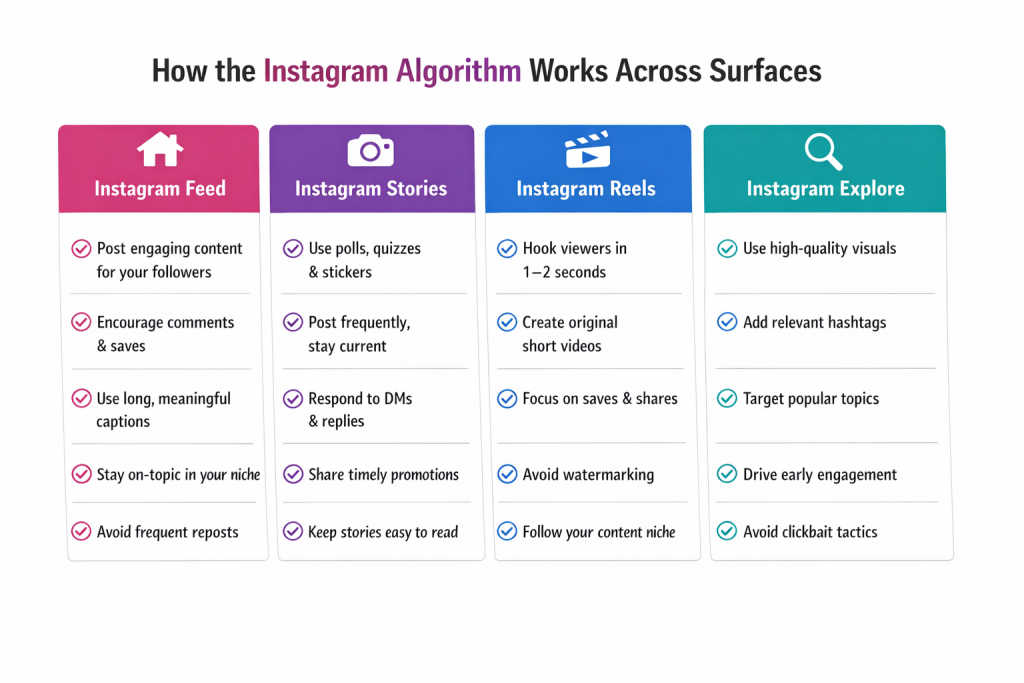
Instagram Feed Algorithm

What it optimizes for: relationship strength, relevance, and predicted interest
Primary goal: keep users engaged with accounts they already care about
Feed posts perform best for nurturing high-intent audiences who are more likely to click links, reply to Stories, convert on offers, and engage repeatedly.
5 things to do for the Feed algorithm
- Post content your existing audience wants to return to
Educational carousel posts, thoughtful commentary, and saved content reinforce relationship signals and increase repeat exposure. - Encourage meaningful engagement, not just likes
Comments, saves, and shares signal stronger relevance than passive likes and help posts surface higher in users’ feeds. - Maintain topical consistency
When your instagram account consistently publishes within a clear theme, Instagram better predicts relevance for your target audience. - Use captions to extend time-on-post
Longer, structured captions increase dwell time, which indirectly supports feed ranking. - Avoid frequent reposts
Original content consistently outperforms reposted material in feed distribution because it strengthens creator–audience relationships.
Instagram Stories Algorithm
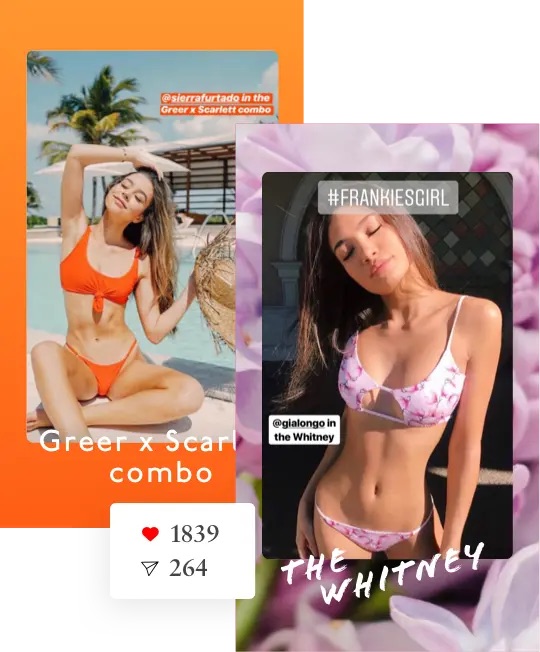
What it optimizes for: recency and interaction
Primary goal: surface timely content users are most likely to tap through
Stories are highly sensitive to user behavior and are one of the strongest drivers of ongoing engagement.
5 things to do for the Stories algorithm
- Post regularly, but in small batches
Frequent updates keep your stories near the front without overwhelming viewers. - Use interactive elements intentionally
Stickers, polls, quizzes, and emoji reactions create explicit interaction signals that boost visibility. - Respond to story replies
Direct replies and dms strengthen interaction history, making future stories more likely to appear first. - Prioritize recency during launches or promotions
Stories perform best for time-sensitive offers, updates, or reminders. - Keep frames simple and readable
Clear visuals and concise text improve completion rates, which helps sustain story ranking.
Instagram Reels Algorithm

What it optimizes for: discovery, watch time, and engagement velocity
Primary goal: introduce users to new creators and content
Reels are the primary growth engine and are critical for expanding beyond existing instagram followers.
5 things to do for the Reels algorithm
- Hook attention in the first 1–2 seconds
Early retention is one of the strongest ranking factors for Reels distribution. - Design for completion, not just views
Shorter, tighter videos often outperform longer ones because completion rate matters more than raw impressions. - Publish original content
Instagram explicitly reduces reach for reposted or watermarked videos. - Encourage saves and shares
These signals indicate long-term value and help push Reels into broader discovery pools. - Stay within your content lane
Consistent type of content helps Instagram understand who to show your Reels to.
Instagram Explore Page Algorithm
What it optimizes for: interest matching and comparative performance
Primary goal: surface content similar to what users already engage with
Explore is not relationship-based — it’s performance-based relative to similar posts.
5 things to do for the Explore algorithm
- Create content aligned with proven interests
Posts that mirror topics users already interact with are more likely to be tested. - Focus on early engagement quality
Strong initial saves, shares, and comments determine whether a post scales. - Optimize visual clarity
Clean, high-quality visuals perform better in Explore’s grid-style layout. - Use relevant hashtags contextually
Hashtags help Instagram classify content, but only when they align with actual post themes. - Avoid misleading engagement tactics
Engagement bait or irrelevant tagging can limit distribution rather than help it.
How to Think About These Algorithms Together
Each surface uses different ranking factors, but they reinforce each other:
- Feed and Stories build relationship depth
- Reels and Explore drive discovery and reach
- Interaction history connects all four systems
Creators who intentionally design instagram content for the specific surface it appears on consistently outperform those using a one-size-fits-all approach.
How Instagram’s Algorithm Affects Monetization Methods
Different monetization models rely on different surfaces:
- Brand partnerships → feed posts + carousel posts
- Affiliate links → stories + shoppable UGC
- Subscriptions → feed + stories
- Instagram Shop & shopping integrations → shoppable galleries
- UGC examples on Instagram → reels + explore
The MICHI case study shows how shoppable content embedded via Foursixty drove a reported 51× ROI:
https://foursixty.com/media/nl_assets/pdf/case-study-foursixty-michi.pdf
This is why many commerce brands pair Instagram strategy with tools that turn content into ongoing discovery assets. By connecting shoppable galleries to Instagram posts, platforms like Foursixty help creators and brands compound engagement over time — rather than relying solely on the first 24–48 hours of distribution.
This demonstrates how algorithm-friendly design directly impacts revenue.
How you can use Shoppable UGC to generate revenue on Instagram or TikTok
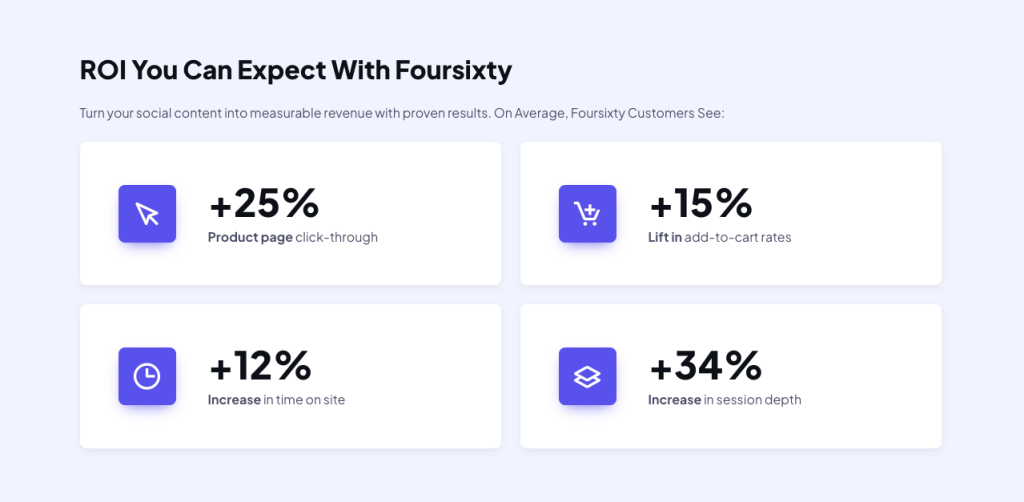
One monetization approach that aligns especially well with how Instagram’s algorithm works is Shoppable UGC, particularly when powered by platforms like Foursixty (https://foursixty.com/). Because Instagram prioritizes saves, reshares, profile visits, and repeat interactions, user-generated content that feels authentic—and is directly tied to products—tends to outperform traditional promotional posts over time.
In practice, Foursixty helps brands turn high-performing Instagram posts into shoppable experiences on their website, which drives qualified traffic back to Instagram, reinforces interaction history, and extends content lifespan beyond the initial posting window.
This creates a feedback loop where algorithm-favored engagement signals support both visibility and conversion, making Shoppable UGC one of the most sustainable ways to translate reach into revenue without working against Instagram’s ranking systems.
Instagram vs. Tiktok Monetization
Instagram vs. Tiktok Monetization differs structurally:
- Instagram favors brand deals, subscriptions, and affiliate conversions
- Tiktok monetization emphasizes creator programs, virality, and RPM-style payouts
In practice, creators often use tiktok for discovery and Instagram for conversion depth. Audience intent, user activity patterns, and ranking factors differ between platforms.
Recent Instagram Algorithm Updates (2024+)
Instagram has confirmed:
- Reduced reach for repost content
- Increased weighting of original content
- Expanded AI moderation for misinformation
- New features focused on creator transparency
Official ranking updates:
https://creators.instagram.com/blog/how-instagram-ranking-works
Adam Mosseri has clarified that shadowbanning is not real, posting frequency stabilizes after consistency, and hashtags are a contextual signal—not a growth lever.
Best Practices to Work With the Algorithm (Safely)
Instagram best practices focus on sustainability:
- Publish engaging content consistently
- Use relevant keywords in captions
- Apply instagram seo principles (alt text, captions)
- Use hashtags intentionally, not excessively
- Prioritize high-quality content over volume
This applies to creators, business accounts, and social media management teams alike.
Common Instagram Algorithm Myths (That Hurt Monetization)
- Posting more does not guarantee ranking
- Only reels make money is false
- Hashtags alone do not drive reach
- New content does not automatically outperform established content
Understanding how it works prevents wasted effort.
Measuring Algorithm Success Beyond Vanity Metrics
Effective creators measure:
- Engagement rate
- Saves and shares
- Completion rate
- Content performs by surface
- Profile actions and direct messages
Try this Instagram Money Calculator by Influencer marketer!
Final Thoughts
Understanding the Instagram algorithm helps you earn reach — but converting that reach into revenue requires infrastructure.
If you’re investing in Instagram monetization, Foursixty helps brands and creators turn high-performing Instagram posts into shoppable experiences that drive traffic back to Instagram and onto your site, reinforcing engagement, extending content lifespan, and unlocking more value from every post.
Get started with Foursixty Now!
FAQs
What is the 5-3-1 rule on Instagram?
The 5-3-1 rule suggests posting five value-driven posts, three engagement-focused posts, and one promotional post within a given cycle. This balance helps maintain audience trust while still supporting growth and monetization goals.
How do I improve my Instagram algorithm performance?
Focus on creating engaging content that encourages saves, shares, and meaningful interactions rather than chasing likes. Consistency, originality, and understanding how different surfaces rank content are more effective than short-term tactics.
What are the 6 main factors of the Instagram algorithm?
The core factors are engagement signals, recency, relevance, interaction history, content type, and predicted user interest. These factors are weighted differently depending on whether content appears in the feed, Stories, Reels, or Explore.
How does Instagram order content in users’ feeds?
Instagram ranks posts based on how likely a user is to interact with them, using past behavior, relationship signals, and content performance. Posts from accounts a user regularly engages with are more likely to appear higher.
How does the Instagram algorithm work overall?
Instagram uses machine learning to predict which content will be most relevant to each user at a given moment. It evaluates different signals—such as engagement, watch time, and interaction history—across multiple ranking systems.
Do hashtags even matter anymore on Instagram?
Hashtags still matter as contextual signals that help Instagram understand what a post is about. However, they are no longer a primary growth driver and work best when paired with strong content performance.
Where do you find official updates on Instagram algorithm changes?
Official updates are published on Instagram’s blog and shared directly by Instagram leadership through verified posts. These sources provide the most reliable insight into ranking updates and new features.
Does posting too frequently impact ranking?
Posting too often can reduce engagement if content quality drops or audiences feel overwhelmed. Consistent, sustainable posting generally performs better than high-volume posting with uneven results.
How do you measure Instagram algorithm success beyond vanity metrics?
Look beyond likes and focus on saves, shares, completion rate, profile actions, and link clicks. These metrics better reflect content quality and long-term visibility.
Why is the reach on my Instagram feed posts so low?
Low reach is often caused by weak engagement signals, limited interaction history, or increased competition from other content. Feed distribution is relationship-driven, so inconsistent engagement can reduce visibility.
How can I optimize my content for the Instagram algorithm in 2023 and beyond?
Prioritize original content, clear messaging, and formats that encourage interaction and retention. Optimization today is less about tricks and more about alignment with user intent and platform goals.
How does Instagram decide which posts to show on the Explore page?
Instagram tests posts with small groups of users who have shown interest in similar content. If engagement is strong, the post is shown to progressively larger audiences.
How does the Instagram algorithm prioritize content in the Explore tab?
The Explore tab favors interest-based discovery rather than follower relationships. Content performance relative to similar posts is a key factor in how far it spreads.
Why do some Instagram posts get more engagement than others?
Posts that clearly match audience interests, encourage interaction, and perform well early tend to receive more engagement. Format, timing, and relevance all influence results.
How does Instagram determine which posts appear in your feed?
Feed ranking is based on predicted interest, relationship strength, and recent interactions. Instagram continuously adjusts ranking as users interact with content.
How does engagement affect the Instagram algorithm?
Engagement tells Instagram that content is valuable and relevant, increasing the likelihood of broader distribution. Saves, shares, and meaningful interactions carry more weight than passive signals.
Note: Some of our images are generated with ChatGPT.com