Black Friday 2025 might seem like it’s eons away. But for ecommerce retailers, now is the time to start planning for this major shopping event.
This Black Friday will be different than those in years past. The days of shoppers camping outside stores before Thanksgiving so they could be first in line for a free TV are behind us.
Now, Black Friday extends from before Thanksgiving through to Cyber Monday sales and beyond.
It happens in multiple places, too: in-store and curbside. On traditional ecommerce storefronts and on social media shops.
In other words, the entire month of November—and December—are ripe for sales. And purchases are made from a web of platforms both in-store, online, and somewhere in the middle.
Here’s how to pull off a successful Black Friday ecommerce strategy in 2025. Keep a close eye on Tip #4, where we’ll show you a way to supercharge sales with user-generated content (UGC).
How to Prepare for Black Friday: 7 Powerful Tips for Success
Before you launch your first ad or schedule an email, your Black Friday ecommerce strategy begins with preparation.
The goal is to forecast the inventory you’ll need and plan aggressive—but profitable—offers for your shoppers.
A successful holiday shopping season hinges on laying the groundwork.
Follow these 7 straightforward steps and you’ll be ready to boost sales this Black Friday and Cyber Monday (BFCM).
1. Forecast Your Inventory Needs
Your ecommerce store can’t sell what it doesn’t have. That’s why it’s crucial to forecast product demand based on:
- Historical sales data for Black Friday, Cyber Monday, and the rest of the holiday season
- Product-specific trends—aka, finding out what’s popular right now in your industry
- Studying real demand signals from any pre-orders or waitlists you’ve got on file
You can use tools like Inventory Planner, Shopify, or third-party logistics (3PL) dashboards to make sure you’ll have enough stock. If you’re a small business with limited warehousing space, partner with services like ShipBob to fulfill orders as you sell products.
Consider grouping your products (SKUs) into categories based on how well they typically sell—high performers, mid-tier, and slow movers, for instance.
This will help you (a ton!) when you start planning the deals and discounts part of your Black Friday ecommerce strategy.
2. Map the Logistics
Now is the time to make sure your shopping processes, fulfillment timelines, and return policies are crystal-clear and doable for your team.
If you usually see lots of foot traffic on Black Friday, how will your store keep up without testing customer patience and losing sales? How will you handle returns or exchanges from both online and in-store purchases? How fast can you ship and deliver items during peak volume?
Figure this out now and make a plan for your team to move through the shopping and fulfillment processes as smoothly as possible.
Then, take what you’ve learned and prepare assets—emails, newsletters, and banners for your website—to share the information with your customers. Communicate:
- How quickly things will or won’t ship during the holiday season
- Order deadlines for items to arrive before key holidays (Christmas Day, Hanukkah, Kwanzaa)
- Typical number of days in the shipping process for both standard and expedited shipping
- When customers should inquire about their order (after 7 days, 10 days, 14 days, etc)
Use a fulfillment system that offers seamless tracking and automated order updates via email or SMS. Keeping your customers in-the-know will help you avoid the dreaded “where’s my order???!!!” emails.
But be ready to handle those, too. Your customer support team might need extra training—or extra hands—to deal with shipping questions, returns, and exchanges.
Again: now is the time to set the stage for Black Friday sales, Cyber Monday, and the rest of the holiday season.
We spoke with Saj Munir, owner of Chorlton Fireworks, a brick-and-mortar in Manchester, UK with an online store presence.

“Last year’s crowd control challenges [on Black Friday] taught us valuable lessons about physical retail management,” says Munir. “We’ve invested in better queue management systems and upgraded our in-store signage with QR codes for live stock updates.”
To make waiting in line more exciting, Munir and the team are “introducing a ‘Spin to Win’ fireworks giveaway” to gamify the Black Friday experience.
But the core change is that the Chorlton Fireworks team is preparing to treat Black Friday as a local community event, not just a sales day. “Instead of simply discounting products, we’re creating an experience people anticipate year-round,” says Munir.
The more you plan, practice, and prep your team and customers for BFCM, the more smoothly your operations will flow come November.
3. Audit Your Website and App Performance
In the four hours between 10:00 am and 2:00 pm on Black Friday 2024, online shoppers bought $11 million worth of products every minute. The result? A record $10.8 billion in online sales—more than twice what consumers spent in 2017, according to a December 2024 piece by NPR.
This is exciting news for Black Friday 2025, but only if your ecommerce site is ready to handle the influx of shoppers.
Offering strategic deals is only part of the equation for Black Friday success. You’ve also got to be able to navigate the traffic.
Here’s your pre-Black Friday 2025 tech CRO checklist:
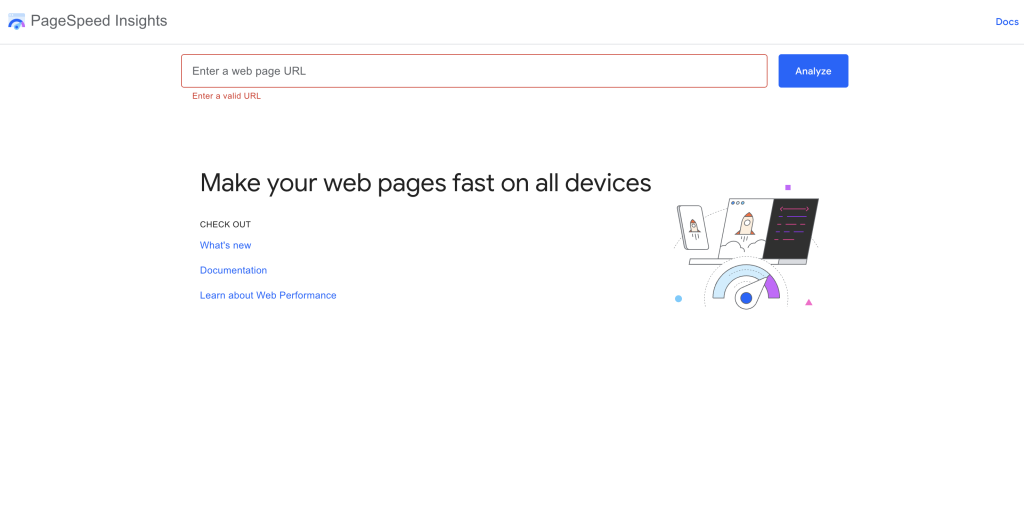
- Do a speed test. Understand your web vitals and test your website and app’s load times using various tools like; Google pagespeed insights, GTMetrix or In-browser testing. Try to solve any functionality issues that are slowing things down. Aim for a mobile load time under 3 seconds, because anything lower than that can cause bounce rates to spike during Black Friday.
- Load test your endpoints and website. How much traffic can your website and app handle? Find out with tools like Loader.io or BlazeMeter, which can simulate high-traffic loads and identify your site’s potential weaknesses, especially on add-to-cart and checkout.
- Test your mobile design. Most holiday shoppers browse and buy on mobile devices. Make sure your app is optimized to the nth degree. Test your checkout process backwards and forwards. Remove any unnecessary steps that add friction to the checkout, like forced account creation, excessive form fields, or surprise fees at the end.
4. Make Conversion-Focused Upgrades
We’ve got a riddle for you.
What not-so-secret tool can:
- Increase conversion rates by 161% when users interact with it
- Lift conversion rates by ~20% when they simply see it as they’re shopping
- Significantly increase shoppers’ trust in your brand and drive intent-to-buy
The answer?
Shoppable User-generated content, or Shoppable UGC.
UGC is anything your existing customers write, create, or post about your brand and products, including:
- Reviews (both text-only and with media, like videos or photos)
- Social media posts, including TikTok videos and Instagram Reels
- Photos
- Screenshots
- Q&A sections on product pages
- Podcasts
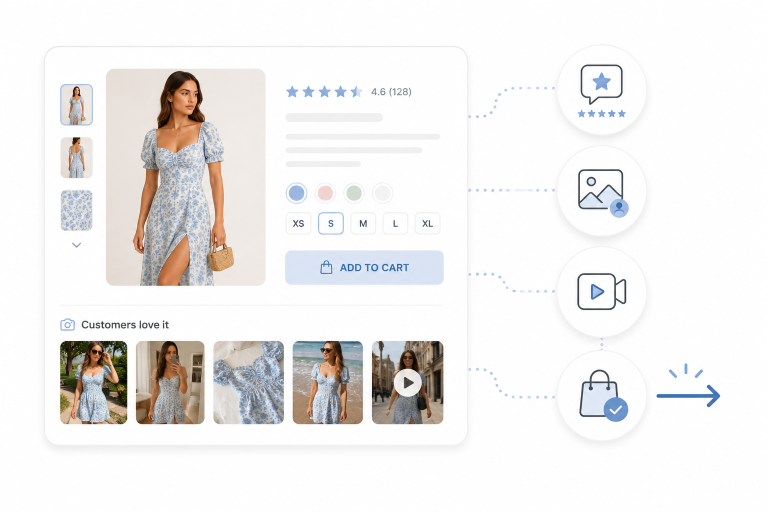
Most shoppers rely on unbiased information from their peers to make decisions about whether to buy from a brand. UGC is that information, and you can elevate your BFCM 2025 strategy by weaving it into strategic areas on your website.
Case in point? Foursixty’s collaboration with Frankies Bikinis. The Frankies team wanted to add UGC to their website. They wanted to show shoppers exactly how other customers were already using (and loving) the swimwear.
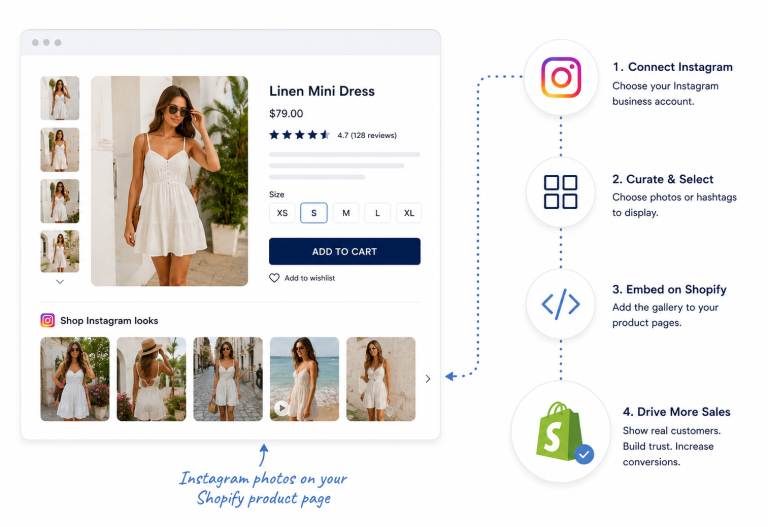
Along with homepage and Instashop galleries, the team here at Foursixty helped Frankies create product page galleries displaying high-performing posts and UGC.
Like this Instagram post of a woman wearing the Christa Denim Mini Dress.

When shoppers visit a product page for a specific swimsuit set, they see Instagram posts of customers and models showing off those exact same bikinis.
With Foursixty, this Christa Mini Dress post appears just above the reviews section of the product page.
As would-be customers dig into product reviews, they’ll also see this IRL post from Instagram.

Hello, conversions!
No, really. Point-of-sale galleries like this get 5x more engagement than even full-page galleries. They literally put shoppers in the shoes of other customers, bringing the shopping experience to life with real-world context.
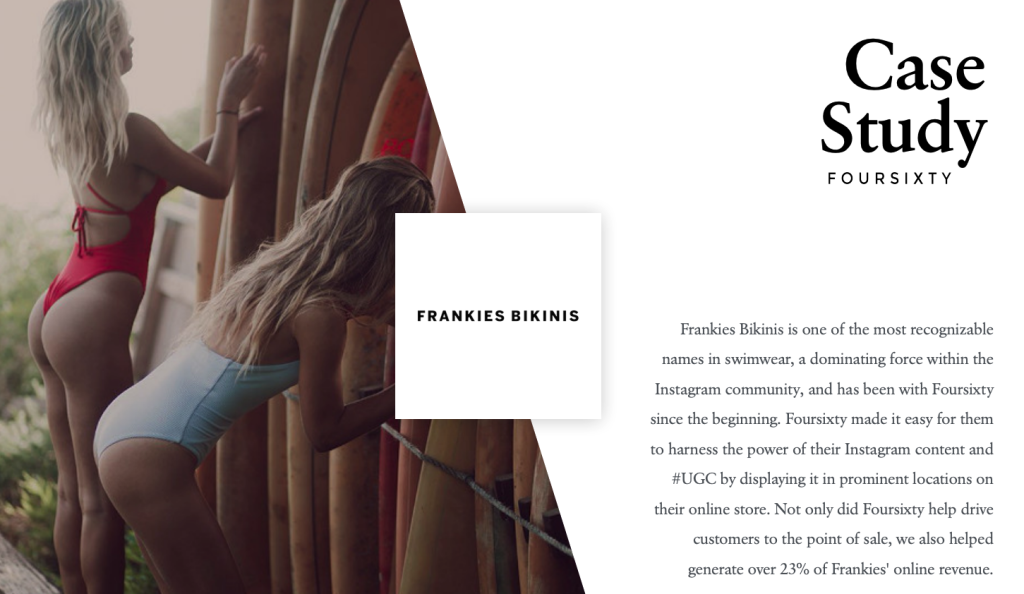
Ultimately, Foursixty helped drive 19% of Frankies Bikinis orders after we implemented shoppable galleries and UGC.
And 23% of Frankies Bikinis’ total revenue came from Foursixty’s changes, too.
We’ve helped brands like Pura Vida Bracelets, Skims, and Knix drive conversions with UGC.
We can do the same for your brand—and in plenty of time for Black Friday 2025, too. Our skilled team got Frankies Bikinis up and running with shoppable UGC in just four hours.
Reach out to our team to see how Foursixty’s shoppable content platform can put conversion-focused content on your most important web pages.
Consider making additional upgrades to help drive conversion rates on your site, like:
- Adding countdown timers for limited-time offers
- Using pop-ups to deliver discount codes
- Putting product recommendations on every product detail page
5. Plan Your Offer Strategy
There’s a secret sauce to a successful Black Friday marketing strategy.
Here it is: Focus on creating attractive offers that also carefully protect your margins.
Sure, doorbuster deals like big-ticket items at a 50% discount (or more) will lure buyers in. But at what cost to your business?
Instead, offer sales that toe the line between delivering value to shoppers and protecting your profits.
Remember how we recommended sorting your SKUs into three categories: high performers, mid-tier items, and slow movers?
Here’s where this organization gets really helpful. Assign a different sales percentage for each product category, like this:
- High performers/bestsellers: Don’t need deep discounts. Offering 10-15% off the list price is perfect.
- Mid-tier items: These products could use a little help getting into your customers’ hands at a faster rate during Black Friday. Offer a discount of 20-25% off and position these items as big-value purchases in your email marketing and landing page content.
- Slow-movers/overstock: Holidays are the ideal time to get these products moving. Mark them at a steep 30-50% off or bundle them with higher average order value (AOV) items. Shoppable posts and countdown timers can help give these items more clout.
By following this structure, you’ll avoid over-discounting your bestsellers, which would reduce your profits. You’ll also protect your AOV, since shoppers will still buy higher-priced/premium items—it’s the holidays, after all.
At the same time, you’ll clear out some of your slower inventory without hurting your margins across the whole cart.
To maximize ROI, you can also try offering tiered promotions, like:
- 10% off $50
- 20% off $100
- 30% off $150+
Target frequently offers these types of rewards for its Target Circle™ members—not just on Black Friday. The $25 off $125 offer below is a significant discount—and one that’s highly likely to make a person snap up (at least) $125 worth of goods from the brand.

6. Reward Loyal and New Customers With Special Deals
New customers love a personalized deal for handing over their email and phone information. Loyal customers appreciate getting custom discounts and perks in exchange for their continued support of a company.
The days surrounding Black Friday weekend and Cyber Monday are prime for sending out these offers.
Even better? Give these customers early access to Black Friday deals.
This is exactly what Saj Munir plans to do for Black Friday 2025 at Chorlton Fireworks.
“After analyzing last year’s traffic patterns, we noticed significant customer activity starting in mid-November, well before Black Friday weekend,” explains Munir.
“This year, I’m launching an exclusive ‘Early Bang’ VIP list in October, giving our most loyal customers early access to bundles and discounts.” The goal, says Munir, is to capture that early momentum while rewarding customer loyalty.
Here’s what we recommend doing:
- Use cart abandonment and purchase history to segment your email list. You don’t want to send the same discount to everyone. Instead, the focus is on customizing offers based on actual customer behavior.
- Break your list into smaller groups:
- VIP customers with high lifetime value (LTV)
- First-time buyers
- Recent shopping cart abandoners
- New subscribers acquired pre-Black Friday
- Match your message and offer type to each segment:
- VIPs: Reward customer loyalty with early access to sales, higher-tier discounts, and exclusive deals
- First-time buyers: Follow up that first purchase with a thank-you message and a discount code for future purchases
- Cart abandoners: Send targeted reminders and notifications with product recommendations—and small discounts to nudge them to checkout
- New subscribers: Offer a personalized welcome discount or free gift
Create a sense of urgency strategically throughout your holiday sales messaging. Give the offers a deadline. Apply countdown timers. Show “only X left in stock” messaging to help drive action.
And don’t forget about the power of UGC in your emails, too. With Foursixty’s Klaviyo integration, you can embed shoppable UGC directly into your emails.
This places conversion content in a highly impactful place, since shoppers can see real customer photos or videos.
Chances are, the weight of social proof will drive them past any hesitation to make a purchase.
7. Set Up Your Black Friday Marketing Strategy
Your Black Friday marketing strategy should include paid ads, SEO, influencer content, and affiliate partnerships.
Paid Ads
According to Kevin Heimlich, CEO and Founder of The Ad Firm, a long lead time for paid ads is key.
“Many ecommerce brands wait until October or even November to start blasting Black Friday deals on social media,” says Heimlich, but “that is too late—many shoppers start their deal discovery on social media, well in advance of the actual sale dates.”
Instead, “Begin with ‘warm-up’ campaigns as early as late August or early September,” says Heimlich.
“These [ads] are about building brand awareness, teasing the idea of big upcoming sales, and most importantly, driving traffic to dedicated landing pages designed specifically for email and SMS list sign-ups.”
To give potential new subscribers an incentive to opt in, Heimlich recommends running contests or offering exclusive, early-bird access to subscribers.
“We also use this pre-Black Friday period to test different ad creatives and messaging,” continues Heimlich. “We want to see what images, videos, and headlines resonate most with various audience segments.”
Another bonus of starting early is saving money on ad spend, says Heimlich. “One thing we noticed during Black Friday 2024 was that the competition for ad space on platforms like Meta and TikTok got even more intense and expensive closer to the actual Black Friday weekend.”
Advertisers that jumped in too late saw much higher costs and lower return on ad spend.
For Heimlich, “This reinforced the need to front-load our audience-building and engagement efforts. We found that the earlier we started teasing and building our lists, the more cost-effective our actual Black Friday conversion campaigns became.”
So, at least two months before BFCM, start running ads on Meta, TikTok, Google Shopping, and Amazon (if relevant).
Build awareness with soft CTAs like “Black Friday deals coming soon.”
Send this traffic to gift guides, early access landing pages, or VIP sign-up forms to grow your marketing list.
Once Black Friday/Cyber Monday hits, use ad retargeting to put your deals in front of promising eyes: cart abandoners, product page viewers, and past buyers.
Rotate these ads every 1-2 days to keep viewers from getting tired of them.
For even more engagement, plug in high-performing UGC strategy assets, like customer posts praising your product on Instagram. With Foursixty, you can easily secure the rights to use customer content in your own ad creatives.
SEO Tips
Throughout your product pages, blogs, and sale collections, keep SEO in mind. Optimize with terms like:
- “Black Friday sales”
- “Holiday deals under $50”
- “[Your niche] + gift guide”
Include schema markup to help search engines display rich results that include pricing and reviews. Remember, pages that rank well organically will also lower your dependence on paid ads.
Affiliate and Influencer Marketing
For affiliate and influencer marketing, recruit creators about when BFCM is about 6-8 weeks away. Instead of trying to wrangle the biggest influencers on TikTok, focus your efforts on micro-influencers that can drive strong engagement.
Give them a simple brief to follow:
- Use the product
- Show results
- Mention the offer
- Include a clear CTA
Tools like Shopify Collabs or Awin can provide you with unique links or discount codes to give your influencers.
Affiliate deals work best when you structure them with a flat fee + commission combination—like $200 + 10% in commissions. Schedule your final influencer pushes to land just before or during your Black Friday drop.
Then, reuse the best influencer content as shoppable posts on your online store, powered by Foursixty.
Bonus: Download Our Black Friday Ecommerce Strategy Timeline
Black Friday 2025 falls on November 28.
Here’s a 16-week timeline to show you when to do the steps above at just the right times to be ready to sell on Black Friday weekend.
Feel free to download below!
16-Week BFCM Preparation & Execution Timeline
| Phase | Dates (2025) | Focus | ✅ Status/Notes |
| Early Planning | Aug 4 – Aug 31 | Set revenue goalsReview past BFCM dataIdentify trends Forecast demandFinalize SKUsBegin planning offers and discounts | [Insert any notes and status updates here!] |
| Prep & Partnerships | Sep 1 – Sep 21 | Secure 3PL/logistics supportPlan return policiesBuild landing pagesLaunch warm-up ad campaignsStart influencer/affiliate outreach | |
| Build & Segment | Sep 22 – Oct 12 | Segment email/SMS listsCreate blog and gift guide contentUpdate product pages for SEO Test mobile UX and checkout performance | |
| Optimize & Finalize | Oct 13 – Oct 26 | Fix site issuesInstall UGC, pop-ups, and countdown timersFinalize all creatives and campaign copyPrep support team workflow | |
| Campaign Launch | Oct 27 – Nov 9 | Activate early access for VIPsLaunch full paid/email campaignsPush retargeting and influencer contentMonitor performance daily | |
| Last Push & Handoff | Nov 10 – Nov 23 | Run last-chance offersScale winning adsReview ROAS/AOV in real timePrep post-sale flowsEnsure support is ready for follow-up and retention |
How to Measure the Success of Your Black Friday Ecommerce Strategy
Planning your Black Friday campaigns is just the beginning.
With the tools in place to measure the success of your BFCM 2025, you can learn what to do (and what to avoid) for Black Friday 2026.
Here are key success metrics ecommerce businesses should use:
- Average order value (AOV): Helps you measure the impact of your deals, as well as whether your upsell and cross-sell efforts helped drive sales.
- Return on ad spend (ROAS): For paid marketing campaigns, this number tells you how much revenue you earn for every dollar spent on ads. A ROAS of 4.0, for instance, means you made $4 for every $1 invested.
- Conversion rate: Tells you how well your site and promos turn traffic into hard, cold sales.
- Refund rate: Reveals the percentage of returns and refunds. High return volumes might reflect a poor customer experience or product expectations that didn’t pan out.
- Customer acquisition cost (CAC): Tracks how much you’re paying to acquire new buyers during heavy online shopping periods.
Luckily, you don’t have to do any of this math manually. Use tools like Google Analytics, Triple Whale, or Northbeam to monitor performance throughout BFCM 2025.
Study this data both in real-time and after BFCM is over. In real-time, the data can help you spot any underperforming products or segments before revenue is negatively affected.
After the holiday rush is over, the data can help you understand what went right—and what needs improving—in 2026.
Common Pitfalls to Avoid When Planning for Black Friday 2025
The pressure to pull off an impressive BFCM can push teams to skip best practices in favor of quick wins. But making mistakes here can actually cost you conversions, profit, and long-term customer retention.
Avoid these common traps:
- Over-discounting your high-ticket items. Selling more while making less per product isn’t sustainable, even for Black Friday—especially for smaller ecommerce businesses.
- Skipping email segmentation. Treating a VIP like a new subscriber, even unintentionally, dampens your user experience.
- Ignoring mobile issues. A poor mobile checkout process, slow load time, or cluttered design can destroy the customer experience at high-stakes moments.
- Forgetting to include shoppable UGC. Without real customer photos or reviews integrated into your site, emails, or ads, you’re missing a major trust signal—especially during high-stakes Black Friday campaigns.
Most teams make mistakes because they’re in a rush and want to save time. But if you start planning for BFCM now, you can take the time you need to make sure your BFCM is a smashing success.
Ready to drive conversions during Black Friday 2025 with Foursixty?, Sign up for a free 14-day trial
Black Friday Ecommerce Strategy FAQs
Does Black Friday affect online shopping?
Yes—dramatically. Black Friday has evolved from an in-store frenzy into a month-long digital event. For many ecommerce businesses, online traffic and sales surge not just on Black Friday itself, but throughout November.
Shoppers now browse deals via mobile apps, social media shops, and curated landing pages. They often buy directly from ads or shoppable content. For online retailers, Black Friday is one of the most important conversion windows of the year.
How do you get ready for Black Friday and Cyber Monday?
Start early—ideally 12 to 16 weeks out. Preparation includes:
- Forecasting inventory
- Finalizing your discount and upsell strategy
- Segmenting your email/SMS list
- Testing your site’s user experience, especially on mobile devices
- Setting up tracking and reporting tools for real-time monitoring
- Launching warm-up ads and building marketing campaigns across paid, email, and influencer channels
Brands that treat BFCM as a 4-week event, not a 4-day one, usually see stronger performance.
What are the best ecommerce strategies to boost sales on Black Friday?
The top-performing brands combine:
- Smart segmentation (VIPs vs. cold traffic)
- Personalized, time-sensitive offers
- Seamless mobile checkout
- Compelling visuals (like shoppable UGC content and influencer posts)
- A strong retention plan for post-sale follow-up
Using platforms like Foursixty to embed social proof across your site and emails is a proven way to build trust and drive clicks.
Combined with strong CRO and remarketing, these strategies help increase conversion rate and average order value without sacrificing your margins.