Generative AI (or gen-AI) has become one of the most disruptive forces in modern ecommerce, reshaping how brands produce content, analyze performance, and scale their user-generated content (UGC) strategies. UGC—photos, videos, customer reviews, testimonials, and social posts created by real people—has always been a conversion engine. But with artificial intelligence, brands now have the ability to analyze, curate, generate, and optimize content at a scale that wasn’t possible even two years ago.
This topic matters now more than ever: the rise of deepfakes, AI-generated UGC, machine learning–driven algorithms, and “pseudo-UGC” is forcing marketers to rethink authenticity, trust, and how much human touch consumers expect. At the same time, automation, ai tools, and ai-driven workflows are helping brands dramatically improve conversion rates, reduce shopping cart abandonment, and streamline their customer journey optimization efforts.
In this article, you’ll learn how generative AI is impacting UGC, what’s changing for brands and creators, and how to blend human creativity with the latest generative AI tools—including opportunities to use Foursixty’s industry-leading shoppable content, Shoppable UGC, and PDP optimization capabilities.
A Quick Primer on Generative AI and UGC
Generative AI refers to ai technologies and ai models like ChatGPT, Midjourney, DALL·E, and Sora that can create ai-generated content including text, images, videos, and even synthetic avatars. These tools use massive data sets, machine learning, and neural networks to create content that increasingly looks like it was made by humans.
UGC, on the other hand, includes high-quality images, videos, testimonials, customer reviews, and posts created by customers, advocates, or content creators on social platforms such as TikTok, Instagram, and YouTube. It also powers UGC ads, ugc campaigns, influencer marketing, and brand storytelling.
Real UGC vs. AI-Generated UGC:
Real UGC comes from real people. AI-generated UGC (sometimes called “synthetic UGC”) is created using video generation, virtual influencers, or AI-authored text that simulates the tone of a real consumer.
It’s essential not to overstate what AI can do. Generative AI can support UGC workflows—but it can’t replace the trust equity built by real humans sharing authentic experiences.
Five Ways Generative AI Is Changing UGC
a. UGC Curation and Tagging

Brands are drowning in content. AI now identifies, tags, and ranks UGC automatically using image recognition and natural language processing. This allows ecommerce teams to:
- scan UGC feeds in real-time
- detect top-performing visuals
- select photos that increase add-to-cart rate
- identify Shoppable posts and Shoppable content examples faster
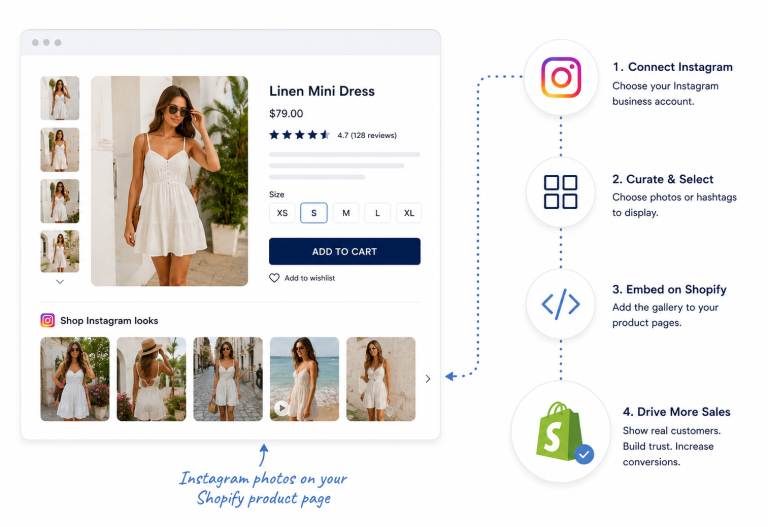
Tools like Foursixty already allow teams to curate UGC, measure metrics, and integrate Shoppable UGC into PDPs with far less manual work.
b. AI-Assisted Content Creation for “Pseudo-UGC”
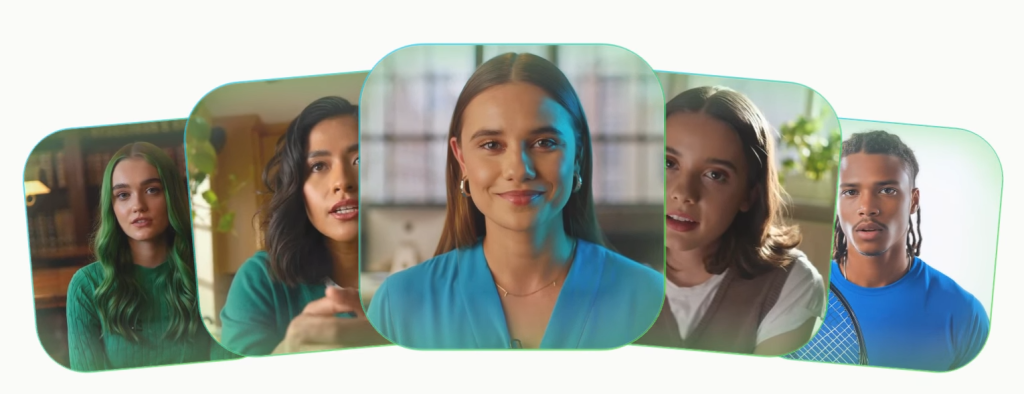
In 2025, brands increasingly experiment with ai-generated UGC—synthetic product demos, voiceovers, or AI avatars that look user-created. These workflows:
- are cost-effective
- help brands scale quality content
- support rapid iteration for ugc strategies
But there’s a breakthrough risk: consumers still prefer real people, not artificially generated testimonials. Too much artificial UGC erodes trust and damages brand voice.
c. Improved Moderation and Brand Safety

AI helps platforms filter out content that doesn’t meet guidelines. Content moderation tools powered by ai technologies detect:
- harmful comments
- off-brand aesthetics
- fake reviews
- IP infringements
Platforms like Meta and YouTube already use machine learning to regulate content at scale.
d. Creator Enablement

For creators, AI is a co-pilot. It helps with:
- scripting product reviews
- editing TikTok-style videos
- idea generation
- caption writing
- fast content creation workflows
AI boosts campaign efficiency—without removing control from human creators.
e. Synthetic Influencers and Deepfakes

Virtual influencers and AI-generated personas (like Lil Miquela) mimic real influencers but operate entirely from generative ai pipelines buildling on the concept of diffusion. These are being used in:
- influencer marketing
- brand deals
- experimental digital worlds
But they’re controversial, blurring the lines between use of AI, identity, and authenticity.
Impact on Authenticity and Consumer Trust
Consumers know when something looks “too polished.” Overusing AI can backfire:
- People trust human oversight
- Fake UGC or AI-simulated testimonials raise ethical concerns
- Disclosure rules now require brands to state when AI created part of a campaign
Even Gen Z, the demographic most comfortable with AI, still prefers UGC from real people. Authenticity remains the heart of social proof.
Opportunities for Brands
When used responsibly, AI enhances UGC—not replaces it. Brands can:
- Identify top-performing UGC automatically
- Improve PDP content with AI for PDPs
- Personalize content by demographics, target audience, and past behavior
- Use AI to assist creators, not replace them
- Integrate UGC into PDPs, emails, SMS, and loyalty flows
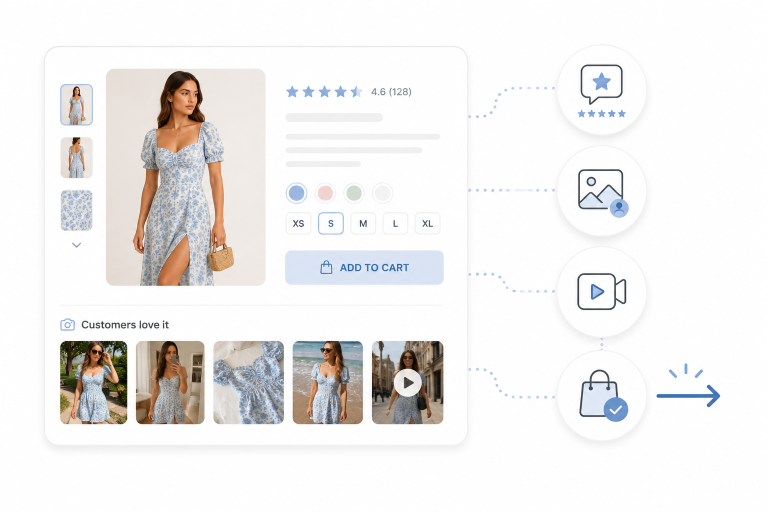
Foursixty gives brands the ability to merge real UGC, data, and Shoppable UGC—which helps reduce shopping cart abandonment and increase customer journey optimization.
Here are some brands that are currently using AI to impact not just their UGC but their company as a whole.
Gucci — AI Visualization & Virtual Try-On

Gucci has been one of the earliest luxury leaders to embrace AI-driven visual workflows. Their app uses computer vision, AR, and machine-learning models to power virtual try-ons for sneakers, eyewear, and beauty products. This reduces uncertainty, improves PDP content clarity, and supports higher conversion by showing customers “what it looks like on me” without needing physical samples.
Levi’s — AI-Generated Models for Inclusive Sizing

Levi’s has experimented with ai-generated avatars to showcase products across a wider variety of body types, sizes, and skin tones. While controversial, the intent was to improve accessibility and reduce the cost and time required for massive photo shoots. Levi’s clarified that these AI models supplement (not replace) real people, and real UGC remains at the heart of their brand.
H&M — AI for Trend Forecasting & Personalized Content
H&M uses large-scale data sets, machine learning, and predictive algorithms to identify emerging micro-trends. AI analyzes social sentiment, browsing behavior, and UGC patterns to predict which colors, fits, or styles will spike in demand. This data feeds directly into editorial content, merchandising choices, and personalized website modules.
Nike — AI-Assisted Product Recommendations & Content Personalization (as good as people)

Nike incorporates AI into its apps to deliver hyper-personalized product suggestions, training content, and even dynamic PDP modules based on customer behavior. AI also helps optimize conversion content, tailoring homepage modules and shoppable recommendations based on past engagement, UGC interactions, and fitness-tracking data from the ecosystem.
Shein — Machine Learning for Real-Time Trend Detection

Shein’s content engine is driven by real-time trend monitoring through ML models. AI detects rising patterns across TikTok, Instagram Reels, and global social media conversations—allowing Shein to rapidly produce new content, test styles, and generate ai-generated content variations at scale. Their workflow is one of the closest real-world examples of ai-driven UGC adjacent content—fast, reactive, and data-guided.
Challenges and Risks
Some risks to consider:
- AI-generated fake reviews
- FTC & platform disclosure requirements
- Algorithmic bias
- Ethical issues with replacing human creators
- Misaligned ai-generated content damaging brand trust
This is why the future belongs to hybrid models with strong human oversight.
What the Future Looks Like (2025–2027)
Expect rapid evolution in:
- AI-powered 3D personas
- voice clones
- contextual product placement
- real-time predictive algorithms
- automating creator workflows
- enhanced ugc ads personalization
But successful brands will blend human creativity with AI augmentation—not full automation.
Conclusion
Generative AI is transforming UGC, but it’s not replacing it. The brands winning in 2025 are those that use AI to optimize, streamline, and enhance—not impersonate—the consumer voice.
If you’re ready to improve PDPs, increase conversions, and build a modern UGC strategy rooted in trust and authenticity, see the special offer for Foursixty customers:
👉 https://foursixty.com/landing/special-offer/
FAQs
Does AI UGC work?
Yes, but with limitations. AI can enhance UGC workflows—but consumers still trust UGC created by real people.
What is the impact of GenAI?
Generative AI accelerates content production, improves curation, and amplifies personalization—but raises ethics concerns.
How to create UGC using AI?
Use AI for scripting, ideation, video editing, or creating pseudo-UGC—always with clear disclosure and human oversight.
Do Gen Z like UGC?
Yes. Gen Z prefers authentic, casual UGC from real people over polished branded content.
What makes UGC different?
UGC is powered by real customer experiences—it’s authentic, social, and trusted.
Can AI-generated content be called UGC?
Not traditionally. UGC, by definition, is created by users—not AI. AI-generated content is its own category.
What is AI-generated UGC?
Content created by AI designed to look like UGC—e.g., product demos, lifestyle videos, voiceovers, or synthetic personas.
What is Generative AI?
Technology that creates new images, video, or text using machine learning models like ChatGPT.
What happens to UGC marketing if TikTok gets banned in the US?
Brands will shift UGC investment toward Instagram, YouTube Shorts, and emerging platforms—but UGC demand won’t drop.
Do I still need real UGC if I use AI?
Yes. AI supports scale, but authentic UGC is irreplaceable for trust and social proof.
How is generative AI changing the landscape of UGC?
It’s speeding up creation, enhancing moderation, improving targeting, and expanding personalization.
How is generative AI transforming user-generated content?
By enabling new forms of content creation, automating workflows, and reshaping how brands use UGC across PDPs, ads, and social media.