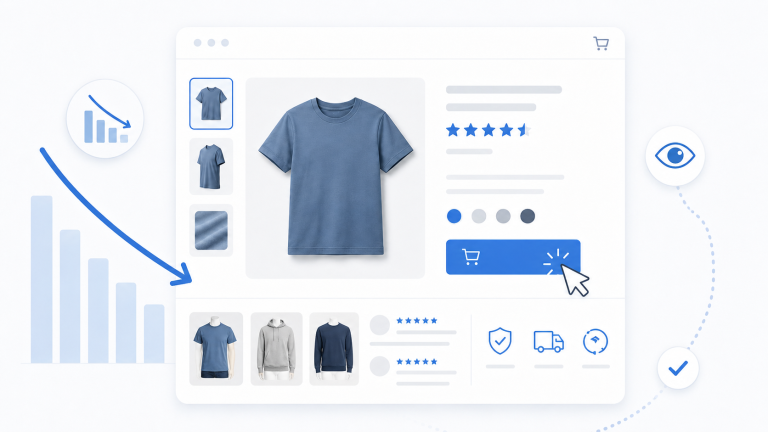
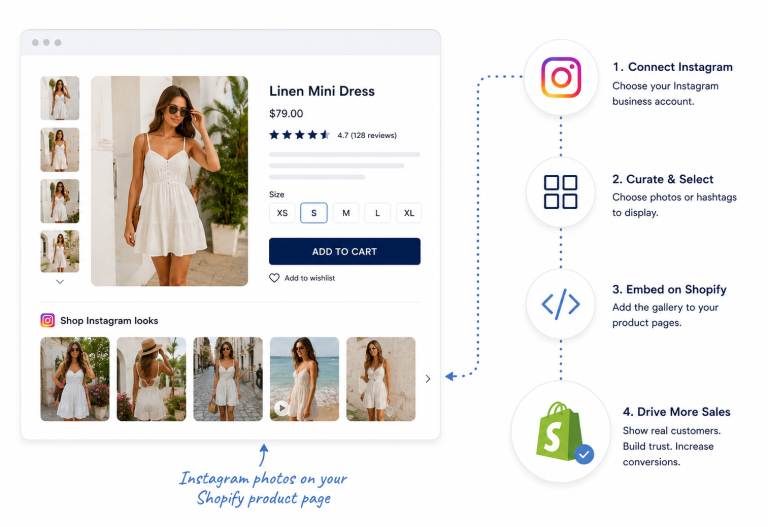
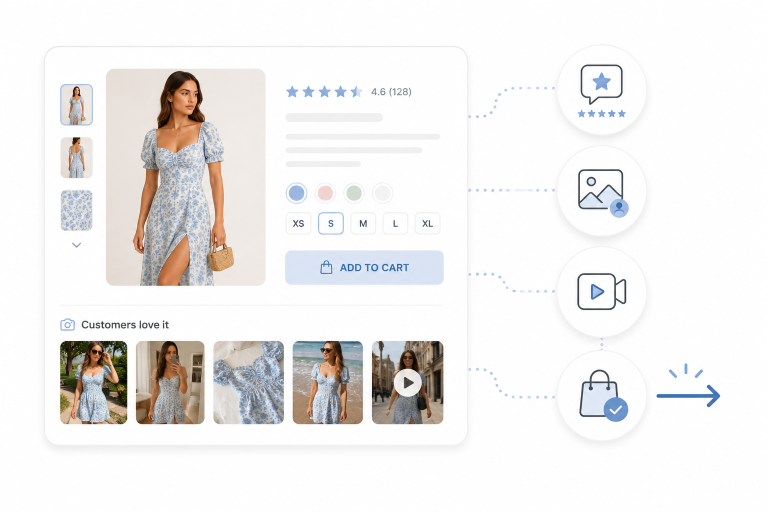
Most ecommerce brands don’t have a traffic problem—they have a trust problem. Your product pages are getting visits, but they’re not converting because customers don’t see enough real-life validation to make confident purchasing decisions. User-generated content (UGC) fixes this by turning your product pages into environments filled with social proof, authentic customer experiences, and visual trust signals—which directly increases conversion rates and drives measurable revenue.
Your product pages don’t have a traffic problem—they have a trust problem.
There’s a pattern that shows up across almost every ecommerce audit.
Traffic is healthy. Engagement rates are decent. People are landing on your product pages, scrolling, even clicking into image galleries. But then they leave. No add-to-cart. No checkout. Just drop-off.
The instinct is to fix this with more information—better copy, more product specs, stronger SEO, maybe even more branded content. But that rarely moves the needle in a meaningful way.
Because the real friction isn’t information.
It’s hesitation.
Customers are asking one question:
“Will this actually work for me in real life?”
And if your page can’t answer that quickly, you lose the sale.
What Is UGC on Product Pages?
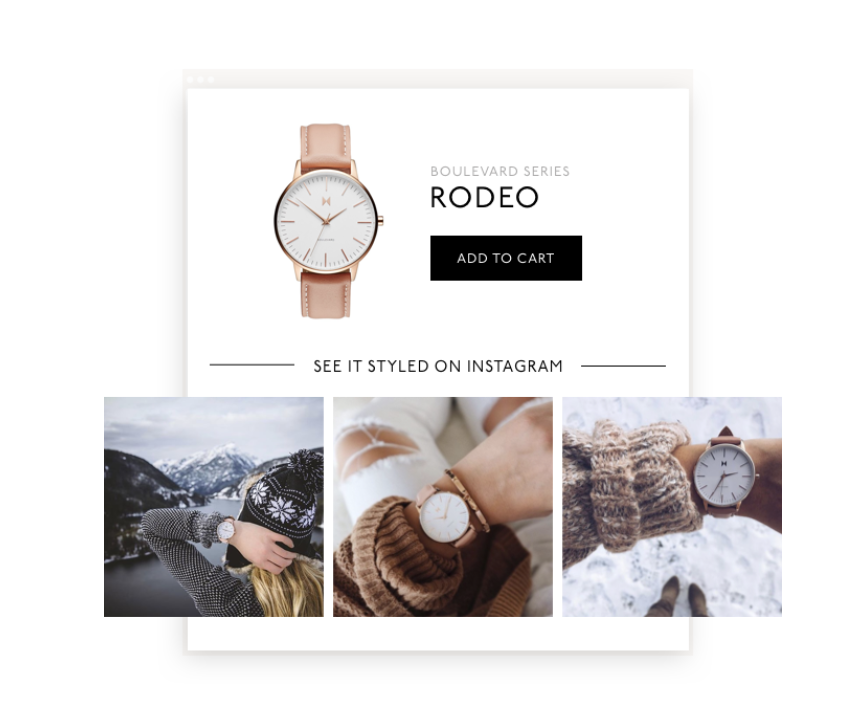
UGC (user-generated content) refers to any content created by customers, content creators, or brand ambassadors, rather than your internal team.
On product display pages (PDPs), this typically includes:
- Customer photos and lifestyle imagery
- UGC videos (try-ons, reviews, unboxing)
- Product reviews with star ratings and testimonials
- Social media posts pulled from platforms like TikTok or Instagram
The difference between UGC and traditional brand imagery is subtle—but critical.
Branded content is optimized for control.
UGC is optimized for authenticity.
And in modern ecommerce, consumers trust authenticity more than perfection. According to Nosto, shoppers are significantly more likely to convert when exposed to real customer content versus polished product shots.
Why UGC Increases Conversion Rates
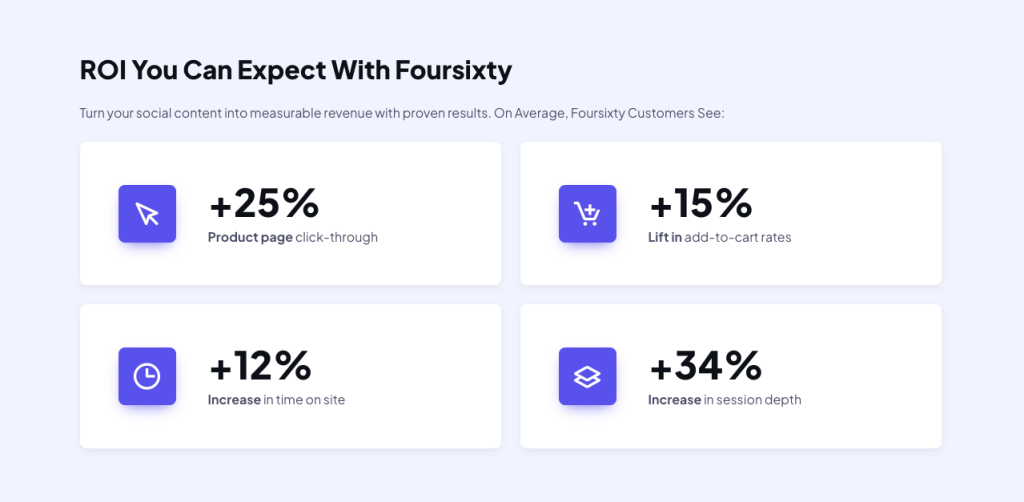
When you zoom out, UGC works because it aligns with how humans make decisions under uncertainty.
Social proof
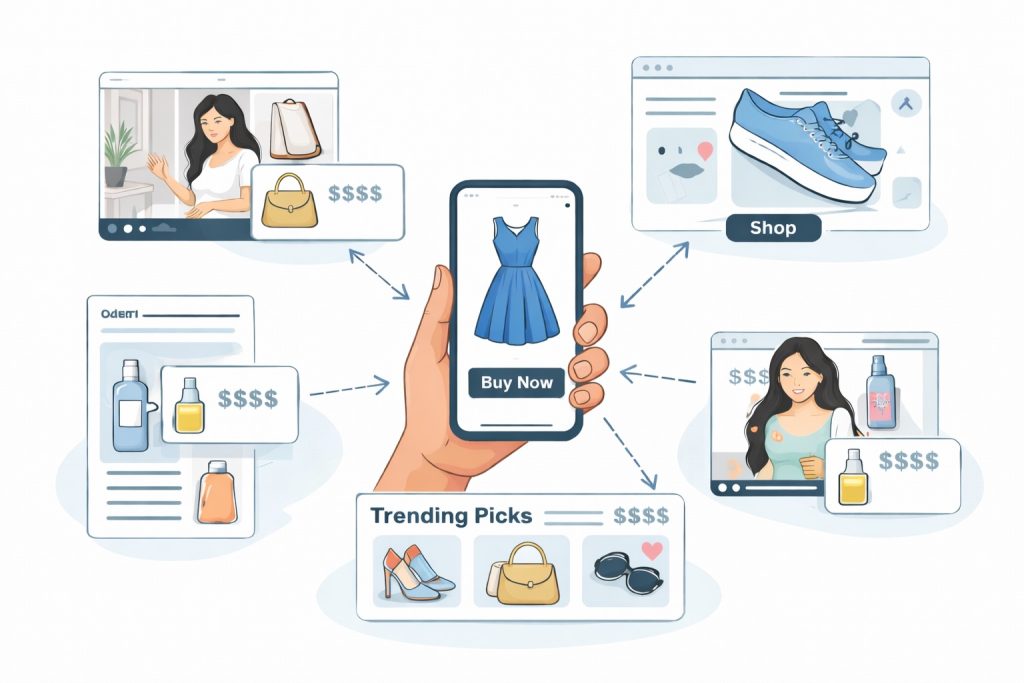
People look to other people for validation—especially when buying online. Customer reviews, testimonials, and real customer photos signal that others have already made the purchase and had a positive experience. This reduces perceived risk instantly.
Visual validation

Static product shots don’t answer real-world questions.
UGC shows:
- Fit
- Scale
- Styling
- Context
This is what helps customers mentally simulate ownership, which is a key driver of purchasing decisions.
Reduced uncertainty

Every unanswered question introduces friction.
UGC removes that friction by answering questions implicitly—through visual content, real-life use cases, and authentic customer experiences.
When done right, UGC doesn’t just “support” your page.
It replaces the need for over-explaining.
The Data Behind UGC Conversion
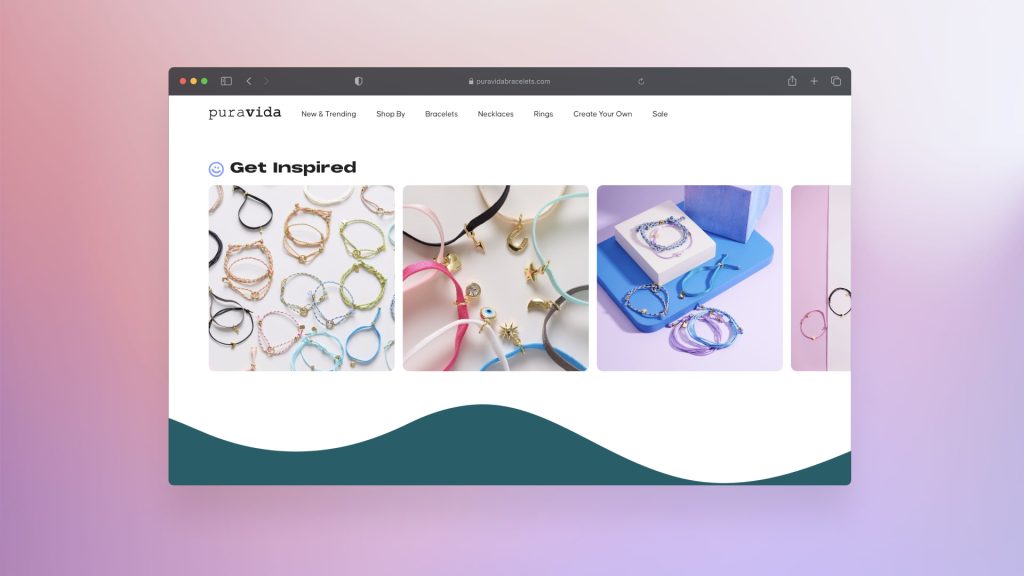
The impact of UGC isn’t theoretical—it’s measurable.
After implementing shoppable UGC across their product experience:
- +73% increase in page views
- -34% reduction in bounce rate
- 18.2% click-through rate on UGC interactions
- 17% of total revenue influenced
What changed wasn’t traffic.
It was engagement depth.
Customers stayed longer, explored more, and moved more confidently toward purchase.

Frankies Bikinis saw a similar effect. By placing top-performing customer content and influencer-driven posts directly into high-impact areas, they drove:
- 19% of total orders
- Over 23% of online revenue
The takeaway is simple:
UGC increases engagement → deeper engagement increases conversion likelihood
Where UGC Should Live on Product Pages
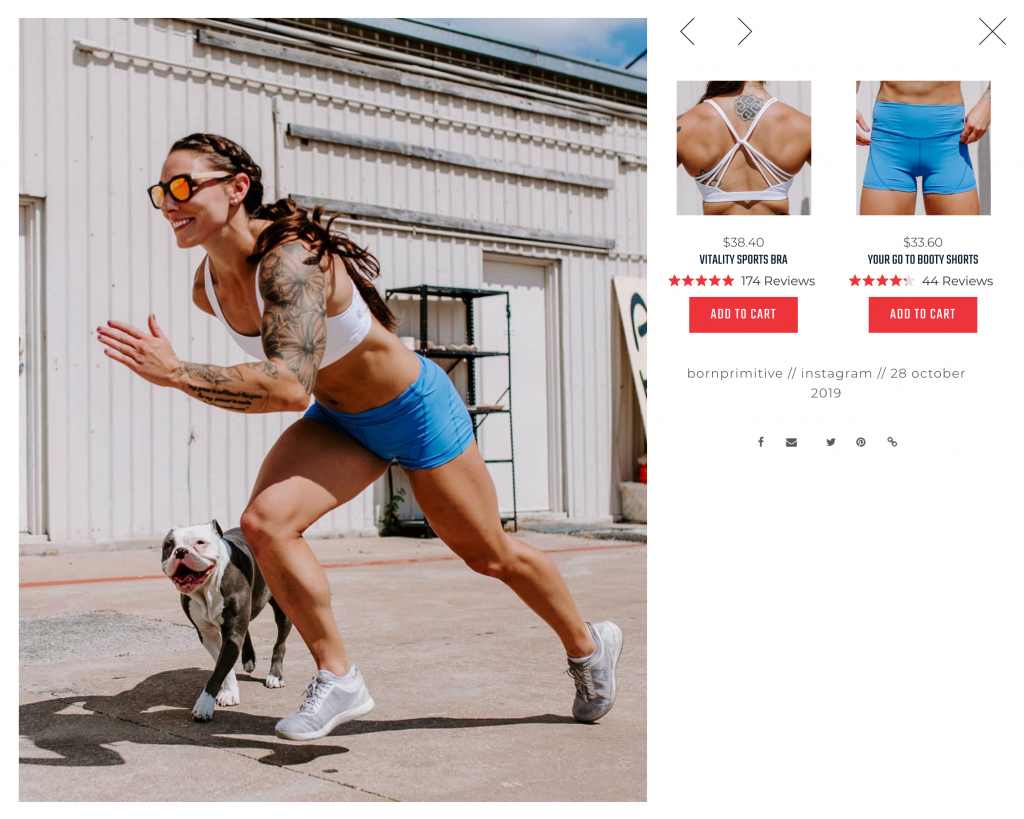
Placement is where strategy becomes performance.
Too many brands treat UGC like an afterthought—buried below reviews or tucked into a separate gallery. That’s a missed opportunity.
The highest-performing brands integrate UGC directly into the decision-making flow:
- Inside the image gallery → blends UGC with branded imagery
- Below the add-to-cart button → reinforces confidence at the moment of hesitation
- “Shop the look” modules → transforms browsing into guided discovery
Babyboo is a perfect example of this done right.
Instead of structuring their experience around individual products, they leaned into how their customers actually shop—through outfits and inspiration. By combining UGC, editorial visuals, and “shop the look” functionality, they created a more immersive experience.
The result:
- +11% increase in AOV
- 15% of total revenue driven by the app
- Significantly deeper product exploration
This worked because it aligned the experience with real customer behavior, not internal catalog structure.
UGC Formats That Convert Best
Not all types of user-generated content perform equally.
The formats that consistently boost conversions are the ones that reduce ambiguity fastest.
Try-on and real-life photos
These show how products look on real people, across different body types, environments, and styles.
Lifestyle content
UGC that shows products in context—how they’re used, worn, or experienced—helps customers visualize ownership.
Video content (especially short-form)
UGC content platforms like including TikTok are increasingly dominant. They combine motion, storytelling, and authenticity in a way static images can’t.
Creator content vs customer content
Influencer marketing can drive discovery, but authentic customer content often drives conversion. The best strategy blends both.
How to Optimize UGC for Conversion
UGC alone isn’t enough. It needs to be structured intentionally.
The highest-performing brands focus on a few key levers:
- Tag products directly within images and videos to make content shoppable
- Moderate content to ensure it stays high-quality and on-brand
- Prioritize relevance (best-performing content) over recency
- Continuously curate and refresh content based on performance
This is where many teams fall short.
They collect UGC—but don’t optimize it.
And without optimization, you’re leaving conversion gains on the table.
UGC + Shoppable Experiences = Conversion Multiplier
This is where things compound.
UGC builds trust.
But shoppable UGC drives action.
When you connect customer photos, social media posts, and video content directly to product pages and checkout, you remove the gap between inspiration and purchase.
That’s the difference between:
“Looks great”
and
“I’m buying this”
Platforms like Foursixty are built around this exact principle—turning UGC into a fully integrated, shoppable layer across your ecommerce experience.
Tools to Add UGC to Product Pages
At a high level, most tools in this category fall into three buckets:
- Aggregation tools (display-focused)
- Review platforms (feedback-focused)
- Social commerce platforms (conversion-focused)
The capabilities that matter most:
- Product tagging
- Moderation workflows
- Analytics and attribution
- Seamless integration with your ecommerce platform
Because again—the goal isn’t to show content.
It’s to drive sales.
Why Foursixty Drives Higher Conversion
Foursixty stands out because it’s built specifically for conversion, not just content display.
The results reflect that:
- MICHI → 51x ROI within 30 days
- Pura Vida → 17% revenue influenced
- Frankies Bikinis → 23%+ revenue driven
The difference isn’t just features.
It’s how the system connects:
UGC → product pages → purchasing decisions → revenue
That’s what most platforms miss.
Try Foursixty for free now by signing up!
FAQs
What is UGC in social media?
UGC in social media refers to any content—photos, videos, reviews, or posts—created by users rather than brands. This includes customer photos, testimonials, unboxing videos, and influencer content shared across platforms like TikTok and Instagram. In ecommerce, this content is often repurposed onto product pages to build trust and influence purchasing decisions.
What does the UGC stand for?
UGC stands for user-generated content. It refers to authentic content created by real users, customers, or content creators, rather than branded marketing teams. This type of content is highly effective because consumers trust peer experiences more than traditional advertising.
How do I become an UGC creator?
To become a UGC creator, you start by creating authentic content featuring products you genuinely use. Many brands now collaborate with creators through influencer marketing partnerships, even for non-influencers. Platforms like TikTok and Instagram are key channels for building visibility and showcasing your work.
Do UGC creators get paid?
Yes, many UGC creators get paid through brand collaborations, sponsorships, or content licensing agreements. Some brands also provide free products in exchange for customer content. As UGC becomes more central to ecommerce marketing strategies, demand for creators continues to grow.
How does UGC increase conversions?
UGC increases conversions by reducing uncertainty and providing social proof. When customers see real people using products, they feel more confident in their purchasing decisions. This leads to higher conversion rates, longer engagement, and increased trust.
Who Creates User-Generated Content?
UGC is created by customers, influencers, brand ambassadors, and everyday users. It includes everything from product reviews and star ratings to social media posts and videos. The most effective UGC often comes from authentic customers sharing real-life experiences.
Can I use Shoppable UGC in email marketing?
Yes, many brands now integrate shoppable UGC into email campaigns. This can include customer photos or videos linked directly to product pages, helping to drive conversions from email traffic. It works especially well because it combines personalization with social proof.
Are Shopify SEO apps worth it?
Shopify SEO apps can be helpful for improving search visibility, but they don’t solve conversion challenges on their own. Driving traffic through SEO is only part of the equation—UGC helps convert that traffic once it lands. The best strategies combine both.
Why UGC matters for e-commerce success?
UGC matters because it aligns with how people trust and evaluate products today. It provides authentic content, social proof, and real-life validation, all of which influence purchasing decisions. Without it, product pages often feel incomplete or overly promotional.
How do I use UGC effectively for my brand?
To use UGC effectively, integrate it directly into your product pages, curate high-performing content, and make it shoppable. Focus on quality, relevance, and placement. The goal is to support the customer journey—not distract from it.
How can user-generated content improve product page conversion rates?
UGC improves conversion rates by showing products in real-world contexts and building trust quickly. It answers common objections visually, reducing hesitation. When combined with shoppable functionality, it creates a seamless path to purchase.
How can UGC on product pages improve conversion rates?
By embedding customer photos, reviews, and videos directly into product pages, brands create a more engaging and trustworthy experience. This leads to deeper engagement, higher confidence, and ultimately more conversions. It transforms product pages from static listings into dynamic, trust-driven environments.