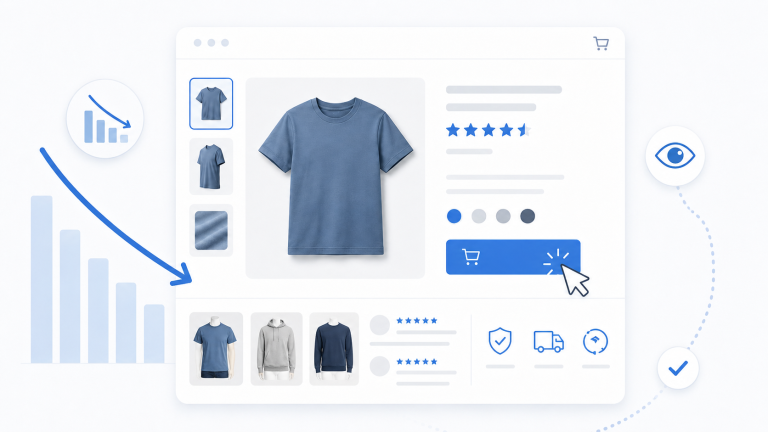
Shopping cart abandonment remains one of the most persistent — and costly — challenges in ecommerce. According to the most recent Baymard Institute research (2025–2026), the average cart abandonment rate now sits at 70.19%, meaning the majority of online shoppers still leave before completing a purchase.
For ecommerce businesses, this represents billions in preventable lost sales every year. Yet cart abandonment is often misunderstood.
For this article, we drew upon our CMO’s expertise, Rashel Hariri; to provide her expertise alongside our own, what we see with our clients and what the internet has to offer.

Generally, this is how Rashel feels about abandoned carts:
“Cart abandonment is not about lack of intent. It’s about unresolved hesitation. One unanswered question at checkout can undo everything you did right before it.”
In 2026, shoppers are more distracted, more price-aware, and more comparison-driven than ever. The checkout experience is no longer just a functional step — it’s a psychological decision point. This guide breaks down why shoppers abandon, and how to optimize every stage of the customer journey using modern UX, CRO, and recovery strategies.
What Is Shopping Cart Abandonment?
Shopping cart abandonment occurs when a user adds items to an online shopping cart on an ecommerce site but exits before completing the payment process.
How to Calculate the Shopping Cart Abandonment Rate
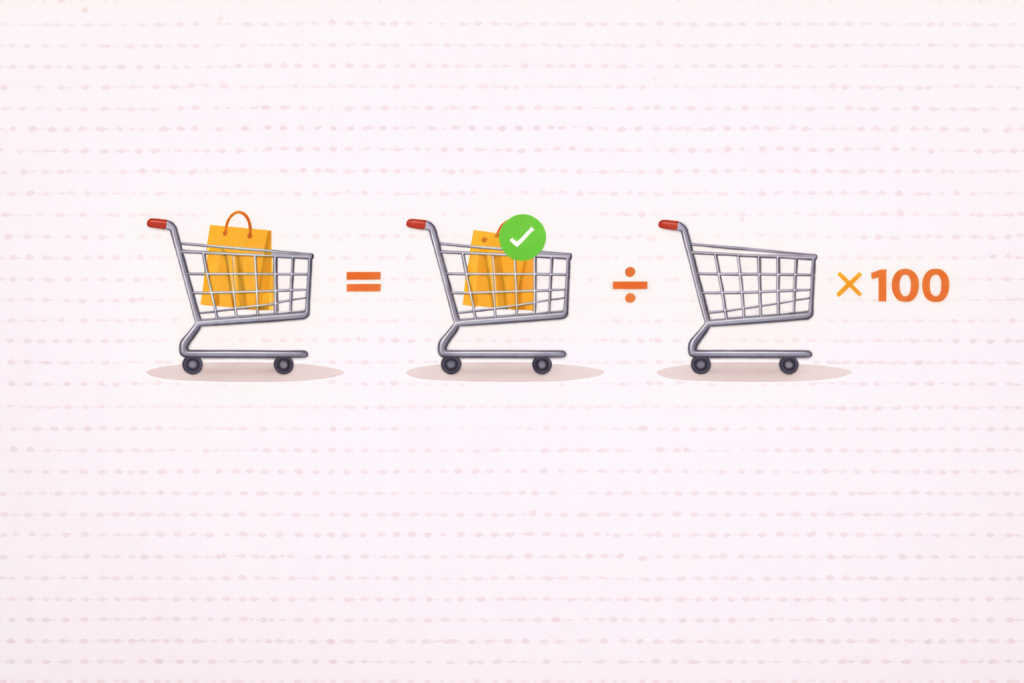
Abandonment Rate = (Carts Created − Completed Purchases) ÷ Carts Created × 100
Tracking this alongside supporting metrics such as Add-to-cart rate, PDP conversion rate, and overall UX conversion rate helps identify exactly where users drop off.
Why Do Shoppers Abandon Carts? (2026 Data)
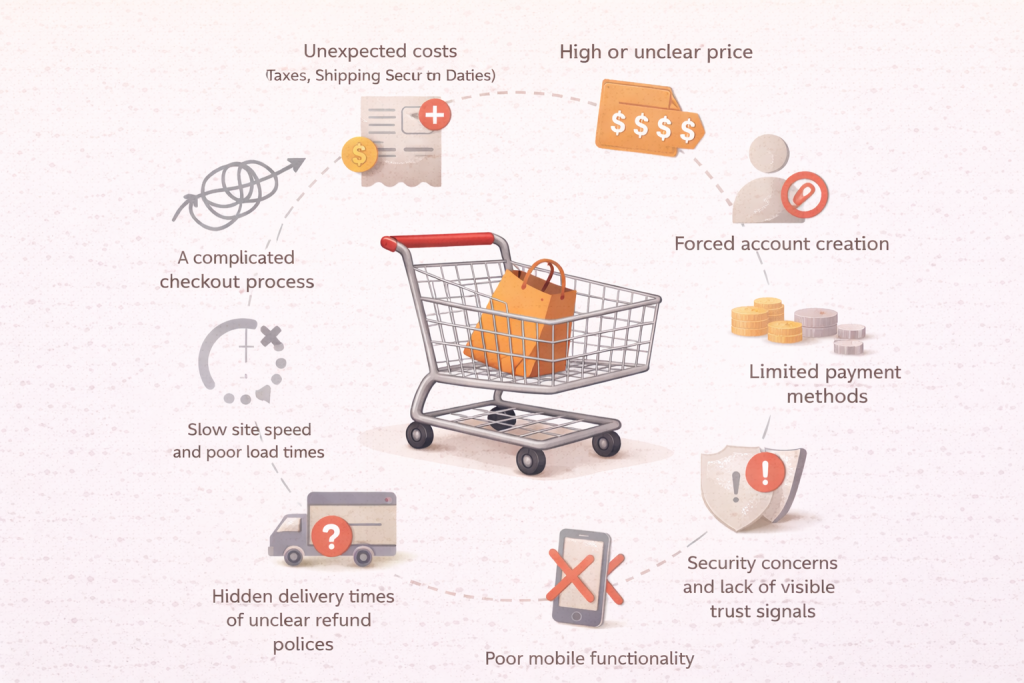
According to Baymard’s latest large-scale UX testing:
The most common reasons include:
- Unexpected costs (taxes, shipping fees, duties)
- High or unclear price
- Forced account creation
- A complicated checkout process
- Slow site speed and poor load times
- Limited payment methods
- Security concerns and lack of visible trust signals
- Poor mobile functionality
- Hidden delivery times or unclear refund policies
As our CMO notes, brands often underestimate mental strain:
“Too many decisions, too many fields, unclear next steps — that cognitive overload is what kills conversions, especially on mobile devices.”
12 proven strategies to reduce shopping cart abandonment (with sources)
1) Streamline the checkout flow (fewer steps)
Reducing steps and simplifying the checkout process lowers friction and improves conversion rates. Large-scale UX research repeatedly finds that long or multi-step checkouts contribute to abandonment, especially when shoppers feel the flow is inefficient or unclear.
2) Minimize form fields and remove non-essential inputs
A high number of form fields is a consistent driver of drop off in a complicated checkout process. Focus on the minimum data required to fulfill the order and support autofill where possible.
3) Offer guest checkout (avoid forced account creation)
Forced account creation pushes users out of the funnel. A guest checkout option reduces friction for first-time buyers and supports new customers who aren’t ready to commit.
4) Show total cost upfront (taxes, shipping, fees)
Hidden or last-minute totals—especially shipping costs, shipping fees, taxes, and other extra costs—are among the most-cited causes of abandonment. Show estimates early (PDP/cart), not only at the checkout page.
5) Provide clear delivery times and shipping expectations early
Uncertainty around delivery times creates hesitation. Clearly communicate delivery windows and costs upfront, and keep them visible throughout the checkout experience.
6) Expand payment options (digital wallets reduce friction)
Supporting multiple payment options/payment methods—including credit card, Paypal, Apple pay, and other digital wallets—reduces friction and can improve mobile completion by shortening the payment process.
7) Improve site speed and reduce load times (especially on mobile)
Poor site speed/load times correlates with lower conversions and higher abandonment. Faster experiences reduce friction throughout the customer journey on mobile devices.
8) Add trust signals near payment (SSL, security badges, returns)
At the moment of entering payment details, visible reassurance matters: ssl, security badges, easy-to-find return policy and refund policies, and support access can reduce security concerns and increase completion.
9) Use exit-intent popups for assistance (not just discounts)
Exit-intent popups can reduce abandonment when they resolve uncertainty (shipping, returns, support) or offer a small incentive. Their impact depends on relevance and not interrupting user experience.
10) Run abandoned cart email programs (timed, personalized follow-up)
A structured abandoned cart email program (multiple touches) is a standard abandoned cart recovery lever. Performance improves when emails include product context, social proof, and a clear call-to-action/ctas.
11) Add SMS recovery for high-intent shoppers
sms recovery often works well for mobile-first audiences when used with consent and tight timing. It’s especially useful for reminders and quick-return links to the cart.
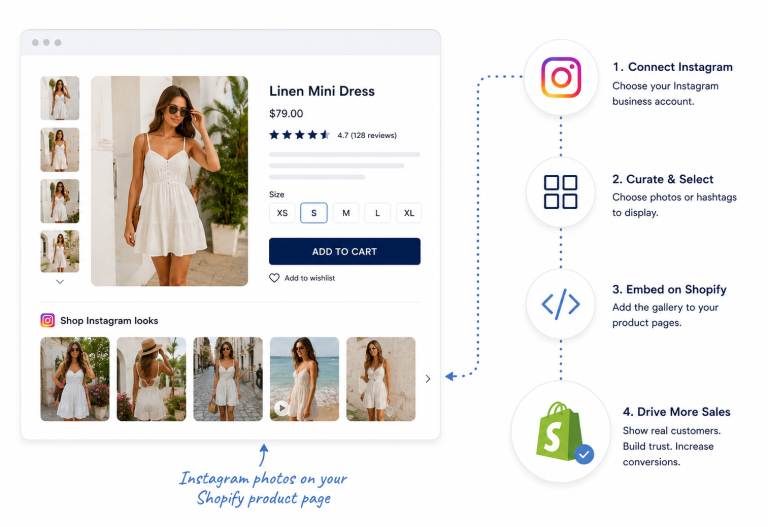
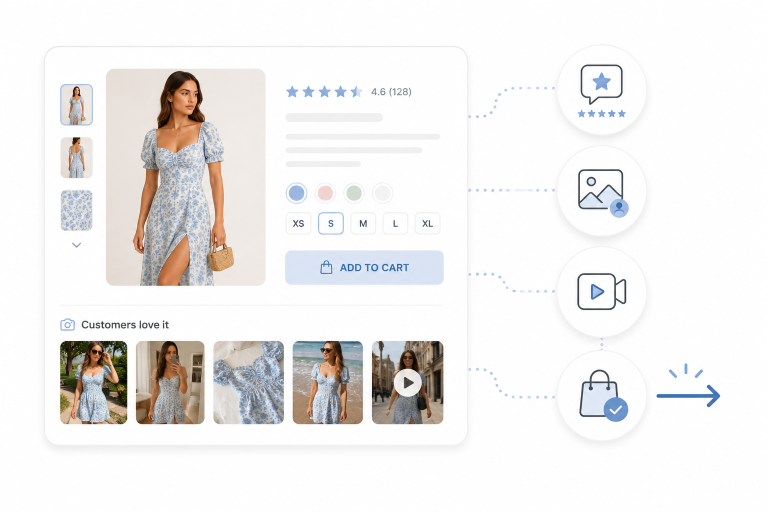
12) Strengthen PDPs with social proof + shoppable UGC (reduce doubt before checkout)
Many “checkout problems” begin on product pages. Improving PDP optimization (reviews, testimonials, Q&A, sizing, UGC) increases confidence, improves Add-to-cart rate, and can reduce later abandonment.
Tools like Foursixty support Shoppable social, UGC galleries, and email integration to drive conversion-ready traffic back to cart.
Sources for our list of 12:
- Google — Web Vitals / performance guidance: https://web.dev/vitals/
- Google — Core Web Vitals overview: https://web.dev/learn-core-web-vitals/
- Baymard Institute (PDP usability, Checkout usability, Cart abandonment)
- Optin Monster (https://optinmonster.com/what-is-exit-intent/)
- Shopify — Abandoned checkout recovery (Shopify ecosystem context): https://help.shopify.com/en/manual/orders/abandoned-checkouts
- Attentive — SMS marketing resources (opt-in and flows): https://www.attentive.com/resources
- Mailchimp — Cart abandonment automation concepts: https://mailchimp.com/resources/cart-abandonment-email/
Tools That Help Reduce Shopping Cart Abandonment
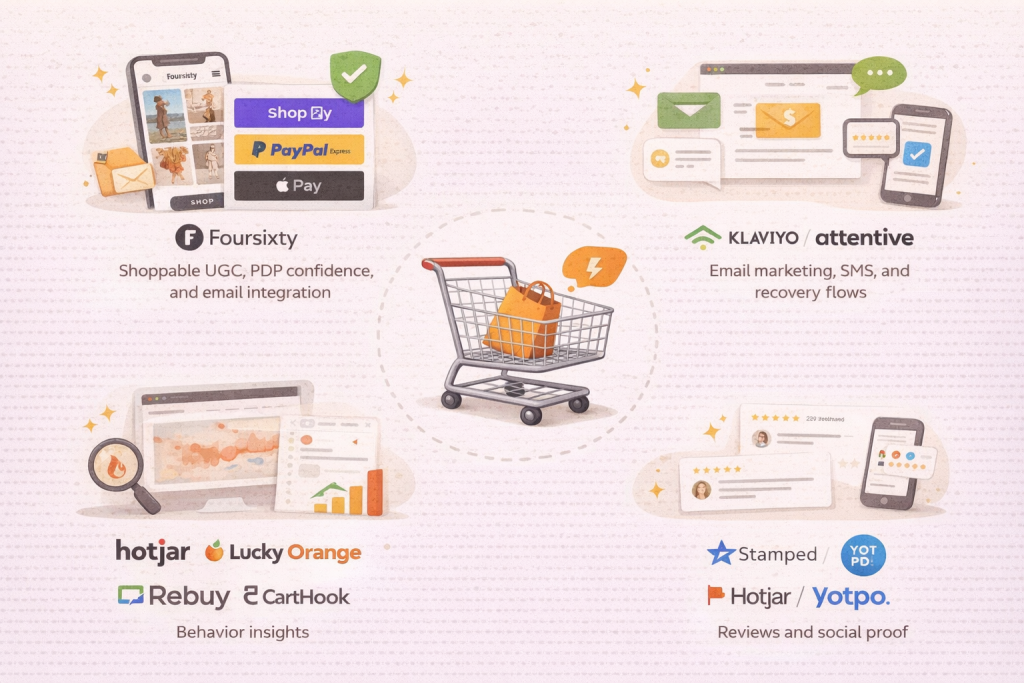
- Foursixty – Shoppable UGC, PDP confidence, and email integration
- Shop Pay, PayPal Express, Apple Pay – Accelerated checkout
- Klaviyo / Attentive – Email marketing, SMS, and recovery flows
- Rebuy, CartHook, Bold – Cart and checkout optimization
- Hotjar / Lucky Orange – Behavior insights
- Stamped / Yotpo – Reviews and social proof
Conclusion
Reducing cart abandonment in 2026 isn’t about chasing hacks. It’s about removing friction, answering doubt, and aligning PDPs, checkout, and recovery into a cohesive customer journey optimization strategy.
“The brands that win don’t shout louder — they make it easier to say yes.”
— Rashel Hariri
If you’re investing in eCommerce, Foursixty helps brands and creators turn high-performing content into conversions.
Get started with Foursixty Now!
FAQs
How to fix cart abandonment?
To fix cart abandonment, focus on reducing friction and uncertainty at key decision points in the checkout process. Start by simplifying the checkout flow, minimizing unnecessary form fields, and offering a guest checkout option so users are not forced into account creation.
Next, surface total costs upfront, including shipping costs, taxes, and any extra costs that might otherwise appear as last-minute surprises. Improving site speed, optimizing for mobile devices, and offering multiple payment options such as credit card, PayPal, Apple Pay, and other digital wallets can significantly improve completion.
Finally, implement abandoned cart recovery through timely abandoned cart email, cart recovery emails, and sms follow-ups to recover high-intent shoppers who were interrupted rather than uninterested.
How to stop people from stealing shopping carts?
Most “shopping cart stealing” isn’t malicious — it’s a symptom of poor user experience or unresolved doubt. Shoppers abandon carts when they encounter unexpected costs, unclear delivery times, or security concerns during the payment process.
To prevent this behavior, build trust at checkout with visible security badges, SSL, clear return policy and refund policies, and reassurance near the call-to-action. Reducing friction and increasing clarity turns hesitation into confidence and reduces cart drop off.
Which of the following strategies is most effective for reducing shopping cart abandonment?
There is no single silver bullet, but the most effective strategy is reducing cognitive load during checkout. Research consistently shows that a complicated checkout process, forced account creation, and hidden fees drive abandonment more than product dissatisfaction.
In practice, the highest impact improvements tend to be:
- Streamlining the checkout experience
- Showing total price and shipping fees upfront
- Expanding payment methods
- Strengthening PDP confidence with social proof, testimonials, and UGC
Together, these changes improve conversion rates and reduce the overall shopping cart abandonment rate.
How to stop abandoned checkouts?
Abandoned checkouts are often caused by interruption rather than rejection — especially on mobile devices. To stop them, combine UX improvements with recovery tactics.
On-site, optimize site speed, remove friction from the checkout page, and ensure the experience works seamlessly across devices. Off-site, use email marketing, abandoned cart email, sms, and notifications to re-engage shoppers quickly.
Retargeting across social media and shoppable social formats also helps bring users back into the funnel by reminding them of the value they saw earlier.
How can we effectively reduce cart abandonment rate?
To reduce your cart abandonment rate, focus on consistency across the customer journey. Ensure that what users see on product pages matches what they experience at checkout — especially around pricing, shipping, and delivery expectations.
Strong PDP optimization, clear CTAs, fast load times, flexible payment options, and transparent policies all reduce exits. For new customers, limited-time incentives or first-purchase offers can help, but clarity and confidence typically outperform discounts alone.
What are the best practices to reduce cart abandonment rates on an ecommerce store?
Best practices include:
- Offering guest checkout
- Reducing form fields
- Showing total costs upfront
- Supporting multiple payment methods
- Displaying security badges and trust signals
- Optimizing checkout for mobile devices
- Sending timely cart recovery emails
- Using a/b testing to continuously improve
These practices are foundational for any modern ecommerce store or ecommerce platform.
How to reduce cart abandonment without hurting user experience?
The key is to remove friction, not add pressure. Avoid aggressive popups, misleading urgency, or overusing discount codes. Instead, focus on clarity, speed, and reassurance.
Improving functionality, simplifying the checkout process, and using helpful exit-intent popups that answer questions (instead of pushing offers) can reduce abandonment while preserving a positive customer experience.
What is SMS customer service?
SMS customer service uses text messaging to support customers with order updates, checkout reminders, and recovery messages. In ecommerce, it’s commonly used for abandoned cart recovery, shipping notifications, and customer support follow-up.
When used with consent, SMS can complement email campaigns and improve response rates, especially for mobile-first shoppers.
How do I calculate the shopping cart abandonment rate?
Use this formula:
Shopping Cart Abandonment Rate = (Carts Created − Completed Purchases) ÷ Carts Created × 100
This calculation shows what percentage of potential purchases resulted in abandonment and helps track improvements over time.
Should I always offer discounts in abandoned cart recovery campaigns?
No. While discounts can help in some cases, overusing them can train shoppers to wait for incentives and hurt long-term margins.
Often, reminding shoppers of product benefits, adding social proof, clarifying shipping or returns, or improving trust signals is enough to recover the sale without discounting.
What are some proven methods to decrease shopping cart abandonment?
Proven methods include:
- Improving PDP conversion rate with reviews and UGC
- Streamlining checkout
- Expanding payment options
- Improving site speed
- Sending targeted abandoned cart email
- Using retargeting and marketing campaigns
- Testing checkout changes with a/b testing
What tools or plugins can help reduce shopping cart abandonment?
Popular tools include:
- Foursixty for shoppable UGC, PDP confidence, and email integration
- Shop Pay, PayPal Express, Apple Pay for fast checkout
- Klaviyo or Attentive for email marketing and SMS recovery
- Rebuy, CartHook, or Bold for cart optimization
- Hotjar or Lucky Orange for behavior insights
- Stamped or Yotpo for reviews and social proof
(Some of these images were generated using ChatGPT.com)