Quick summary: UGC ecommerce is the strategic use of customer-created content—reviews, photos, videos, social posts, testimonials, and other real-life product experiences—to help shoppers evaluate products, build trust, and make more confident purchase decisions. For modern ecommerce brands, UGC is no longer just a social media asset or an optional brand awareness tactic. It has become conversion content: a practical layer of PDP content, homepage proof, email engagement, shoppable content, and social shopping infrastructure that can materially influence add-to-cart rate, product page conversion rate, and revenue. The strongest UGC strategy does not simply “collect content.” It places the right authentic content at the exact moments where doubt appears in the customer journey.
For years, ecommerce marketing was built around the brand controlling the message. Product pages were carefully art-directed. Campaign imagery was polished. Copy was written to make the product sound as compelling as possible. That model still matters, but it increasingly fails when it is the only lens shoppers are given. Consumers are more skeptical, more comparison-driven, and more accustomed to checking what real people say before they buy. They expect high-quality merchandising, but they also want proof that the product works outside the studio, on real bodies, in real homes, and in real customer experiences.
That is where user-generated content changes the shape of ecommerce. UGC adds what traditional branded content often cannot: social proof, relatability, and evidence of actual use. A professional product photo tells a shopper what the brand wants them to see. A customer photo, unboxing video, or post-purchase testimonial helps them imagine what ownership will feel like. That distinction is small on the surface, but commercially it matters. It can shorten the path between interest and confidence, and confidence is what tends to drive conversions.
The practical question for ecommerce leaders is no longer whether UGC marketing belongs in the tech stack. It does. The harder question is how to use it as a system: how to collect it responsibly, moderate it intelligently, distribute it across marketing channels, tie it to product discovery, and measure the ROI of shoppable content rather than treating it like a vanity engagement metric. This article explains how that system works, where UGC fits in the customer journey, what brands that use UGC are doing well, and how ecommerce businesses can build a UGC strategy that improves trust without losing control of brand standards.
What Is UGC in Ecommerce?
UGC in ecommerce refers to content created by customers, creators, fans, or community members rather than the brand itself. In practice, this includes customer reviews, star ratings, Q&A content, customer photos, before-and-after visuals, testimonials, unboxing videos, TikTok clips, Instagram mentions, branded hashtag posts, and real-life product demonstrations. It can appear on social media platforms, within an online store, inside email campaigns, in shoppable ads, or directly on product pages. When used well, UGC becomes an extension of ecommerce merchandising rather than a separate content marketing initiative.
The difference between branded content and UGC is not simply who created it. It is the role the content plays in a buyer’s mind. Branded content is designed to shape perception. UGC helps validate perception. A campaign photo may establish that a dress feels premium; a series of customer photos shows how that dress fits different body types, how it moves in real settings, and whether buyers are actually styling it the way the brand suggests. That movement from promise to proof is why using UGC can support purchase decisions so effectively.
This distinction also explains why UGC belongs in PDP optimization. Product detail pages are where interest becomes evaluation. At that point, shoppers are asking highly practical questions: Will this fit? Is the material substantial? Does the color look the same in normal lighting? Are other customers happy after purchase? Static PDP content often answers the first layer of those questions, but authentic customer content answers the emotional layer. It gives potential buyers permission to trust the product.
Common Types of Ecommerce UGC
The most common types of UGC serve different functions across the funnel:
- Product reviews provide structured feedback and often become the first trust signal a shopper looks for.
- Customer photos show products in real-life contexts, reducing the gap between polished merchandising and lived experience.
- Unboxing videos help shoppers understand packaging, product scale, quality cues, and the emotional experience of receiving the item.
- Social media mentions and shoppable posts connect brand discovery on social channels with on-site product discovery.
- Testimonials offer focused stories of outcomes, especially valuable for high-consideration products.
- Q&A content addresses objections in the language customers actually use.
- Before-and-after images can be powerful in beauty, skincare, home organization, fitness, and other transformation-oriented categories, provided they are presented responsibly and compliantly.
The strategic value of these formats depends on placement. A glowing testimonial buried in a footer will not do the same work as a short review next to size selection or a relevant customer gallery beside the “Add to Cart” button. UGC is most commercially useful when it responds to a decision barrier at the moment that barrier appears.
Why UGC Matters for Ecommerce Brands
UGC matters because ecommerce is a trust problem disguised as a traffic problem. Many brands spend heavily on paid social, search engines, influencer marketing, and content marketing to bring qualified visitors into the store, only to lose them when the on-site experience does not provide enough confidence to act. That gap is especially visible in visually driven categories like apparel, beauty, accessories, and home decor, where shoppers are not just buying specifications. They are buying imagined outcomes. User-generated content helps them see whether those outcomes feel believable.
The strongest ecommerce marketing strategy treats UGC as a conversion layer. It is not simply “more content.” It is content that lowers perceived risk, enriches context, and makes social discovery actionable. Done well, it can support brand awareness at the top of the funnel, product evaluation in the middle, and post-purchase advocacy after the sale. Done poorly, it can look generic, over-curated, legally careless, or disconnected from the specific product a shopper is considering.
Builds Trust and Social Proof
UGC helps build trust because it shows that the brand exists in the lives of real customers. Shoppers understand that brands will make strong claims about themselves; they place different weight on authentic customer photos, customer reviews, and testimonials because those assets feel less controlled. The Federal Trade Commission has repeatedly emphasized that endorsements and reviews must be truthful and not misleading, which reinforces a core principle for UGC marketing: the trust value comes from authenticity, not manipulation.
This is why brands should resist the temptation to over-edit customer submissions until they become indistinguishable from branded content. A little moderation is necessary. Low-quality imagery, irrelevant posts, and content that creates brand safety concerns should not be published indiscriminately. But if every customer photo is polished to look like a studio campaign, it stops performing the psychological function UGC was meant to serve. It no longer feels relatable.
Helps Shoppers Visualize Products
Visualization is one of UGC’s most important roles. Product photos can be technically excellent while still failing to answer how an item will look in the customer’s life. Fashion shoppers want to see outfits styled beyond the hero image. Home decor shoppers want to see scale and room placement. Beauty shoppers want to see usage, texture, and progression. Fitness shoppers may respond more strongly to transformation videos than a manufacturer’s feature list.
This is why customer content often works as decision support rather than just inspiration. The shopper is not merely entertained by a video or photo. They are reducing uncertainty. Real-life usage helps them translate the product from abstract inventory into a personally relevant purchase. That is a powerful bridge between browsing and buying.
Supports Purchase Decisions
UGC influences purchase decisions because it often answers the “Should I believe this?” question more convincingly than the brand can alone. Customer reviews can validate durability, sizing, comfort, scent, ease of use, or performance. Social content can show whether the product resonates with the customer base the shopper identifies with. Testimonials can create emotional credibility where product specs fall short.
This is also where influencer content and UGC should be distinguished. Influencer marketing can be excellent for reach, authority transfer, and trend creation. But influencer content is not automatically equivalent to UGC. A paid creator with a polished brief may introduce the product, while an authentic customer who purchased it and shares a candid experience may validate it. Strong brands use both, but they do not confuse the function of each type of content.
Improves Product Page Depth
Product pages are often overloaded with claims yet underdeveloped in proof. PDP optimization tends to focus on page speed, pricing clarity, reviews, shipping information, product comparison, and CTA placement. Those are essential. But PDP content should also help potential customers imagine ownership. A shoppable gallery of relevant customer photos, short customer videos, or social posts tagged to the specific SKU can add depth without creating more explanatory text.
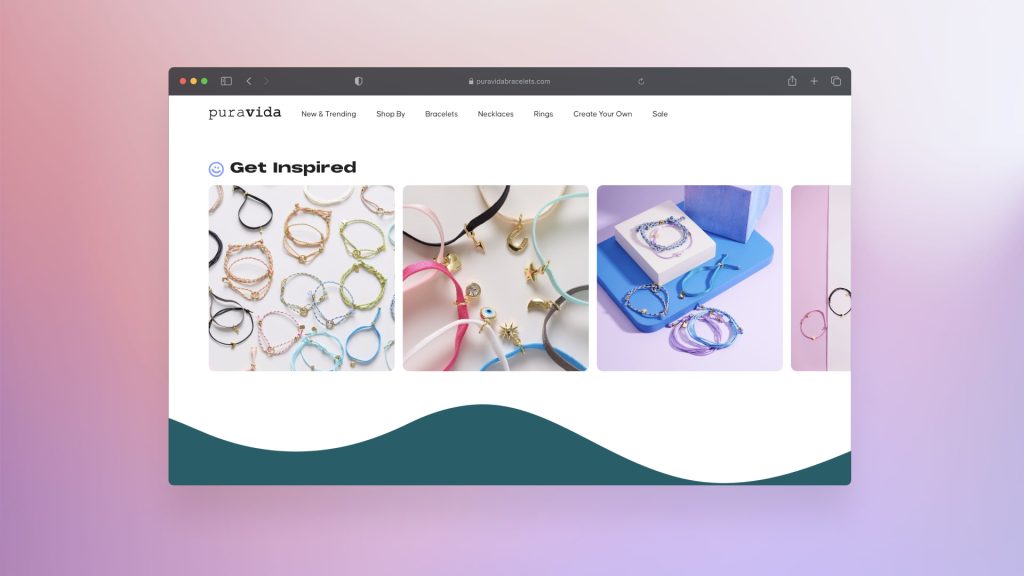
Foursixty’s Pura Vida case study illustrates the commercial importance of this approach. Pura Vida used Foursixty to display shoppable Instagram galleries across its homepage, product pages, email campaigns, and Shop App presence. The brand saw 18.2% click-through among users who interacted with the shoppable photos, a 73% increase in page views, a 34% lower bounce rate, and 17% of online revenue generated through Foursixty engagement. The critical lesson is not merely that “UGC worked.” It is that product-relevant, shoppable social content placed throughout the journey created more meaningful engagement and more direct paths to the point of sale.
Encourages Community and Brand Advocacy
UGC also matters after conversion. When customers see their own content reposted, featured, or incorporated into the ecommerce store, it can strengthen brand affinity. Branded hashtag campaigns create a feedback loop: the brand invites participation, customers contribute content, that customer content inspires others, and the store gains a growing library of authentic creative assets. This is why UGC campaigns can support both retention and acquisition.
However, community only grows when the brand treats contributors with respect. Reposting without permission, failing to credit creators when appropriate, or using customer content in marketing campaigns without a clear rights process can erode the very trust the brand is trying to build. Compliance and community are not separate concerns. They are part of the same trust system.
UGC Ecommerce Examples
The most persuasive UGC examples are not simply brands placing social media posts on a webpage. They are examples of content aligned with a customer question and connected to an action. The content helps the shopper move forward. The commerce layer makes that forward motion easy.
Fashion Brands Using Customer Outfit Photos
Fashion is one of the clearest use cases for user-generated content because fit, styling, confidence, and identity all influence purchase decisions. A fashion PDP can describe fabric composition and model measurements, but customer photos show what the product looks like in different environments, on different people, and as part of a complete outfit. This is why shoppable social and shoppable posts are especially potent in apparel.

Frankies Bikinis is a strong example. The brand placed high-performing UGC and Instagram content in prominent locations across its ecommerce store, including homepage galleries, a full-page Instashop, and product-specific galleries. According to the case study:
19% of total orders and over 23% of online revenue were driven through Foursixty.
The real learning is that Frankies did not isolate Instagram monetization to the Instagram app itself. It brought the energy of social discovery into the online store, where the brand controlled the path to conversion.
Beauty Brands Using Before-and-After Images
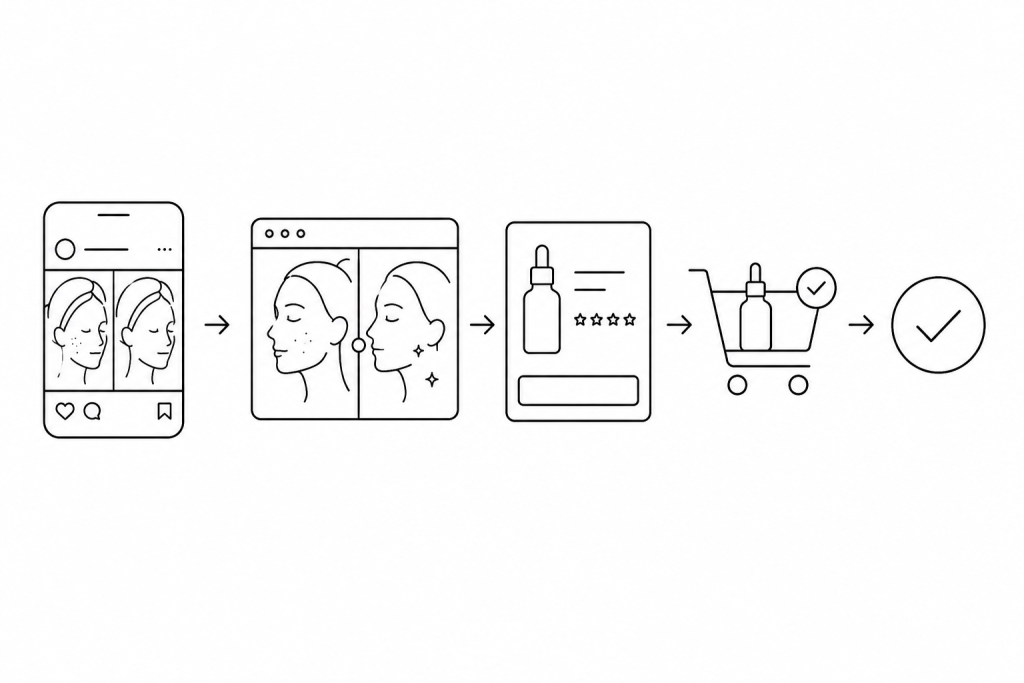
Beauty and skincare brands often use UGC to help shoppers assess outcomes that are difficult to communicate through copy alone. Before-and-after images, tutorial clips, routine videos, and customer reviews can show texture, application, consistency, and time-based expectations. These formats are especially important where the customer is buying a promise of improvement and needs to evaluate whether that promise feels realistic.
The tradeoff is that beauty UGC must be managed carefully. Before-and-after content can be highly persuasive, but it can also create compliance concerns if it implies typical results without adequate context or drifts into unsupported claims. The FTC’s guidance on endorsements and reviews is relevant here: authenticity does not exempt a brand from truthfulness obligations.
Home Decor Brands Using Real Room Placements
Home decor shoppers struggle with scale, proportion, texture, and how items coordinate with what they already own. Customer photos of furniture in real rooms, rugs in varied lighting, or shelf styling in homes with different aesthetics can outperform highly controlled product photography for one reason: they help consumers mentally place the item. This is especially useful when the product is visually distinctive but not self-explanatory.
A home decor UGC strategy should not simply aggregate every tagged post. It should segment content by room type, style, and product family. A shopper considering a brass lamp for a bedroom should not need to scroll through fifty unrelated kitchen images. Relevance is what turns UGC from inspiration into conversion content.
Fitness Brands Featuring Customer Transformation Videos

Fitness ecommerce often benefits from long-form customer experiences: transformation videos, workout clips, progress updates, and authentic customer stories. These formats work because they help bridge skepticism. A customer may distrust aggressive branded claims, but they may pause for a real-life story of consistent use and visible improvement. The content does not need to guarantee identical results; it needs to make the product feel credible and meaningful.
For fitness equipment, apparel, and wellness-adjacent products, testimonials can also reduce objections around durability, comfort, and routine fit. A 20-second clip showing a product used every morning may do more for purchase confidence than a paragraph of brand copy. That is the core value of UGC marketing: it demonstrates lived utility.
Consumer Electronics Stores Using User Reviews and Q&A
Electronics shoppers often rely on detailed reviews, Q&A, setup tutorials, and unboxing videos because product complexity creates uncertainty. A branded specification table is useful, but customer questions often reveal the practical concerns that matter most: compatibility, battery life, learning curve, maintenance, shipping condition, and support responsiveness. Good ecommerce brands treat these questions as a source of product education, not as a nuisance.
This is where AI for PDPs may become useful, provided it is used as an assistive layer rather than a substitute for real customer insight. AI can help summarize recurring themes from large review sets, identify common objections, surface relevant Q&A, and organize UGC by product use case. What it should not do is fabricate customer experiences or generate fake social proof. The trust asset only works when it remains grounded in genuine customer content. That doesn’t mean that AI isn’t being used on PDPs or in UGC; but you don’t want to sully your brand by producing AI slop out with AI.
Where to Use UGC in an Ecommerce Store
UGC is most effective when it is distributed with intent. A common mistake is treating it as a gallery that sits in one part of the site and expecting it to influence the entire funnel. In reality, the value of UGC depends heavily on context. The same customer video may work as homepage inspiration, PDP reassurance, and email re-engagement, but it should be framed differently in each location.
Product Pages
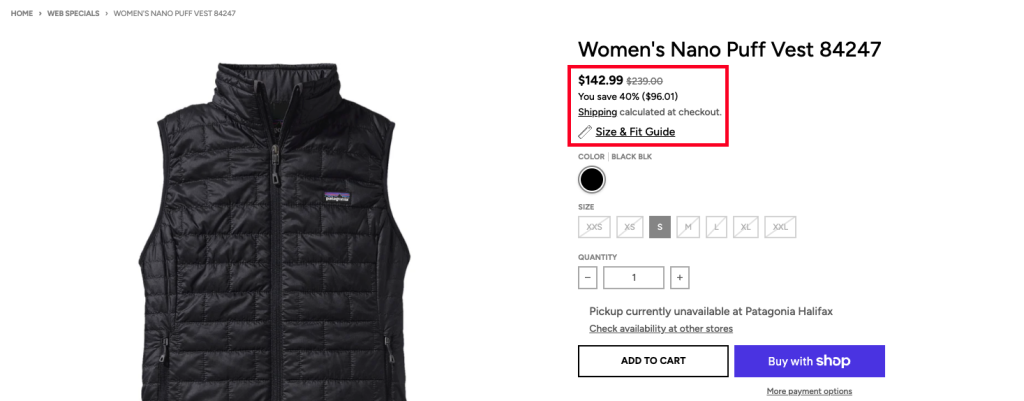
Product pages are the most important UGC placement for many ecommerce brands. This is where the buyer has moved beyond vague interest and is actively evaluating whether to purchase. Product-specific galleries, customer photos matched to the SKU, verified reviews, and short videos showing the item in use can help reduce hesitation. When these assets are close to price, variant selection, sizing, shipping, or add-to-cart controls, they support conversion rather than sitting as passive decoration.

MICHI’s experience with Foursixty is instructive. The brand wanted shoppable Instagram and user-generated content that matched its innovation-focused positioning, and Foursixty helped implement one of its most advanced integrations in half a day. Within the first 30 days, the brand generated a 51x ROI relative to the competing platform it had previously used. The broader strategic lesson is that a UGC tool is not valuable because it exists; it is valuable when it is integrated deeply enough into the merchandising journey to alter performance.
Homepage
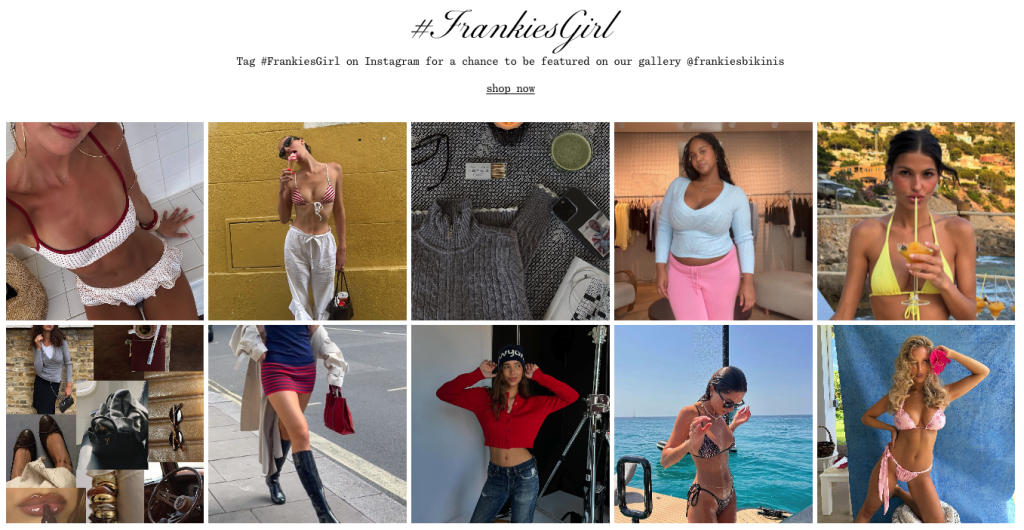
The homepage is not usually where final purchase decisions happen, but it is where first impressions are shaped. UGC on the homepage can communicate that the brand has a real customer base, an active community, and products that live beyond the studio. For fashion and lifestyle retailers, a well-curated homepage gallery can make the brand feel current, social, and culturally alive.
The danger is overloading the homepage with content that does not guide the visitor anywhere. Social content should not be a dead-end mosaic. It should be shoppable, linked to relevant collections or products, and aligned with the current merchandising focus. Otherwise, the gallery creates engagement without direction.
Category Pages
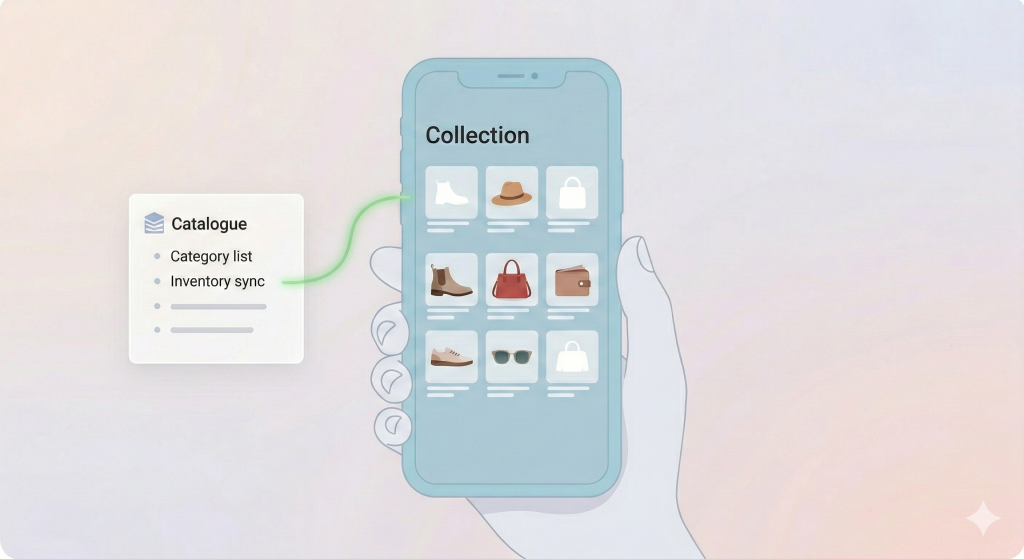
Category pages are often underused for UGC. Yet these pages serve shoppers who are still comparing options, which makes them ideal for lifestyle context. A category page for dresses, skincare routines, or outdoor furniture can benefit from customer photos and videos that show the breadth of use cases within that assortment. This helps visitors choose where to click next.
The key is not to interrupt product discovery. UGC on category pages should enrich browsing, not dominate it. It works best as a curated layer that helps define the category in human terms while preserving scanning efficiency.
Landing Pages
Campaign landing pages often rely heavily on branded creative because the brand wants message control. That instinct is understandable, but it can make the page feel promotional without enough proof. Adding UGC near claim-heavy sections can increase credibility, especially when the campaign promise depends on customer outcomes or community enthusiasm.
For example, a landing page for a seasonal drop might include a hero banner, campaign copy, and then a shoppable customer lookbook showing early buyers or creators styling the items. The branded message creates desire. The UGC makes that desire feel socially validated. Both are necessary.
Email Campaigns
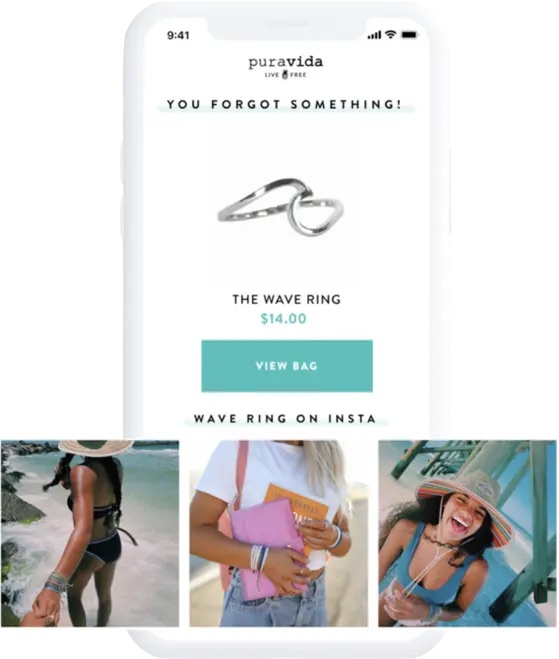
UGC in email campaigns can increase the usefulness of messages that might otherwise feel repetitive. Instead of yet another “shop now” grid, a retailer can feature customer photos, social posts, reviews, or real-life use cases tied to specific products. Pura Vida used dynamic email galleries through Foursixty to incorporate shoppable Instagram and user-generated content into campaigns and newsletters, making the email experience feel more connected to the social content customers were already responding to.
This also creates an effective repurpose loop. A strong customer post can appear in social, on-site, and in lifecycle marketing, provided the brand has permission and the context remains appropriate. That is a much more efficient content model than treating each channel as if it needs an entirely separate creative pipeline.
Social Ads
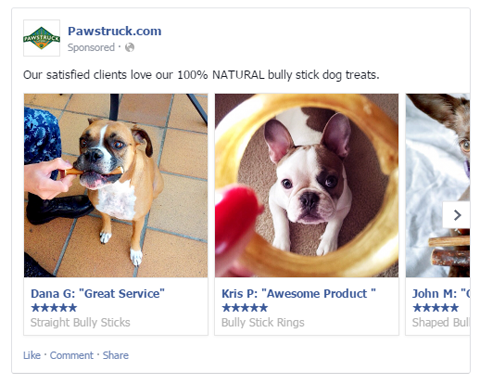
Shoppable ads and paid social campaigns often benefit from UGC because they inherit the visual language of the feed. A polished ad can stand out, but it can also trigger ad avoidance. UGC-style creative can feel more native to TikTok, Instagram Reels, and other social media environments, especially when it resembles tutorials, product discovery, or authentic customer storytelling rather than formal brand advertising.
The strongest paid teams do not choose between UGC and branded creative as a matter of taste. They test formats against objectives. UGC may earn attention and click-through rates; branded creative may provide clarity and authority; hybrid formats may deliver both. The important thing is to evaluate performance at the level of creative type, audience, and downstream conversion, not only top-of-funnel metrics.
Checkout or Post-Purchase Flows
UGC can also appear after the PDP. At checkout, restraint is required; this is not the place to distract a buyer with endless social content. But subtle trust signals, such as review snippets or a compact reassurance module for high-consideration products, can reduce last-minute doubt. In post-purchase flows, UGC collection becomes more important. Email and SMS follow-ups can request reviews, customer photos, or video submissions while the experience is still fresh.
This is where UGC strategy becomes cyclical. The order creates an experience. The experience creates customer content. The content supports future purchase decisions. The brand then turns that content into a compounding asset across the ecommerce store.
How to Collect UGC for Ecommerce
Collecting UGC is often treated as a creative challenge, but operationally it is a systems challenge. Brands need repeatable moments, clear prompts, permission processes, and incentives that do not compromise authenticity. A few customers will post organically without being asked. A scalable UGC program cannot rely on that alone.
Request Reviews After Purchase
Post-purchase review requests remain one of the most reliable UGC collection methods because they arrive after a real transaction. Timing matters. Asking for a review before the product has reasonably been used produces shallow feedback. Waiting too long reduces response rates and emotional recall. The best sequence reflects the product category: a fashion item may be reviewable shortly after delivery, while a skincare product or fitness item may need a longer usage window.
Review requests should also be specific. A generic “Leave us a review” prompt is less useful than asking what the customer liked, how they used the product, whether the fit met expectations, or whether they would upload a photo or video. Specificity improves the quality of customer content, which makes it more useful for future buyers.
Create Branded Hashtag Campaigns
A branded hashtag campaign can help organize social content and give customers a simple way to participate. It also creates discoverability across social channels. But hashtags are not magic. A branded hashtag only works if the customer has a reason to use it and if the brand actively incorporates resulting content into its marketing campaigns, reposting strategy, or on-site galleries.
Hashtag initiatives are especially effective for brands with visually expressive products or communities that naturally want to be seen: fashion, beauty, travel accessories, home decor, baby products, and lifestyle categories. The hashtag should feel like participation in a brand culture, not a compliance requirement attached to a discount.
Incentivize Customer Submissions Responsibly
Incentives can increase submission volume, but they must be handled transparently. A retailer might offer loyalty points, entry into a draw, or a modest discount for submitting customer photos or product reviews. The commercial logic is clear: more content gives the brand a stronger library of authentic customer experiences. However, incentives should never be used to purchase falsely positive reviews or suppress negative feedback. FTC guidance on reviews and endorsements makes that distinction important.
From a strategy standpoint, the best incentives reward participation, not praise. Ask customers to share honest feedback, not glowing feedback. That preserves trust signals. It also creates better internal learning for the product and merchandising teams.
Use Post-Purchase Email and SMS Flows
Email and SMS follow-ups are the workhorses of scalable UGC collection. They can be automated, segmented by purchase type, and tied to specific time delays. A shoe brand may request a review after delivery and a styling photo a week later. A cookware brand may ask for recipe photos after enough time has passed for actual use. These follow-ups should feel like a continuation of the customer experience, not a sudden demand for free creative assets.
This is also where copy quality matters. A message that says, “Show us how you styled it” will often produce richer content than “Submit UGC.” Customers do not think in industry acronyms. They think in stories, pride, and participation.
Ask for Photo and Video Reviews
Text reviews are essential, but photo and video submissions often carry a different level of persuasive power. They help potential buyers understand scale, texture, movement, packaging, and context. For brands selling products where appearance and use strongly influence purchase decisions, this content can be especially valuable. It is not a replacement for product reviews; it is a complementary proof format.
To improve submission quality, brands should provide light guidance without scripting the customer into sounding fake. Suggest showing the product in use, filming in natural lighting, or mentioning a specific detail they appreciated. Do not over-direct. Relatable, authentic customer content is usually more valuable than a perfectly staged clip.
Get Permission Before Reusing Customer Content
Permission is not a bureaucratic afterthought. It is part of the trust architecture. A customer posting a photo with a branded hashtag does not automatically mean the brand can reuse it in ads, on product pages, or in email campaigns. Brands should use clear rights requests and maintain records of content usage permissions, especially when UGC will be repurposed beyond a simple social repost. Foursixty, for example, positions rights management for UGC reuse as part of its shoppable Instagram offering.
This is one of the reasons purpose-built UGC platforms can matter. Manual rights tracking in spreadsheets becomes fragile as volume grows. A brand with a serious UGC program needs workflow discipline, not just enthusiasm.
Best Practices for Using UGC in Ecommerce
The best UGC programs create a sense of authenticity without surrendering merchandising clarity. That balance is important. Publish everything and the site can feel messy. Over-curate everything and the content loses the realism that made it persuasive in the first place. Good UGC strategy sits between those extremes.
- First, display authentic and relevant content. Relevance matters as much as authenticity. A customer photo of a bestselling jacket may be strong UGC, but it should not appear on a PDP for an unrelated dress simply because the image performs well on social media. Matching UGC to the right product, category, or use case is what turns it into conversion content.
- Second, avoid over-editing customer submissions. Cropping for layout is one thing; transforming a customer photo until it reads like branded content is another. The goal is not aesthetic perfection. The goal is credible proof. Consumers trust content that feels grounded in real people and real-life use.
- Third, moderate for quality and brand safety. Not every tag, mention, or customer image belongs on the ecommerce store. Brands should remove irrelevant content, low-resolution uploads, offensive material, competitor confusion, and submissions that create legal or reputational risk. The moderation standard should protect the customer journey, not sterilize it.
- Fourth, add UGC near conversion points. The homepage may set the mood, but the PDP often decides the outcome. Product galleries, review summaries, social proof modules, and shoppable video placements should appear where shoppers are assessing risk. This is why many CRO checklist for ecommerce managers now include UGC placement as part of conversion review, alongside price clarity, shipping visibility, page speed, trust badges, and CTA hierarchy.
- Fifth, segment UGC by product type or use case. A beauty brand may organize content by skin concern. A fashion retailer may categorize customer photos by fit, style, or occasion. A consumer electronics store may sort content into setup tutorials, everyday use, and comparison questions. Organization reduces cognitive load and helps shoppers find proof that matches their own situation.
Finally, label incentives clearly where relevant and respect image rights and permissions. This is not only a compliance issue; it directly affects trust. When brands blur the line between authentic customer content, influencer content, and incentivized submissions, they weaken the credibility of the entire system.
UGC Ecommerce Strategy: A Step-by-Step Framework
A strong UGC strategy starts with the business problem, not the content format. The wrong opening question is, “Should we add a gallery?” The better question is, “Where are shoppers losing confidence, and what form of customer proof would help?” That framing moves UGC from a decorative tactic to a measurable commercial system.
Step 1: Define Your Goal
The first goal might be to increase trust on a high-traffic PDP, improve conversion rates on a product line with strong views but weak add-to-cart rate, support social proof for new products, or build community around a branded hashtag. Each goal implies a different content mix. Product reviews and Q&A may be best for technical products. Customer photos and shoppable posts may be more persuasive for fashion. Tutorials and unboxing videos may matter for electronics or beauty.
The more precise the goal, the easier it becomes to measure whether the UGC program is working. “Get more UGC” is not a meaningful objective. “Increase product page conversion rate for our top ten paid-traffic landing products by improving trust signals with product-matched customer content” is much closer to an executable ecommerce strategy.
Step 2: Choose the Right UGC Types
Different types of UGC solve different problems. Reviews help reduce quality uncertainty. Videos help demonstrate usage. Customer photos help visualize fit and context. Q&A reduces friction around practical details. Influencer content may help launch new products or drive social discovery, while authentic customer content often performs the heavier trust-building work near conversion.
This is also where brands should consider formats across social channels. Instagram monetization and TikTok monetization have pushed retailers to think beyond static posts toward product-tagged video, shoppable content, and social shopping experiences. Shopify’s Instagram Shopping documentation explains how merchants can tag products in posts and stories through the Facebook and Instagram by Meta channel.
Step 3: Create a Collection Process
Collection should be automated where possible and human where necessary. Post-purchase flows can handle review requests and customer photo prompts. Social listening can identify organic mentions. Branded hashtag monitoring can surface candidate posts. UGC platforms can help with rights requests, organization, and publishing workflows. The process should be designed to grow with the customer base rather than requiring a marketing manager to manually chase every submission.
A new ecommerce store without a big audience can still start. It may begin with post-purchase review collection, creator seeding, founder-led outreach to early customers, and requesting simple photo feedback from satisfied buyers. The store does not need thousands of submissions to see value. It needs relevant, credible proof on the pages where shoppers currently hesitate.
Step 4: Moderate and Organize Content
Moderation is not merely a brand safety task. It is a merchandising task. A photo can be authentic and still not be helpful. A video can be visually engaging and still fail to clarify the product. The best teams evaluate content based on its ability to assist the customer journey: Does it answer a question? Does it reduce doubt? Does it show a useful context? Does it fit the SKU or category?
Organizing UGC into product-level, category-level, and campaign-level libraries also improves repurposing. A customer photo used on a PDP may later support a holiday email, a retargeting ad, or a social repost. A central content library makes that reuse intentional rather than opportunistic.
Step 5: Publish UGC Across Key Store Pages
Publishing should follow customer logic. Shoppable content belongs where the shopper can act. Product-matched UGC belongs on product pages. Broader lifestyle content belongs on homepages, category pages, and campaign landing pages. Reviews and Q&A should sit where they are easy to find and scan. The same store can use multiple placements, but each one should have a job.
This is where Foursixty has built its position in shoppable social and on-site UGC. Rather than treating Instagram and TikTok as traffic sources only, the platform helps ecommerce brands embed product-tagged social content, shoppable galleries, and UGC experiences directly within the store. That gives brands more control over the conversion path while preserving the visual and cultural energy of social media. https://www.foursixty.com/landing/features/instagram/ https://foursixty.com/landing/features/tiktok/
Step 6: Measure Performance
Measurement is where UGC becomes a business function rather than a creative experiment. Brands should monitor product page engagement, conversion rate changes, add-to-cart rate, click-through rates from shoppable galleries, review volume, photo and video submission rates, social shares, and revenue influenced by UGC placements. The best analytics setups distinguish between exposure and interaction. A shopper who saw a gallery is different from a shopper who clicked a gallery, opened a product tag, and later purchased.
This distinction matters when evaluating the ROI of shoppable content. If a brand only measures last-click sales, it may understate UGC’s contribution to decision confidence. If it credits all exposed sessions equally, it may overstate impact. Thoughtful attribution should consider assisted influence, direct clicks, product interactions, and downstream conversion behavior.
How to Measure UGC Performance
UGC metrics should be connected to the commercial role of the content. A retailer using UGC to deepen PDP trust should not judge success primarily by likes or social reach. It should care about the difference in engagement and conversion behavior between shoppers who interact with UGC and those who do not. Similarly, a brand using UGC in email campaigns should evaluate click-through rates, conversion rates, and revenue per recipient, not just opens.
Useful measurement categories include:
- Product page engagement: time on page, gallery interactions, video plays, scroll depth, and product-tag clicks.
- Conversion behavior: add-to-cart rate, product page conversion rate, checkout starts, and revenue influenced by UGC interaction.
- Collection health: review volume, photo/video submission rate, rights approval rate, and submission quality.
- Channel impact: email clicks, social repost engagement, paid creative performance, and shoppable ads efficiency.
- Merchandising insight: which products attract the most authentic customer content, which content formats drive action, and which objections repeatedly surface in product reviews.
UGC Ecommerce Tools and Platforms
The UGC technology landscape includes review collection tools, social content aggregators, shoppable UGC platforms, visual gallery systems, rights management tools, and interactive video platforms. The right choice depends on the job the brand needs done. A business focused primarily on gathering product reviews may choose one category of tool. A retailer trying to transform Instagram and TikTok content into revenue-generating on-site experiences needs something different. A brand running enterprise-scale creator programs may need stronger workflow controls and permissions management.
This is where commercial search terms such as Foursixty Alternatives, Yotpo, and “best UGC platform” become common. The comparison should not be reduced to pricing alone, even though pricing matters. Ecommerce leaders should evaluate:
- How well the platform connects social content to product catalogs.
- Whether it supports shoppable galleries and shoppable social experiences.
- Whether product-tagging is flexible enough for large or fast-changing catalogs.
- Whether rights management is built into the workflow.
- How easily UGC can be embedded on PDPs, category pages, homepage modules, and emails.
- Whether analytics report meaningful conversion metrics rather than surface engagement.
- How much dev work is required to launch and maintain it.
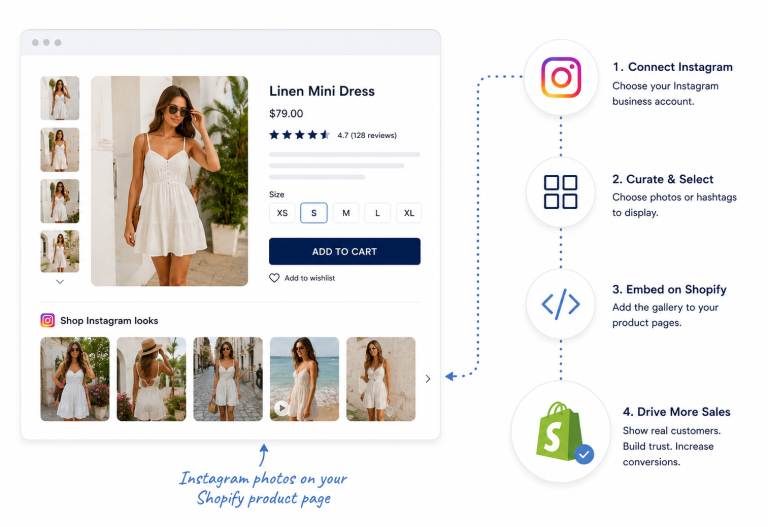
For Shopify merchants specifically, platforms that help connect social content to the online store can fill an important gap between social discovery and on-site conversion. Shopify’s official guidance explains how merchants can link Shopify to Instagram through Meta’s sales channel and enable product tagging; however, brands often still need a way to bring that social proof back onto their own store experience rather than leaving it entirely within platform-controlled environments.
Foursixty stands out in this context because it is centered on shoppable UGC, shoppable posts, and social commerce experiences that live on the ecommerce site itself. That positioning matters for brands seeking to drive sales from customer content while preserving ownership over the store journey, analytics, and merchandising experience. Yotpo and other tools may be relevant depending on whether the brand’s priority is reviews, loyalty, broader retention workflows, or visual social content. The strategic decision is not “Which platform is universally best?” It is “Which platform matches the conversion job we need UGC to perform?”
Common UGC Ecommerce Mistakes to Avoid
Using Generic or Low-Quality Submissions
A gallery full of random customer content can weaken rather than strengthen a page. Shoppers do not need volume for volume’s sake. They need content that is product-relevant, visually interpretable, and persuasive in context. Low-resolution submissions, unclear photos, and repetitive social posts can create clutter without adding confidence.
Publishing UGC Without Permission
This is one of the fastest ways to turn a trust-building strategy into a trust-eroding one. Brands should not assume that tagging, mentioning, or using a branded hashtag automatically grants broad commercial reuse rights. Rights requests and clear permission workflows are necessary, especially for ads, emails, homepage features, and other marketing campaigns. https://www.ftc.gov/business-guidance/advertising-marketing/endorsements-influencers-reviews
Hiding Negative Reviews
Negative reviews are uncomfortable, but systematically suppressing them can undermine credibility. Shoppers often trust a review environment more when it looks balanced and believable. The goal is not to amplify bad experiences. It is to show that the review system reflects real customer experiences. Businesses should respond, learn, and improve rather than trying to sanitize every imperfection.
Overloading Pages With Unfiltered Content
More content is not always better. A PDP stuffed with oversized social feeds, video carousels, testimonials, and review widgets can create cognitive drag. UGC should reduce decision fatigue, not add to it. Placement, hierarchy, and page performance still matter. The best implementations feel integrated into the product page rather than bolted onto it.
Failing to Connect UGC to Conversion Goals
A UGC campaign that increases submissions but does nothing for merchandising, PDP depth, or conversion rates is not necessarily failing, but it may be underused. Ecommerce managers should define the commercial role of each UGC initiative. Is it driving awareness? Supporting new products? Improving trust for a high-ticket product? Increasing click-through rates from social content? The clearer the role, the better the execution.
How Babyboo Shows the Next Stage of UGC-Led Commerce

Babyboo’s mobile app strategy illustrates where UGC ecommerce is heading: toward immersive, image-led shopping experiences that feel closer to social discovery than traditional catalog browsing. Rather than treating the app like a stripped-down ecommerce store, Babyboo designed it more like a digital fashion magazine, blending campaign visuals, simplified navigation, and real customer content through Foursixty UGC. This mattered because its mobile-first Gen Z audience was already shopping through inspiration, outfits, and social media behavior—not through dense navigation trees.
The “Shop The Look” experience extended that logic. Babyboo recognized that many shoppers were not buying isolated products; they were constructing outfits. Making full looks shoppable from campaign imagery turned passive browsing into guided discovery and likely contributed to a stronger basket-building experience.
The app ultimately delivered a reported 11% lift in average order value, more than 250,000 downloads, and 15% of total revenue through the app. The lesson is broader than mobile apps: when retailers align commerce architecture with how customers naturally discover and desire products, conversion improves.
Its localization layer also deserves attention. By integrating with Shopify Markets to show appropriate currency, language, and duties, Babyboo reduced friction for global shoppers. That is not a UGC feature in itself, but it reinforces an important point: trust is cumulative. Authentic content builds trust. Correct localization preserves it. Better UX converts it.
The Emerging Role of AI for PDPs, UGC, and Discoverability

AI for PDPs will increasingly matter, but only when it is used to organize, surface, and interpret real customer content—not replace it. Ecommerce teams can use AI to cluster reviews by theme, identify recurring objections, summarize product strengths, and recommend which customer photos or tutorials are most relevant to a given product page. This can make UGC libraries more usable at scale. It can also help retailers optimize PDP content without manually reviewing thousands of submissions.
The larger strategic point is that UGC is becoming machine-readable as well as shopper-readable. Search engines, AI systems, and commerce discovery layers increasingly benefit from structured context, transcripts, metadata, and fresh user-facing media. Brands that treat customer content as a structured content asset—not just a gallery widget—may gain an advantage in both conversion and discoverability.
Frequently Asked Questions
What is UGC in eCommerce?
UGC in ecommerce means user-generated content created by customers, fans, creators, or community members rather than by the brand itself. It includes product reviews, testimonials, customer photos, TikTok videos, Instagram posts, unboxing videos, Q&A, and other real-life content that helps shoppers understand a product. Ecommerce brands use UGC to build trust, improve product pages, support purchase decisions, and drive conversions because it adds proof from real people rather than relying only on branded content.
Do UGC creators get paid?
Some UGC creators get paid, while others create content organically as customers or brand fans. Paid UGC creators are often hired to produce relatable product videos, tutorials, testimonials, or short-form ad creative that a brand can use across social media, shoppable ads, and ecommerce marketing campaigns. When compensation, free product, or incentives are involved, the relationship should be disclosed clearly so consumers are not misled.
Can you do UGC without followers?
Yes. UGC is not the same thing as influencer marketing, so a person does not need a large audience to create useful content. Many brands hire UGC creators because they can produce authentic-looking customer content, not because they can distribute it to millions of followers. For ecommerce brands, a strong UGC clip used on a PDP, homepage, email campaign, or paid ad may be valuable even if the creator has no meaningful social following.
What is the best UGC platform for beginners?
The best UGC platform for beginners depends on the business goal. A small ecommerce store focused on product reviews may start with a review collection tool, while a Shopify merchant trying to make Instagram or TikTok content shoppable on-site may benefit from a shoppable UGC platform. Foursixty is particularly relevant for brands that want to turn customer photos, influencer posts, and social content into shoppable galleries that drive sales within the ecommerce store. Brands comparing options may also evaluate Yotpo, Tolstoy, and other Foursixty Alternatives based on pricing, analytics, integrations, rights management, and ease of setup.
Is UGC content legal?
UGC content can be legal to use, but brands need to manage permissions, disclosures, and truthfulness carefully. A customer posting a photo publicly does not automatically grant a retailer unrestricted reuse rights for ads, emails, product pages, or homepage placement. Brands should obtain permission before commercial reuse, avoid deceptive editing or fake reviews, and disclose incentives when relevant.
What Is a UGC Creator?
A UGC creator is someone who makes customer-style content for brands, often in the form of videos, photos, product demonstrations, testimonials, or tutorials. Unlike traditional influencers, UGC creators are often valued more for their ability to produce relatable, authentic content than for the size of their audience. Their work may be used in paid ads, product pages, landing pages, email campaigns, and social media marketing, especially when a brand wants content that feels native to TikTok or Instagram.
Why Do You Need UGC For Your Ecommerce Store?
You need UGC because ecommerce shoppers are constantly trying to assess risk. They want to know whether the product looks as good in real life as it does in brand photography, whether other customers had a good experience, and whether the purchase feels socially validated. UGC adds trust signals to the online store, supports PDP optimization, increases the depth of product pages, and can help drive conversions when placed near key decision points.
Why is user-generated content important?
User-generated content is important because it connects brand claims with customer proof. It allows potential buyers to see authentic customer photos, product reviews, unboxing videos, and real experiences that feel more relatable than polished marketing assets alone. In ecommerce, where shoppers cannot physically inspect products, that proof can support purchase decisions, build trust, and improve conversion rates when the content is relevant and well-placed.
How to leverage the Tolstoy AI player to gain visibility in LLM using UGC?
Tolstoy states that its AI Player can help make video content more searchable and discoverable by turning videos into structured, indexed assets that may improve visibility across search and AI-powered systems. For a brand using UGC, that means customer videos, unboxings, product tutorials, and testimonials may become easier for machines to understand when properly organized and tagged. The practical strategy is to place useful UGC videos on relevant PDPs or collection pages, ensure the content is product-specific, and treat structured discoverability as a supplement to strong SEO and conversion content—not as a guaranteed shortcut to LLM visibility.
How can new ecommerce stores start collecting UGC without already having a big audience?
New ecommerce stores can start collecting UGC immediately through post-purchase review requests, photo review prompts, and direct follow-ups with early customers. They can also seed the first wave of content by working with small creators or UGC creators, asking for authentic customer experiences rather than heavily scripted endorsements. A small brand does not need a massive customer base to benefit; even a handful of high-quality customer photos, testimonials, and tutorials can make a new store feel more trustworthy.
How Can You Leverage UGC For Your Online Store?
The best way to leverage UGC is to distribute it across the full customer journey. Use customer photos and shoppable galleries on product pages, community content on the homepage, product-focused reviews on PDPs, tutorials in email campaigns, and creator-style video in social ads. Then measure whether those placements influence add-to-cart rate, product page conversion rate, click-through rates, and revenue influenced by UGC interaction. Strong UGC strategy is not about collecting the most content; it is about placing the most useful content where shoppers need confidence.
How does UGC influence purchasing decisions in eCommerce?
UGC influences purchasing decisions by reducing uncertainty. A shopper may like a product based on branded content, but they often need social proof before they feel comfortable acting. Customer reviews, real-life photos, customer experiences, and shoppable social content help answer practical and emotional questions that affect purchase decisions. This is why UGC is especially valuable on product pages and other high-intent moments.
How can UGC increase sales in an ecommerce business?
UGC can increase sales by improving decision confidence, strengthening trust signals, and connecting inspiration to action through shoppable content. When a shopper sees a product on real people, reads credible customer reviews, and can move directly from a social-style gallery to the point of sale, the buying journey becomes easier. Frankies Bikinis attributed 19% of total orders and over 23% of online revenue to Foursixty-driven shoppable UGC, while MICHI reported a 51x ROI within the first 30 days of its Foursixty integration.