Most brands don’t have a content problem.
They have a trust problem—and they’re trying to solve it with more polish, more ad spend, and more “campaigns” that look great in a deck but don’t change conversion rates.
In modern e-commerce, the fastest way to bridge that trust gap is to put real customers at the center of the story, not the brand. That’s where user-generated content becomes more than a trend and turns into a repeatable growth system.
When you use ugc intentionally across product pages, ads, email, and social media, you don’t just “boost engagement.” You reduce uncertainty at the exact moment someone is deciding whether your product is worth it.
I’ve watched teams run impressive marketing campaigns that still underperform because they’re missing proof.
Not proof in the abstract—proof in the format buyers actually believe: customer reviews, testimonials, unfiltered photos, and messy, human, real-life context. UGC is often the shortest path from “this looks cool” to “this feels safe.”
And in a world where every competitor can copy your pricing, your landing pages, and even your ad angles, trust becomes the durable moat.
What Is a UGC Marketing Strategy? (Beyond the Definition)

At the simplest level, what is ugc?
It’s ugc content created by customers and the community—photos, videos, reviews, and stories that show how people experience a product in the wild.
But the nuance most teams miss is this: UGC as content is an asset. User-generated content marketing is a system.
A system has inputs (sourcing), governance (rights), organization (tagging), activation (distribution), and feedback loops (measurement). Without that structure, your UGC effort becomes ad-hoc reposting and random social media posts that do little more than fill a content calendar.
This is why reposting alone doesn’t equal strategy.
Brands often rely on a few viral moments, a few hashtags, and hope that an occasional ugc campaign will carry the quarter. That works until it doesn’t, because inconsistency breaks momentum—and momentum is what makes UGC compound.
A real ugc strategy answers operational questions:
- Where does content come from consistently?
- How do you get submissions at scale?
- How do you manage rights safely?
- How do you curate content so it’s usable for performance?
Without those answers, UGC stays a “nice-to-have” instead of a revenue lever.
There’s also a difference between “content that exists” and content that wins.
Different types of ugc serve different jobs. An unboxing video can drive attention on tiktok, while a short product-specific review often does more work on the PDP. The strongest teams understand the types of user-generated content and match each type of content to a point in the customer journey.
Why UGC Works So Well for Ecommerce and SaaS Brands

UGC works because trust beats polish.
The moment someone lands on a PDP or pricing page, they’re not only judging your product. They’re judging whether you’re credible, whether you deliver, and whether the outcome will match expectations.
Traditional creative can communicate brand identity. But it rarely resolves uncertainty the way social proof does.
People want proof that looks like them, sounds like them, and comes from someone who isn’t paid to say the right thing. Consumers trust what feels lived-in more than what feels produced.
For ecommerce, UGC reduces the two biggest conversion killers: imagination and risk.
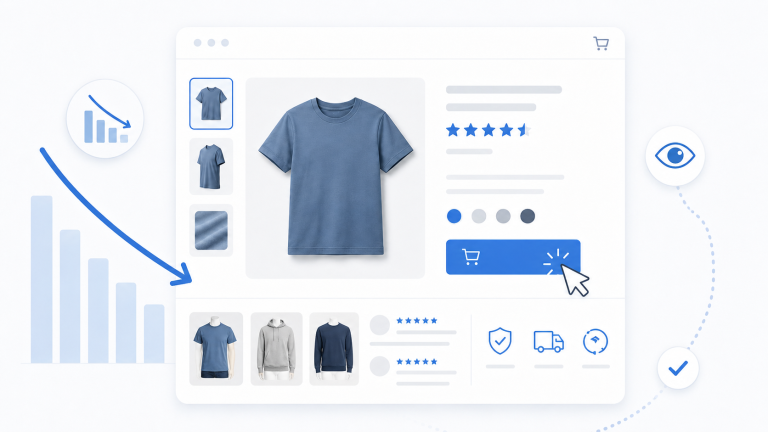
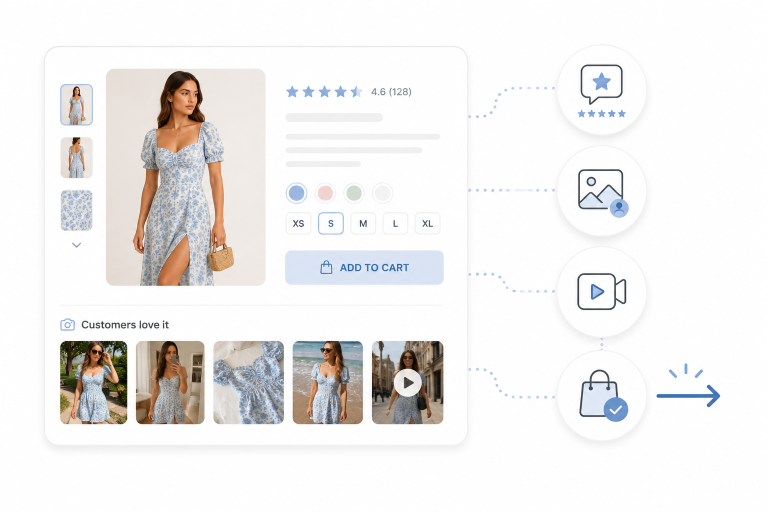
Most products fail online because customers have to guess how the item fits, feels, or performs. Customer content removes that guesswork by showing scale, texture, tone, and context—things studio photography usually can’t communicate.
That’s how UGC improves time-to-purchase.
It helps people make decisions faster, with less doubt, and with fewer “I’ll come back later” moments. The result is better engagement rates, stronger add-to-cart behavior, and more confident checkout.
SaaS benefits in a parallel way.
Buyers don’t need to see a product on a body. They need to see it inside a workflow. In SaaS, UGC shows up as customer stories, mini-demos, onboarding wins, and credible peer-style word-of-mouth.
The other underrated reason ugc works is scalability.
Traditional advertising depends on your creative team’s speed. UGC depends on the community you build—and the engine you put behind it. When designed well, it becomes a more cost-effective way to maintain creative volume without constantly producing traditional ads from scratch.
The Core Pillars of a Successful UGC Marketing Strategy
1. UGC Sourcing (At Scale)
Most UGC programs don’t fail because the content is bad.
They fail because sourcing is inconsistent.
Brands assume UGC will “just happen” if they launch a branded hashtag and ask people to tag them. Sometimes it does. But consistent sourcing is an operational function, not a creative wish.
The strongest sourcing systems reduce friction.
They tell customers exactly what to create, when to create it, and how to submit it. They also make the customer feel like participation is valued, not extracted.
In practice, you’ll source from multiple groups:
- Everyday customers (highest authenticity, lowest predictability)
- Influencers and micro-influencers (higher control, higher cost)
- Dedicated ugc creators (high output, optimized for performance)
This is also where influencer marketing often gets misunderstood.
Influencers can be distribution and attention. UGC creators are often production and performance. Both can work, but they play different roles in your funnel and marketing strategy.
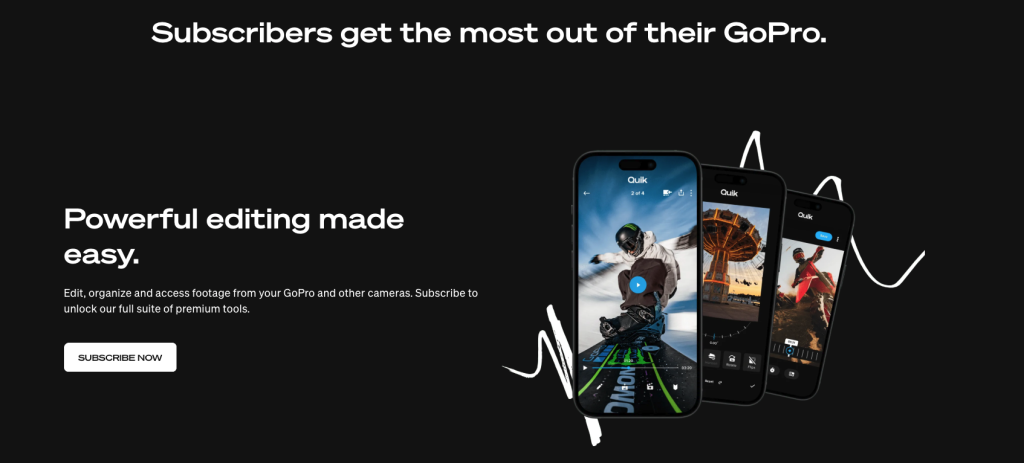
GoPro is one of the clearest proof points of sourcing at scale.
They didn’t accidentally end up with endless community footage. They engineered a loop where people want to share content, compete, and get featured—turning creators into long-term brand ambassadors and a renewable content supply chain.
2. Rights Management & Compliance
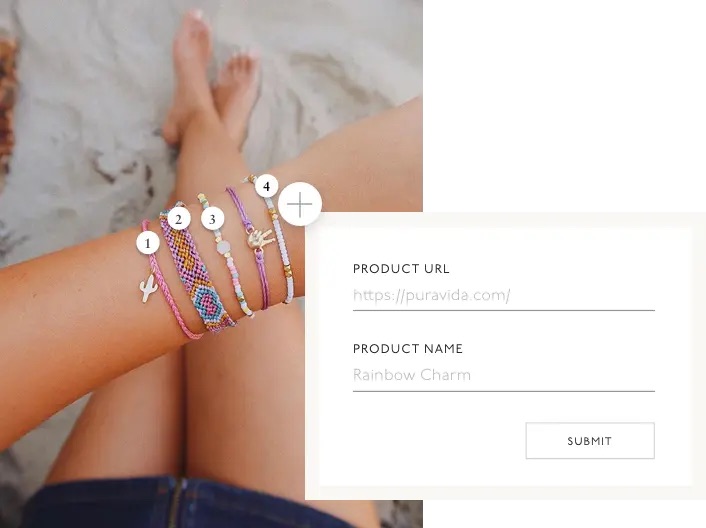
A lot of brands treat UGC like free inventory.
They screenshot a creator’s post, throw it in an ad, and call it a day.
That might feel normal in the moment, but it’s one of the fastest ways to damage trust and create legal exposure. Permission isn’t just a technical step—it’s a relationship signal.
Manual DMs don’t scale.
Even if your team is diligent, approvals become scattered across inboxes, attribution gets lost, and content becomes unusable for larger campaigns. As your marketing efforts expand across paid placements and multiple social platforms, the process breaks.
Rights management is boring—until it isn’t.
Brands that handle it cleanly can activate UGC across channels with confidence. Brands that ignore it end up pulling content down mid-campaign, which is the exact opposite of what a growth system should be.
3. Content Organization & Curation

A folder of assets is not a strategy.
UGC only drives revenue when it’s searchable, deployable, and mapped to intent. The teams that win treat content like inventory with labeling, categorization, and rules.
At a minimum, you want to tag by:
- Product or SKU
- Theme (fit, use case, durability)
- Funnel stage (discovery, evaluation, conversion)
- Format (video, photo, review)
That’s what lets you deploy the right proof at the right point in the journey.
Curation isn’t about making everything look the same.
It’s about maintaining clarity without killing authenticity. If you over-edit UGC into branded content, you lose what made it perform in the first place.
4. Distribution Across High-Impact Touchpoints
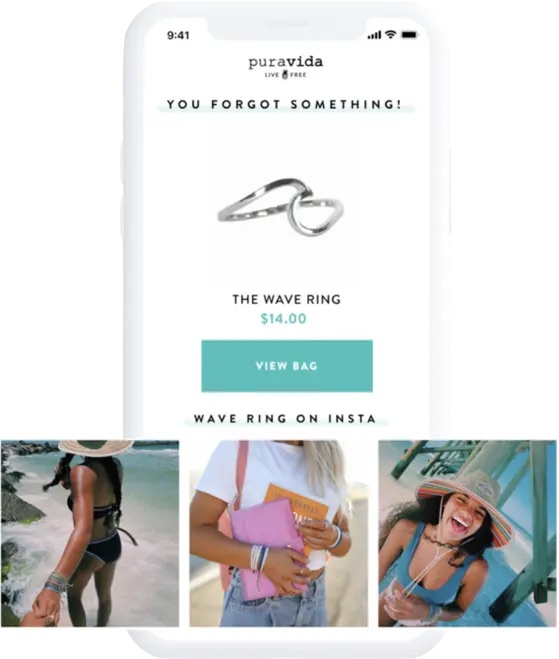
Distribution is where UGC turns from a “content initiative” into revenue.
The highest-impact placements aren’t always the most glamorous. They’re often the most transactional: product pages, retargeting, and lifecycle flows.
In ecommerce, the PDP is where UGC tends to create the biggest lift.
Because that’s where the customer is already interested—but still uncertain. UGC reduces that last-mile doubt.
This is also where social commerce becomes real.
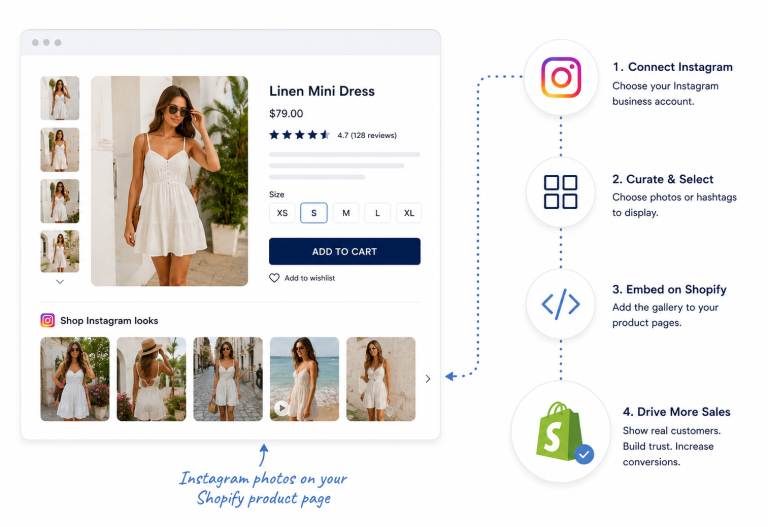
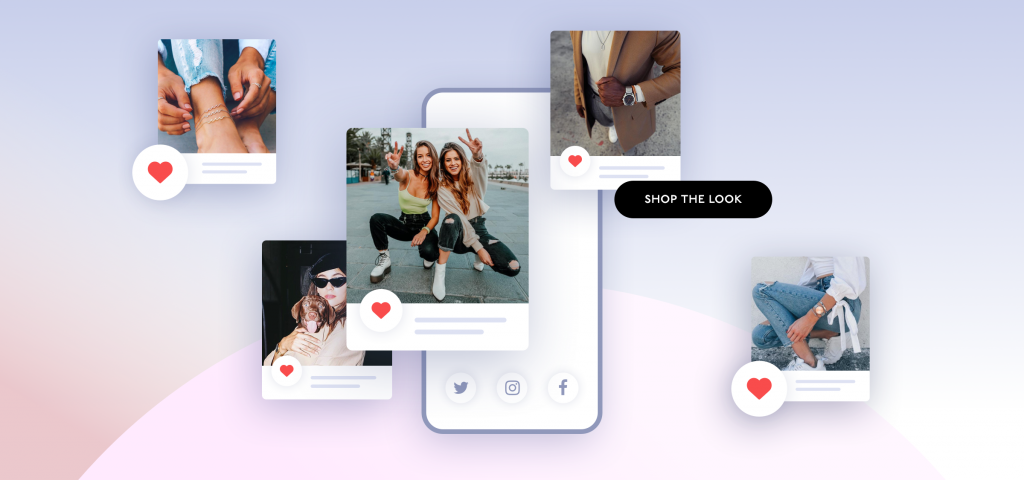
Shoppable galleries, Shoppable posts, and Shoppable social shorten the path between interest and purchase. Instead of inspiration living “over there” on social, it becomes part of the buying experience.
Platforms like Foursixty help brands centralize UGC, manage it, and activate it in shoppable content formats across ecommerce touchpoints.
How to Build a UGC Marketing Strategy (Step-by-Step Framework)
Start with the business outcome.
Are you optimizing for conversion? CAC? Retention? Creative volume? The goal determines where you deploy UGC and which metrics matter.
Then build sourcing around what your customers can realistically produce.
The best UGC doesn’t come from perfect prompts—it comes from prompts that match the customer’s natural behavior. Post-purchase flows work because they hit the moment of satisfaction, not the moment of distraction.
Next: governance and compliance.
If you don’t have clean rights and moderation, UGC becomes hard to reuse. Which means you keep sourcing new assets instead of compounding value over time.
Finally, deploy UGC where it influences revenue.
In ecommerce, that’s often PDPs and paid. In SaaS, it’s pricing pages, onboarding, and proof-led landing pages. Then you measure what actually moved performance, and you optimize from there.
Real UGC Marketing Strategy Examples (Ecommerce & SaaS)
In ecommerce, the clearest pattern is simple: move proof closer to purchase.
That often means taking UGC out of “top of funnel content marketing” and into the PDP experience, where high intent exists. The moment you do that, UGC stops being a brand exercise and starts being a conversion driver.
Foursixty has shared a case study with Frankies Bikinis showing UGC-driven onsite placements influencing revenue and orders. The important detail isn’t the logo—it’s the mechanism: shoppers saw real usage, felt less uncertainty, and progressed through checkout with more confidence.
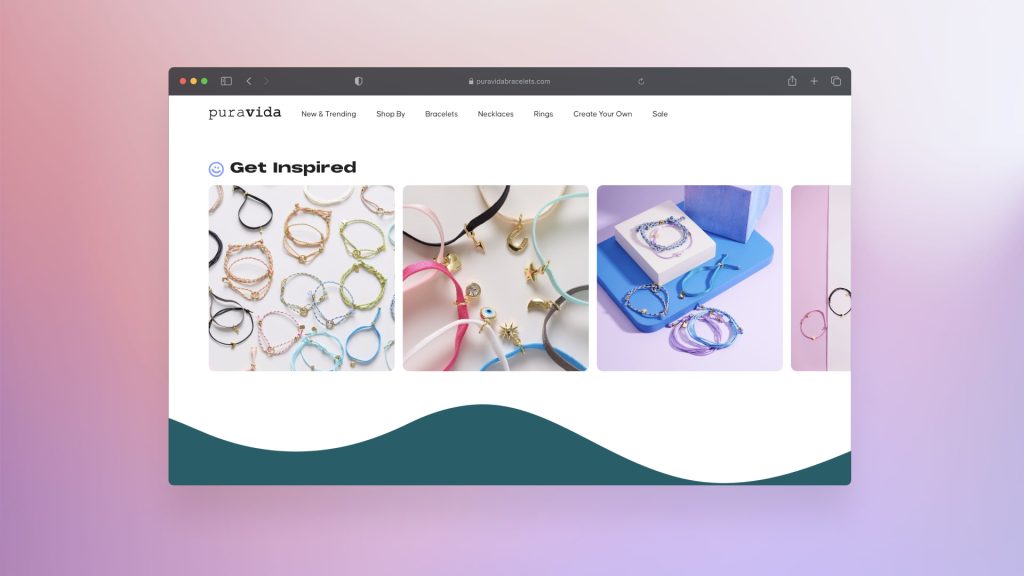
Pura Vida is another example where UGC activation extended beyond social feeds into onsite and marketing placements, reinforcing the idea that UGC works best when it becomes a multi-touchpoint system.
In SaaS, the same principle applies, but the proof changes shape.
UGC becomes customer stories, peer examples, and product usage narratives that show the workflow outcome. The best teams build libraries of proof mapped to personas, because one generic testimonial rarely closes multiple buyer types.
Common UGC Marketing Mistakes (and How to Avoid Them)
The biggest mistake is treating UGC as “free.”
That mindset leads to lazy sourcing, weak permissions, and shallow activation. The result is content that creates activity but not outcomes.
Another mistake is over-curating.
Brands polish UGC until it looks like advertising again, and then wonder why engagement drops. The goal is believability, not perfection.
The third mistake is distribution failure.
If UGC only lives on Instagram, it may drive awareness—but it rarely drives conversion consistently. UGC should be deployed where it removes friction: onsite, retargeting, email, and decision-heavy pages.
How to Measure the ROI of Your UGC Marketing Strategy
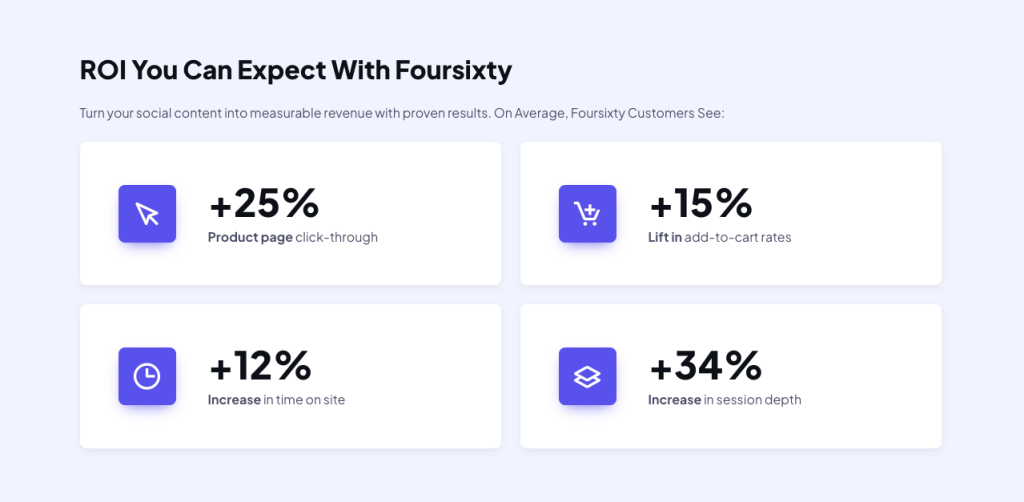
The biggest measurement trap is confusing activity with impact.
Yes, track output volume and engagement. But those are inputs. The outcomes are how UGC changes behavior in your funnel.
In ecommerce, focus on:
- Conversion rate lift
- Add-to-cart rate
- PDP time on page and scroll depth
- Assisted revenue from UGC placements
In SaaS, the parallel looks like:
- Trial-to-paid conversion
- Sales cycle length
- Activation milestones
- Onboarding engagement
UGC ROI is rarely “one big win.”
It’s usually a steady reduction in friction that compounds across the journey. And because it improves trust, it also tends to improve the efficiency of your other digital marketing initiatives over time.
Tools That Help Scale a UGC Marketing Strategy
Once UGC starts working, the operational burden shows up fast.
You end up with assets scattered across DMs, spreadsheets, drives, and random tabs. And suddenly no one knows what’s approved, what’s current, and what actually performs.
Tools matter most in four areas:
- Rights and permissions
- Commerce activation and integrations
- Organization and moderation
- Analytics and performance measurement
For Shopify brands, tools that support shoppable UGC and clean integrations are often the difference between “content posted” and “content converted.” Platforms like Foursixty help brands centralize UGC and deploy it across ecommerce touchpoints without rebuilding workflows every time.
When Is the Right Time to Invest in a UGC Platform?
Early-stage brands can often manage UGC manually.
If your product catalog is small and your team is tight, the overhead is manageable. You can build early momentum without heavy tools.
But scaling brands hit a threshold.
More products. More paid spend. More channels. More internal stakeholders. At that point, UGC becomes hard to reuse, and you start losing the compounding value.
That’s usually the signal.
If UGC is working but messy, a platform creates leverage. If UGC isn’t working because you don’t have a strategy, a platform won’t fix the fundamentals.
Final Thoughts: Turning UGC Into a Long-Term Growth Engine
UGC isn’t a shortcut.
It’s a compounding asset when you treat it like a system for trust.
In ecommerce, it turns product pages into decision environments. In SaaS, it turns claims into evidence. The difference between “some UGC” and effective ugc is whether you can source, manage, and activate it repeatedly—without rebuilding the process every month.
Strategy beats tactics.
Systems beat one-off campaigns.
And trust beats polish, every single time.
Foursixty helps Shopify brands close the gap between inspiration and purchase by turning Instagram content and user-generated content into shoppable storefront experiences that build trust and boost sales. Download our highly rated app in the Shopify app store. Shopify integration can take less than 1 hour.
Book a strategy call with our sales leader
FAQs
What is UGC in marketing?
UGC in marketing is user-generated content—photos, videos, reviews, and stories made by customers or creators that highlight a real experience with a brand. It functions as social proof, helping potential buyers trust what they’re seeing and make faster purchasing decisions. The best UGC marketing activates that content across the funnel, especially on product pages and in paid retargeting where intent is highest.
Does UGC make money?
UGC can absolutely make money, but it does so through behavior change—not just engagement. When UGC reduces uncertainty on a PDP, it can lift conversion rates and increase Add-to-cart rate because shoppers feel more confident. Brands using shoppable UGC experiences often see UGC influence orders because the proof is placed directly inside the buying journey, not left only on social feeds.
What is UGC and how to start?
UGC is customer-driven content that shows how a product looks, feels, or works in real life—often through photos, unboxing clips, or reviews. To start, you need a simple request loop: ask for content post-purchase, give clear guidance on what to create, and make submitting easy. Then organize what you collect so you can reuse it across product pages, email, and social rather than treating it as one-off repost material.
Can you do UGC with no followers?
Yes—because UGC is about content quality and credibility, not audience size. Brands regularly work with ugc creators who can produce native-looking content even without large followings, especially for paid usage. In that model, performance comes from the creative itself and the placement strategy, not the creator’s organic reach.
What Does UGC Creator Mean?
A UGC creator is someone who produces UGC-style content for brands—often short videos, product demos, testimonials, or “in the moment” clips designed to feel authentic. They’re different from influencers because they’re usually hired for content output, not distribution. Many ecommerce brands rely on UGC creators to maintain creative volume while still keeping the human tone that makes UGC effective.
Why is user-generated content important?
User-generated content is important because it helps brands build trust faster than polished branded creative. It shows real experiences from real people, which is exactly what skeptical buyers need in order to feel safe purchasing online. It also strengthens brand loyalty, because when customers contribute content, they stop being passive buyers and become brand participants.
What Is a UGC Creator?
A UGC creator is a type of content creator focused on producing authentic-feeling content that brands can repurpose across ads, product pages, and social channels. They often specialize in formats like unboxing, tutorials, and review-style clips that mirror how people naturally consume content. For scaling brands, UGC creators are a practical way to produce high-performing creative assets without relying only on customer submissions.
What is UGC content?
UGC content is customer-made media that highlights a product or brand through real usage. It can include reviews, testimonials, photos, videos, and social posts that show the product in everyday life. UGC content works because it’s inherently believable, and that credibility makes it a powerful ingredient in ecommerce conversion paths.
What makes UGC marketing campaigns worth the trouble?
UGC marketing campaigns are worth it because they generate a backlog of proof assets that can be reused across multiple touchpoints. One campaign can fuel social posts, paid ads, onsite galleries, and lifecycle email sequences for weeks or months if the content is organized properly. Brands like GoPro built community participation loops that turn campaigns into consistent sourcing engines, not just short-term spikes.
Why should you use UGC in your marketing?
You should use UGC because it creates trust and reduces perceived risk, which directly improves funnel performance. It supports top-of-funnel brand awareness, but it also meaningfully improves conversion by providing real-world proof at high-intent moments. UGC is also cost-effective compared to producing endless traditional ads, because it expands your creative inputs through customers and creators.
How can UGC marketing boost brand engagement?
UGC marketing boosts engagement by making the brand feel more human and more participatory. People engage more with authentic content than overly produced branded content, especially across TikTok and Instagram. It also encourages community behavior—people share content, tag friends, and contribute because they see others doing the same. Over time, that creates a stronger network effect across social media platforms.
How can UGC marketing benefit my brand?
UGC marketing benefits brands by improving conversion efficiency, building trust, and supplying scalable creative inputs for ongoing marketing campaigns. In ecommerce, it supports PDP optimization, helps visitors feel confident, and increases add-to-cart behavior. In social commerce workflows, it also supports shoppable experiences and integrations like connecting Shopify products to Instagram so content can convert, not just entertain.