Editorial policy:
This article reflects current best practices as of January 2026 and is updated as Meta, Instagram, and Shopify features evolve.
Disclosure: This article is written on behalf of Foursixty. No affiliate links are used.
Why Instagram Traffic Doesn’t Automatically Convert
Instagram has become one of the most powerful commerce surfaces on the internet. Between Instagram Reels, Stories, product tags, and shoppable posts, brands can now reach potential customers at nearly every stage of discovery. Yet despite this access, many ecommerce businesses struggle to turn Instagram attention into measurable Shopify sales.
The issue is rarely traffic volume. More often, it’s misalignment — between Instagram content and the Shopify storefront, between ad messaging and product pages, or between customer intent and the checkout experience.
This guide explains how Instagram-to-Shopify conversion actually works in 2026, across organic Instagram content, Instagram ads, Shopify-native tools, and user-generated content. By the end, you’ll understand how to reduce drop-offs, improve conversion rate, and build a repeatable social commerce system instead of relying on one-off viral posts.
How Instagram → Shopify Conversions Actually Work

Instagram is not a traditional traffic source. People don’t open the app intending to shop; they open it to browse, be entertained, and connect socially. Conversions happen only when brands design a funnel that respects that mindset.
At a high level, the funnel has three phases.
First is attention, driven by Instagram feed content, Reels distribution, hashtags, influencers, and paid reach through Instagram ads. At this stage, the algorithm rewards watch time, saves, and shares — not purchases.
Next comes intent. Intent appears when users visit your Instagram business profile, interact with product tags, respond to Stories stickers, or click through to your Shopify website. This is where curiosity becomes commercial interest.
Finally, conversion occurs on your Shopify product page and checkout. If the experience here feels slow, confusing, or disconnected from what the user just saw on Instagram, conversion rate drops sharply.
A critical mistake brands make is assuming that more followers automatically means more sales. In reality, conversion depends on how well each step of the funnel reinforces the last — from content to landing page to checkout.
Optimizing Your Instagram Profile as a Conversion Surface
Your Instagram business profile is effectively a mobile landing page. For many shoppers, it’s their first exposure to your brand — even before your online store.
A high-converting profile clearly communicates what you sell, who it’s for, and why it’s worth trusting. It should make the path to shopping obvious, whether that’s through the Instagram shopping feature, a link to a collection, or a purpose-built landing page.
Just as important is consistency. If your Instagram content emphasizes lifestyle, ease, or value, your storefront messaging needs to echo that same promise immediately when users click through.
Content That Converts: Moving Beyond Engagement

Not all Instagram content drives sales — and that’s okay. The key is understanding which content types support conversion and how they fit into the funnel.
Instagram Reels perform especially well for discovery and education, particularly when they show products in use rather than staged studio shots. Instagram Stories, when paired with stickers or limited-time offers, are powerful for driving short-term action. Carousels that walk users through a problem, a solution, and a real customer outcome often bridge the gap between inspiration and intent.
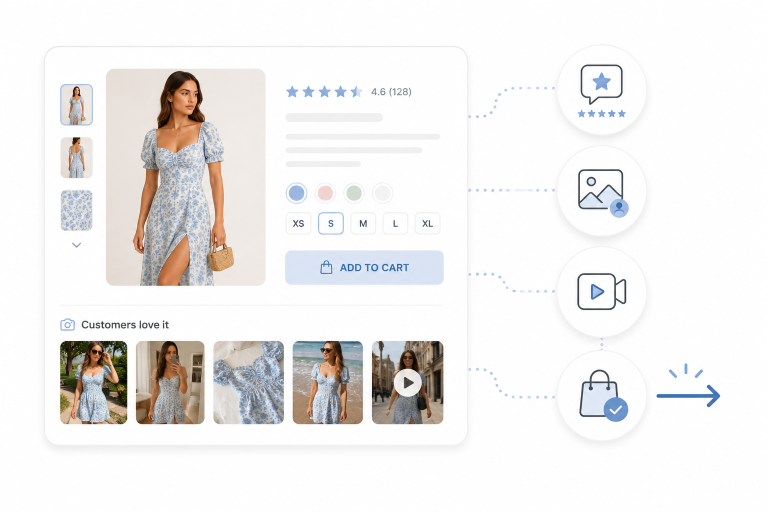
What consistently drives the strongest conversion outcomes, however, is user-generated content. Real customers using products in real contexts reduce perceived risk and build trust far more effectively than polished brand imagery alone. This is where social proof ecommerce strategies begin to outperform traditional merchandising.
Turning Instagram Traffic into Shopify Sales
Instagram Shopping and Product Catalog Sync

To convert Instagram app browsing into purchases, brands must properly enable Instagram Shopping. This requires connecting a Facebook business page account, configuring Meta Commerce Manager and Business Manager, and syncing a Shopify product catalog through the Shopify admin.
When done correctly, product tags, shoppable posts, Instagram Stories, and even a Facebook Shop all point back to live Shopify products with accurate pricing and availability. This removes friction and keeps discovery and commerce tightly connected.
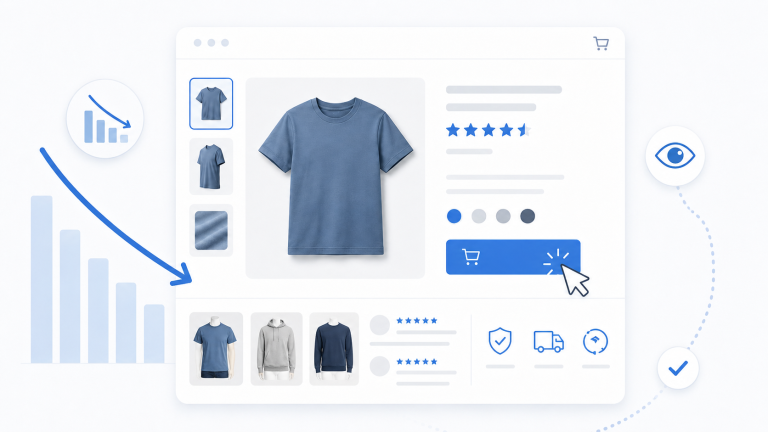
Product Page Optimization for Instagram Traffic
Instagram users arrive with less patience than search users. Your Shopify product page must immediately validate the click.
High-performing pages share a few traits:
- Mobile-first layouts that load quickly
- High-quality imagery that matches what users saw on Instagram
- Clear pricing, shipping, and returns above the fold
- Social proof placed near the call-to-action
This is where Foursixty plays a critical role for many brands.
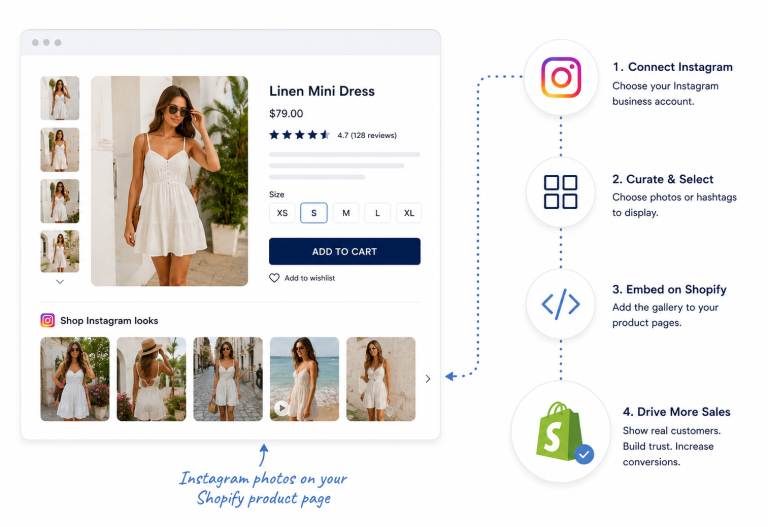
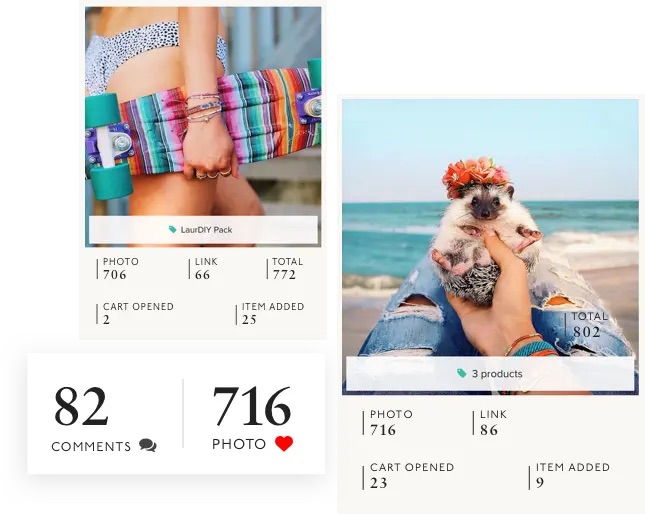
Foursixty enables Shopify brands to embed shoppable Instagram and UGC galleries directly into product pages and storefront experiences. By showing real customer content alongside product details, brands consistently increase add-to-cart rate and PDP conversion without adding friction.
Instagram Ads That Actually Convert on Shopify
Paid Instagram is where conversion strategy becomes scalable — but only if ads are structured around outcomes, not engagement.
The most effective Shopify ad accounts optimize for conversion events that matter: purchases when volume allows, or add-to-cart when training a newer pixel. Optimizing for clicks or likes often produces cheap traffic that never reaches checkout.
Creative strategy also changes by audience temperature. Cold traffic responds best to native-feeling content — creator demos, UGC-style videos, and short problem-solution narratives that don’t feel like ads. Warm traffic can handle more direct messaging, including pricing, urgency, comparisons, and offers.
Retargeting is where many Shopify stores unlock efficiency. Retargeting Instagram viewers, profile visitors, and product page visitors allows brands to re-engage users who already showed intent but needed more reassurance. This is especially powerful when retargeting ads reinforce the same social proof users see on the product page.
The most common ad mistakes are subtle but damaging: sending traffic to a homepage instead of a product or landing page, running ads that promise something the PDP doesn’t deliver, or failing to align ad creative with on-site messaging. Each of these breaks trust and quietly erodes conversion rate.
Advanced Conversion Tactics That Separate “Good” from “Great”
Once the basics are solid, performance gains come from systems rather than isolated optimizations.
- DM automation is one such system. Instagram is conversational by nature, and many high-intent users ask questions before buying. Structured replies and automated flows that route users directly to the right product page or checkout link prevent intent from cooling off.
- Instagram-exclusive offers can also drive action when framed correctly. Early access, limited bundles, or follower-only drops reward engagement without undermining pricing integrity.
- For brands working with creators, influencer whitelisting is a powerful lever. Running ads through a creator’s handle often outperforms brand-run ads because the content feels more authentic and trusted — especially when paired with UGC-driven landing pages.
- Finally, advanced brands think beyond the first purchase. Post-purchase upsells, educational follow-ups, and email or SMS capture from Instagram traffic ensure that social commerce contributes to long-term customer value, not just one-off sales.
Real Examples: What Conversion-Focused Social Commerce Looks Like
The difference between theory and execution is clearest in real brand outcomes.
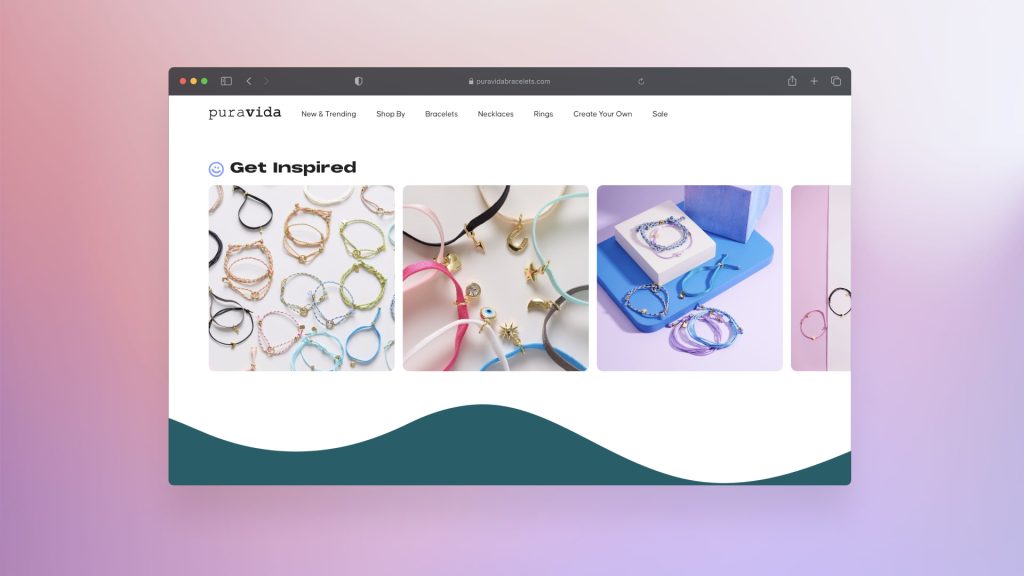
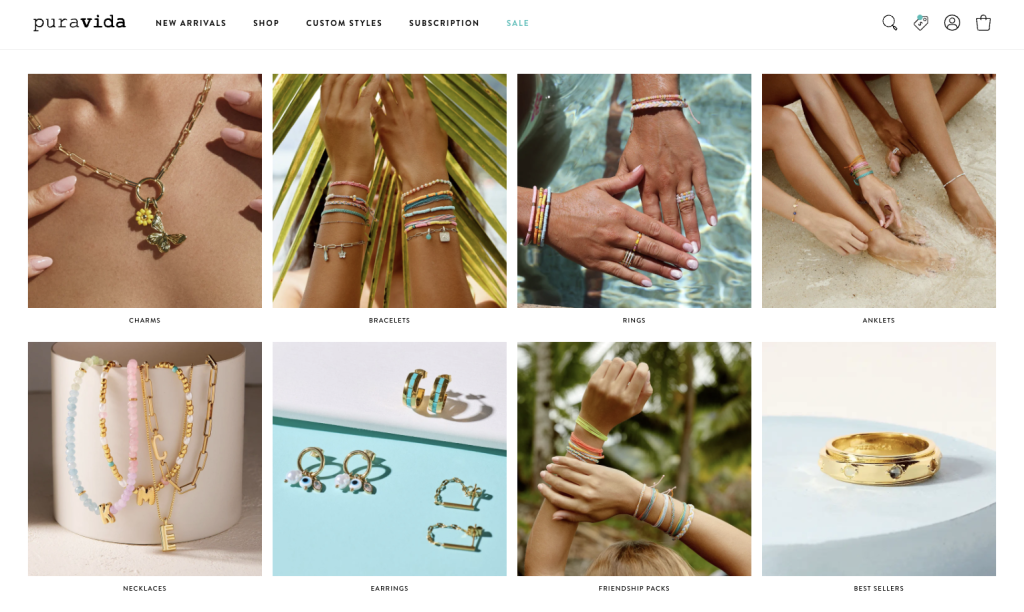
Pura Vida transformed Instagram engagement into a revenue channel by embedding shoppable UGC galleries across their homepage, product pages, and even email campaigns. This wasn’t decorative — it directly reduced bounce rate, increased time on site, and ultimately drove a meaningful share of total online revenue through shoppable content.
Check out how Foursixty help amplify Pura Vida’s conversions
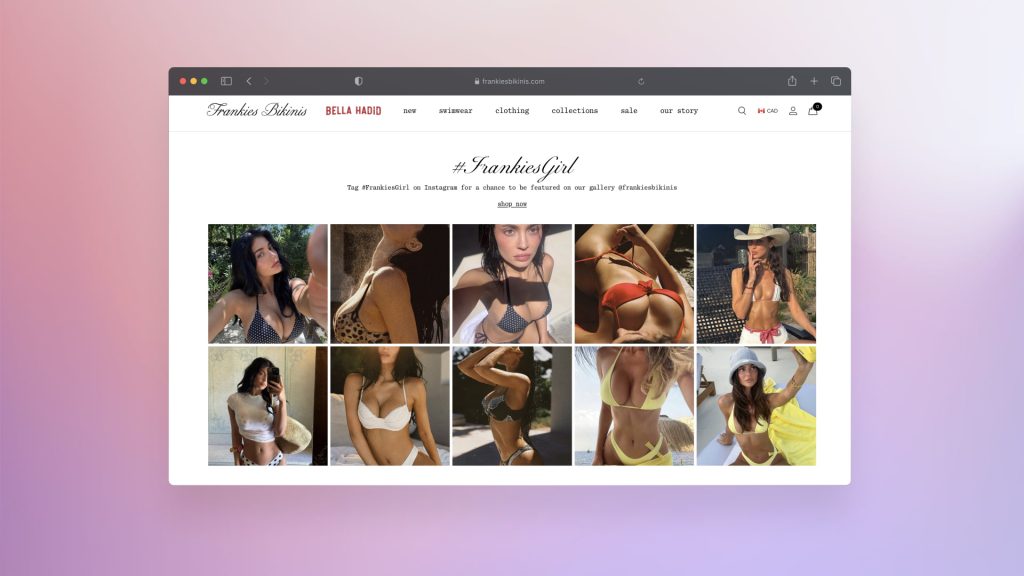
Frankies Bikinis solved a common conversion leak by replacing generic link-in-bio flows with a dedicated Instashop experience. Instead of sending users to the homepage, Instagram traffic landed in a curated, shoppable gallery where products were immediately discoverable. The result was a substantial percentage of total orders attributed to shoppable content rather than paid traffic alone.
Foursixty became a large portion of Frankies’ conversions, learn how!

MICHI demonstrated how quickly impact can materialize when UGC is connected directly to checkout. By replacing a less effective platform with Foursixty, the brand generated outsized ROI within the first month — not because traffic increased, but because conversion efficiency improved.
See how Michi amplified their conversions with Foursixty
Across all three examples, the lesson is consistent: social proof must be placed where decisions are made, not hidden behind secondary navigation.
Common Mistakes That Kill Instagram → Shopify Conversions
Many conversion issues stem from small but compounding missteps.
Sending Instagram traffic to the homepage forces users to restart their journey. Poor mobile optimization undermines the platform’s native behavior. A lack of social proof creates hesitation at the moment of purchase. Slow site speed and inconsistent messaging introduce doubt exactly when confidence is needed most.
None of these mistakes are dramatic on their own — but together, they quietly suppress conversion rate and make Instagram appear less effective than it actually is.
Tools and Resources (Transparent and Practical)
Effective Instagram-to-Shopify conversion relies on a focused tool stack, not an overwhelming one.
Shopify apps that support reviews, upsells, speed optimization, and landing page creation form the foundation. Instagram insights and Shopify analytics provide directional data, while CRO tools like session replay and funnel analysis reveal where users hesitate or drop off.
Rather than recommending a long list of affiliate tools, the priority should be alignment: every tool should either reduce friction, increase trust, or improve measurement.
Turning Instagram into a Predictable Revenue Channel
Instagram doesn’t fail brands — misaligned conversion strategy does.
When Instagram content, Shopify product pages, checkout experience, analytics, and social proof work together, social commerce becomes repeatable and measurable. Brands that treat Instagram as a storefront — not just a marketing channel — consistently outperform those chasing engagement alone.
Foursixty helps Shopify brands close the gap between inspiration and purchase by turning Instagram content and user-generated content into shoppable storefront experiences that build trust and boost sales. Download our highly rated app in the Shopify app store. Shopify integration can take less than 1 hour.
Book a strategy call with our sales leader
Frequently Asked Questions
How to integrate Shopify with Instagram?
To integrate Shopify with Instagram, connect the Instagram sales channel through Shopify admin. This requires a Facebook account, Facebook Shop, and Meta Business Suite setup with proper permissions. Once approved, your Shopify products sync into Commerce Manager, enabling product tags and shoppable posts.
Can I use Shopify to sell on Instagram?
Yes, Shopify allows brands to sell on Instagram through Instagram Shopping and the Instagram shopping feature. Instagram acts as the discovery layer, while checkout typically occurs on your Shopify website. This approach maintains centralized ecommerce operations.
How do I handle shipping for Instagram sales?
All shipping, pricing, and fulfillment are handled through Shopify. Instagram does not manage logistics, which ensures consistent customer experience. Shipping transparency improves conversion rate.
How do I connect Instagram profile to my shop?
Switch to an Instagram business profile and connect it via Business Manager. Once approved, product tags and shop tabs become available. This unlocks instagram posts and storefront functionality.
How are you using Instagram to grow your Shopify store in 2026?
Brands in 2026 focus on Instagram Reels, UGC, and creator partnerships rather than static posts. Real-time analytics, CRO optimization, and Instagram vs. TikTok monetization strategies are often run in parallel. Conversion tracking is central. Make sure to check the Shopify app store for the highest reviewed tools.
Why integrate Instagram Shopping with Shopify?
Integration reduces friction between discovery and checkout. Shopify ensures accurate inventory, analytics, and conversion tracking. This alignment improves ROI and customer journey optimization.
How do you optimize Shopify product photos to boost sales effectively?
High-quality images, consistent templates, and real customer visuals increase trust. Brands using UGC and social proof ecommerce assets outperform studio-only photography. Shoppable content examples reinforce buying confidence.
Why Shopify Instagram Integration Is Important for eCommerce Businesses?
It centralizes operations while leveraging social media demand. Instagram becomes a true sales channel rather than a traffic source. This shortens the path to purchase.
Which Is Best for Your E-commerce Business?
Instagram monetization excels at conversion, while TikTok monetization drives discovery. Most brands benefit from using both strategically. Instagram typically converts better at the bottom of the funnel.
Can I use multiple Instagram accounts with one Shopify store?
Yes, multiple Instagram business accounts can connect via Business Manager. Each account must meet eligibility requirements. This is common for multi-brand or regional storefronts.
What are the best practices for converting Instagram followers into Shopify customers?
The best instagram shoppable practices are; use shoppable posts, clear CTAs, optimized product descriptions and landing pages optimized for mobile. Build trust with UGC and social proof. Measure results using Shopify analytics.
What are the best strategies to increase conversions on Shopify using Instagram?
Focus on PDP optimization, checkout speed, and retargeting. Pair Instagram ads with UGC strategy and CRO checklist execution. Iterate using real metrics.
What strategies can I use to increase conversions from Instagram to my Shopify store?
Align content, landing pages, and checkout experience. Avoid generic storefronts. Optimize every step of the funnel.