In today’s ecommerce, social media is no longer just for brand awareness. With shoppable social media content, posts and videos become mini-storefronts where people can discover, click, and buy in real time.
For eCommerce managers and directors, this matters. You’re measured on conversion rates, ROI, and sales growth. Shoppable content connects your marketing campaigns directly to checkout, giving you a faster way to prove results.
This article explains what shoppable content is, why it matters, how to build strong campaigns, and which tools can help. We’ll also look at real brand examples and give you a clear framework to measure success.
What Is Shoppable Social Media Content?
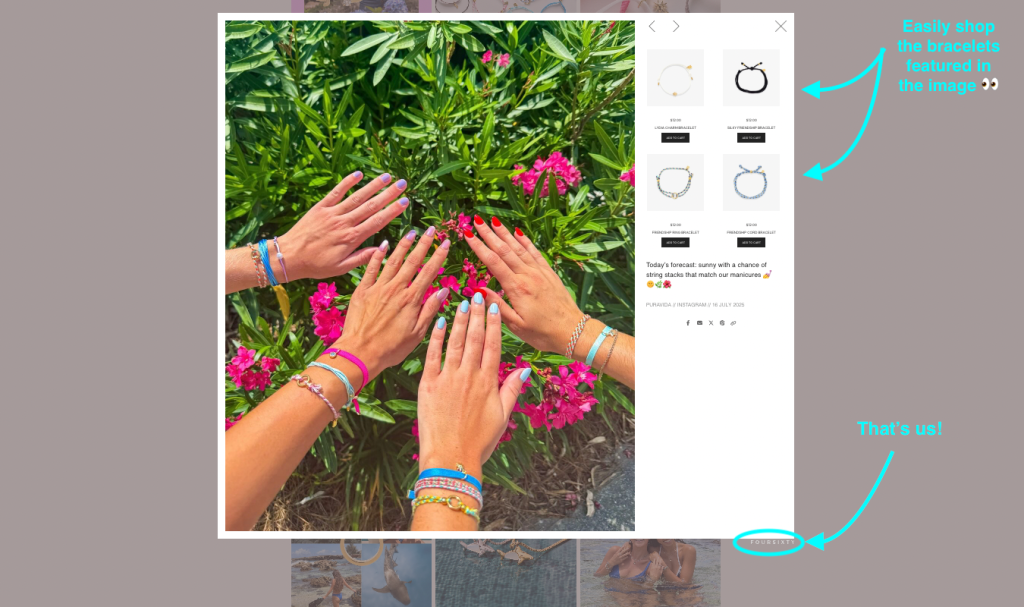
Shoppable content is any social media post, video, or ad that lets people shop without leaving the platform. With product tags, CTAs, and pricing details, a customer can go from scrolling to buying in seconds.
Platforms that support shoppable content include:
- Instagram Shopping and Shoppable Reels
- TikTok Shopping and Shoppable TikTok Galleries
- Pinterest shopping Product Pins
- YouTube shopping with videos with product links
- Facebook Shops connected to your product catalog
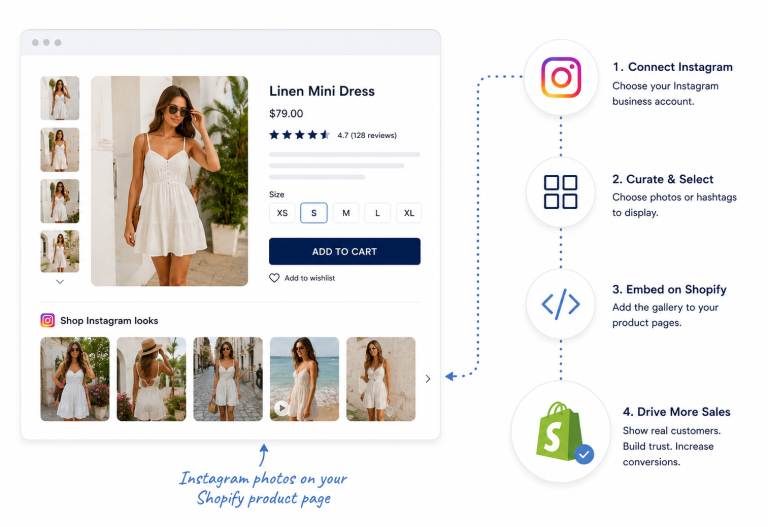
Third-party tools like Foursixty expand these features. They allow brands to add UGC galleries to their Shopify stores, so user-generated content (UGC) turns into conversion content right on the homepage or product page.
Why Shoppable Content Matters for eCommerce Growth

Shoppable posts and videos are more than a trend — they drive measurable results.
- Fewer steps to buy: Customers don’t have to leave the app.
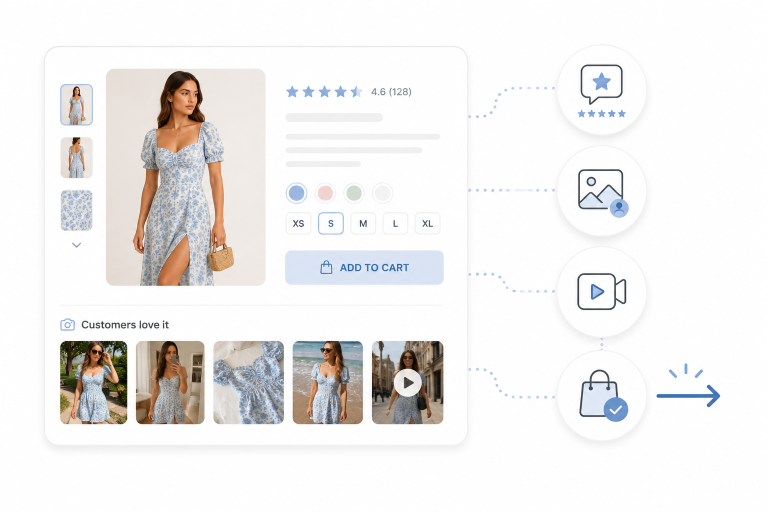
- More trust: UGC and influencer posts feel authentic and add social proof.
- Mobile-first: Most online shopping now happens on phones, making shoppable formats a natural fit.
- Stronger ROI: Brands see higher click-through rates (CTR) and conversion rates compared to regular ads.
Approximately 76% of American consumers have purchased a product they discovered on social media, with 11% making the purchase immediately and 44% completing it later.
Key Features of Strong Shoppable Campaigns
To succeed with shoppable posts, focus on the customer experience:
- Smooth checkout: Don’t force extra clicks.
- Mobile-first design: Use vertical video content and fast-loading carousels.
- UGC and influencers: Feature real customers and micro influencers to build trust.
- Product tagging: Always keep product details synced with your catalog.
- Track results: Use pixels, GA4, and Shopify to see what’s working.

Example: Frankies Bikinis added shoppable UGC to their Instagram feed and homepage, driving 23% of revenue through shoppable content powered by Foursixty.
Tools & Platforms
Most social platforms now include built-in shopping tools:
- Instagram Shops & Reels
- TikTok Shopping
- Pinterest Product Pins
- Facebook Shops
But these have limits. They don’t always sync well with your Shopify store, and reporting can be shallow.
That’s where tools like Foursixty add value. They let you:
- Embed shoppable galleries on your brand website
- Feature UGC shoppable customer content
- Keep your product catalog synced in real time
- Optimize content for big events like Black Friday
Real-World Brand Examples
- Griffin Thrall Co. used shoppable Instagram posts and Foursixty’s UGC galleries to boost conversions by 13% and drive 18% of revenue from shoppable content.
- Frankies Bikinis made their Instagram feed fully shoppable, leading to 23% of online revenue.
- MICHI, a luxury sportswear brand, launched a shoppable Instagram gallery in just four hours. In 30 days, they achieved a 51x ROI.
- Busy Baby Mat added shoppable video to Shopify, hitting a 21% conversion rate.
- ECCO optimized shoppable ads with Google Shopping, improving AOV by 38% and CTR by 28%.
Measuring ROI
To measure ROI, use this formula:
ROI = (Revenue – Campaign Costs) / Campaign Costs
Track these key metrics:
- Conversion rates
- Click-through rates (CTR)
- Engagement rates
- Average order value (AOV)
- Revenue attribution
Avoid relying only on likes or views. Use Shopify Analytics, GA4, and Meta Insights to connect results directly to sales.
How to Get Started
- Align your marketing and merchandising teams.
- Pick platforms based on your target audience (Instagram for fashion, TikTok for younger shoppers).
- Sync your product catalog with Shopify.
- Test UGC, shoppable ads, and influencer campaigns.
- Plan ahead for Black Friday ecommerce strategy with conversion content ready to go.
Start small, test, and scale. A partner like Foursixty can help by turning UGC into shoppable galleries that boost ROI.
Conclusion
Shoppable content is changing the way people shop on social media platforms. It reduces friction, adds trust with UGC and influencers, and creates direct paths to checkout.
For ecommerce businesses, this means stronger conversion rates, better ROI, and a smoother customer journey. The future of social commerce will belong to brands that treat social media content as a storefront.
FAQs
What are shoppable social posts?
Shoppable posts are social media posts with built-in shopping features like product tags, pricing, and CTAs. Customers can view product details and complete checkout without leaving the app.
What is the rise of shoppable posts in social media?
Shoppable posts are growing fast because people want to shop where they already scroll. Instagram, TikTok, and Facebook now act like storefronts, blending brand awareness with online shopping.
How do Shoppable Posts Work?
Shoppable posts connect your product catalog (via Shopify or another CMS) to a social platform. When you tag products in a post, users can click to see pricing and buy instantly. Tools like Foursixty expand this by adding UGC-shoppable galleries to your brand website.
Why is shoppable content important for ecommerce?
It shortens the customer journey, improves conversion rates, and adds social proof through UGC and influencers. Shoppable posts let brands drive sales directly from the social media feed, not just from a homepage or ad.
How can businesses benefit from using shoppable posts on social media?
Shoppable posts turn social media marketing into real sales. For example, Frankies Bikinis drove 23% of their revenue from shoppable Instagram posts. Businesses benefit by reducing friction, boosting CTR, and building trust with user-generated content strategy.
How can I track the performance of my shoppable social media posts?
Use tools like Shopify Analytics, GA4, and platform insights. Measure click-through rates, conversion rates, and engagement to see what works. This helps you optimize your content marketing strategy and improve ROI.