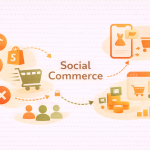
If you’ve led growth on an ecommerce site in the last few years, you’ve probably felt the center of gravity shift. Your best-performing creative isn’t always a studio shot, and your highest-intent traffic doesn’t always arrive from search. It increasingly arrives from social media platforms—people discovering new products through creators, scrollable entertainment, and real-world context, then expecting a frictionless jump to checkout. Social Commerce isn’t “a new channel” anymore; it’s a structural change in how online shopping works, especially as the default experience shifts toward mobile devices. When the buyer’s first impression happens in a reel or a livestream, the brand’s job becomes less about convincing and more about removing friction.
That’s why high-performing teams now think in systems rather than one-off tactics. They’re not asking “Should we do influencer marketing?” They’re asking how to connect user-generated content to product pages, how to tag products inside content without breaking attribution, and how to optimize a storefront for discovery-driven shopping. They’re also navigating platform monetization policies, demographic differences (especially Gen Z behavior), and the reality that “social proof” has become one of the strongest conversion levers on the internet. When social commerce is executed well, it feels like a seamless shopping experience. When it’s done incorrectly, interest spikes but conversion rates flatten—because the path to purchase breaks at the seams.
Trust strip: authority validation, before you ask for the sale
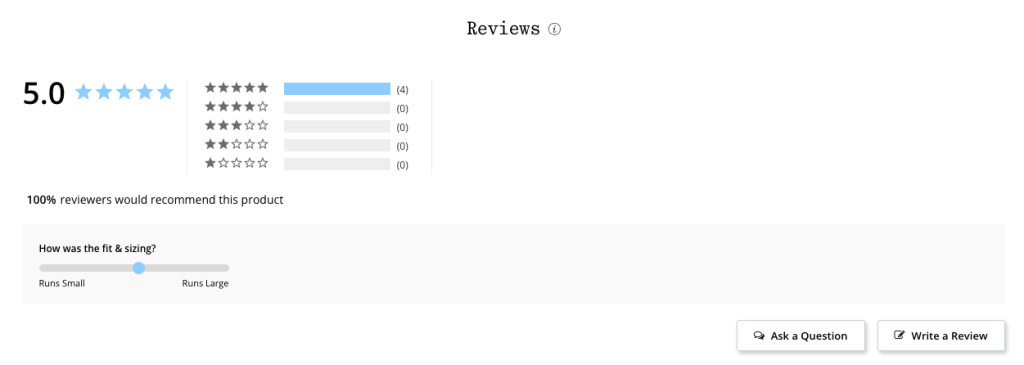
The paradox of social selling is that it feels personal, but it scales through infrastructure. A shopper might arrive because a micro-influencer’s content resonated with their target audience, but they’ll still look for trust signals in commerce before they buy products. Social proof matters, but the form it takes matters more: the shopper wants to see that the brand’s functionality is real, the product catalog is accurate, and the buying experience won’t punish them for acting on impulse. If the “shop tab” exists but product descriptions don’t match what they saw in social channels, the trust transfer breaks immediately.
This is where the trust strip does quiet work. It’s not just logos and testimonials—it’s the signal that the brand is operationally credible. On high-volume social commerce platforms, credibility is built through consistency across touchpoints, not through a single claim.
Here’s what that looks like in practice:
- Authority signals: recognizable retailers, credible partnerships, and visible proof of scale
- Trust signals: high-quality UGC, honest product context, and clear pricing
- Conversion signals: fast load speed, clean mobile experience, and frictionless checkout

Pura Vida’s published case study is a useful example because it frames social commerce as a conversion system, not a content trend. Their implementation focused on creating a direct path to purchase from social content and placing shoppable experiences where they influence buying behavior. They reported outcomes including 18.2% click through, 17% of online revenue generated through engagement, +73% page views, and -34% bounce rate.
What is social commerce? (And what it isn’t)
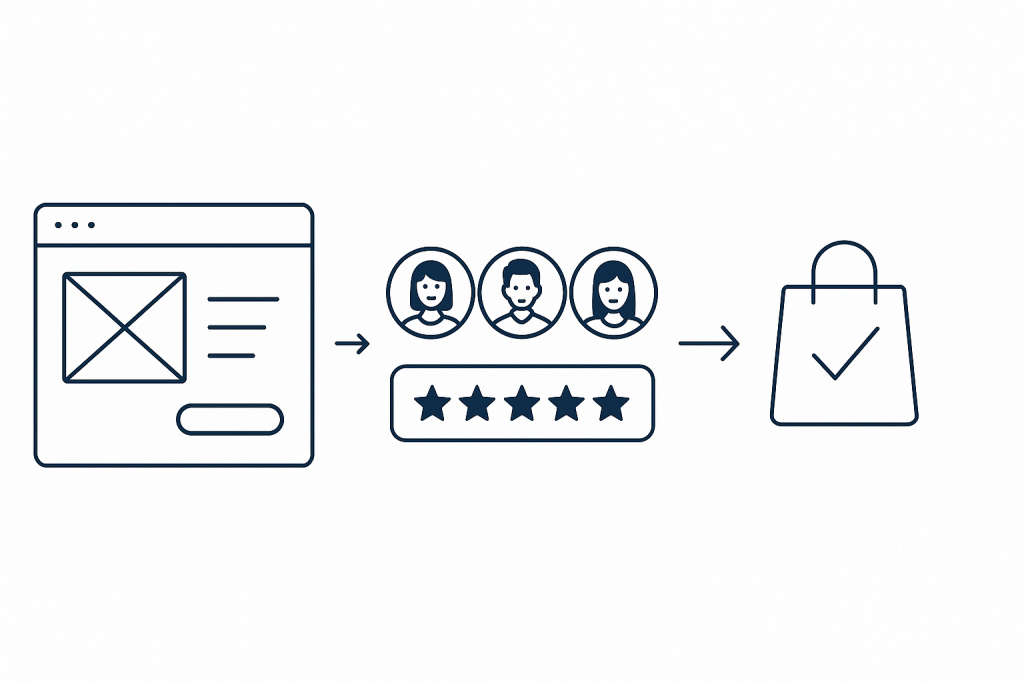
Social commerce is the blend of social networks and ecommerce where content becomes the interface for product discovery and purchase products behavior. It includes on-platform buying (where transactions happen in-app) and off-platform buying (where social content drives traffic back to your storefront and your own checkout).
Either way, the defining mechanic is consistent: content → context → commerce. The shopper sees something compelling, gains confidence through social proof, and then takes action through shopping features like product tags, shoppable posts, or shoppable videos.
It’s easier to understand the category if you clarify what qualifies—and what doesn’t. A lot of brands call everything “social commerce” because it sounds modern, but the operational difference is huge.
- Social commerce is: content-led product discovery with a clear, streamlined path to checkout
- Social commerce isn’t: social media marketing that stops at brand awareness or engagement
- Social commerce breaks when: the shopper has to work too hard to confirm price, variant, or product details
This is why Social Shopping is best understood as the behavioral layer (social purchasing experiences), while social commerce is the commercial layer (systems, tools, and flows). If you collapse the terms, you build the wrong marketing strategy—and your results look like “great engagement, weak sales.”
How social commerce works in the real world: execution, not theory

At a high level, social commerce looks simple: create content, tag products, and drive sales. In reality, the system wins or breaks on the seams. Most shopping journeys now begin with product discovery inside social media platforms, and that discovery is often algorithm-driven. People aren’t searching; they’re being shown something that matches their interests, demographic patterns, and behaviors. This is where influencer marketing becomes more than a “top-of-funnel” play—it becomes a conversion trigger when the content is shoppable and the product context is obvious.
The execution layer moves in three stages, even when it doesn’t feel like a funnel:
- Discovery: reels, shoppable videos, live shopping, hashtags, and creator content
- Validation: social proof, UGC, testimonials, and product-page context that builds trust
- Transaction: in-app checkout or on-site checkout that stays fast on mobile devices
Where brands get stuck is thinking these steps are automatic. They’re not. Every step has friction points, and friction is what kills conversion rates in social commerce because the shopper didn’t arrive in “shopping mode”—they arrived in “scroll mode.”
Here are the most common breakpoints that turn interest into drop-off:
- Discovery without continuity: a high-performing post makes a promise the PDP content doesn’t support
- Tagging errors: the brand tags the wrong product or variant, creating confusion at the moment of intent
- Weak product pages: no PDP optimization, no social proof in eCommerce, no compelling product descriptions
- Slow mobile experience: the page behaves like desktop ecommerce, and the customer bounces
- Checkout friction: too many steps, poor mobile UI, or unclear shipping/returns
TikTok Shop is the clearest “in-app” example because the platform is explicitly building commerce features into the social experience—product tagging, storefront behavior, and live shopping events that lead directly to purchase. But whether the buyer checks out on-platform or returns to your Shopify storefront, the system still depends on one thing: a seamless shopping experience where confidence isn’t interrupted.
Social commerce vs. ecommerce vs. social media marketing: distinctions that protect strategy
Most experienced ecommerce leaders are already fluent in performance marketing, affiliate links, and influencer marketing. Social commerce intersects with all of them, but it isn’t just a new label for “selling on social.” Ecommerce is the broader category of buying and selling online through an ecommerce site, a marketplace like Amazon, or a brand storefront. Social commerce is what happens when commerce is activated through social interactions—where content is both persuasion and interface.
Social media marketing is still important, but it’s not the same as social commerce strategy. Marketing can drive brand awareness, but social commerce requires conversion mechanics. When the distinction isn’t clear, teams invest in the wrong layer.
Here’s the simplest separation that holds up operationally:
- Social media marketing: reach, engagement, awareness, audience building
- Influencer marketing: trust transfer and persuasion through creators and collaborations
- Social commerce: content → product → checkout, supported by commerce features and measurement
This is also why “on-platform vs off-platform” commerce is not just a trend debate—it’s a margin and data strategy. In-app selling can reduce friction, but it can also reduce your control over customer data, merchandising logic, and post-purchase ownership. Off-platform commerce gives you more control, but only if your product pages and checkout are optimized to match social behavior.
Why social commerce works: the psychology behind the conversion lift

Social commerce works because it aligns with how humans actually make purchasing decisions. People don’t buy because a product is “better”—they buy because they feel confident it will work for them. Shoppable content builds that confidence by showing products in real life, in real contexts, with less cognitive load. That’s Social Proof Psychology: shoppers trust what they can see, and they trust it faster when it comes from someone who feels like them.
This is also why Mobile Commerce changes the playing field. On mobile devices, traditional ecommerce browsing is work. Social commerce feels effortless because it mirrors the experience people already enjoy: short-form video, fast context, clear calls to action, and minimal friction. When the path from post to product to checkout is smooth, conversion rates lift because the buyer stays in motion.
If you want the operating principle, it’s this: social commerce reduces uncertainty at the exact moment uncertainty usually spikes. That moment is rarely the ad impression. It’s usually the product page. And when PDP content doesn’t match the story that brought the shopper there, the psychology of selling collapses.
Social commerce in practice: how winning brands place proof where decisions happen

The biggest social commerce gains rarely come from “more content.” They come from better placement and better curation. Brands often start with Shoppable galleries on the homepage because it’s visible and feels intuitive. But the more strategic approach is to treat product pages as the decision engine and build PDP optimization around social proof. That means showing UGC in the exact sections where buyers hesitate—fit, quality, styling, use case, or real-world outcome.
Here are the placements that consistently move the needle for ecommerce brands:
- Homepage galleries: great for brand awareness and product discovery
- Collection pages + In-Feed Shopping: keeps shoppers exploring without dead ends
- Product pages: the highest ROI location for Social proof in eCommerce
- Landing pages: ideal for campaigns, giveaways, and partnerships
This is also where UGC Moderation becomes critical. The higher your UGC volume, the more you need workflows to curate content so it stays high-quality and brand-safe. Without moderation, social commerce becomes chaos: inconsistent visuals, inaccurate product tags, and content that conflicts with platform monetization policies.

This is exactly where tools like Foursixty tend to matter in the real world—not because they “make social commerce happen,” but because they help brands operationalize it. In the Frankies Bikinis case study, the brand used shoppable experiences and gallery placements to create interactive shopping flows that reduce exit behavior. They reported 23% of total revenue via Foursixty and 19% of orders via Foursixty, which reflects what happens when social proof is placed at the point of decision, not just at the top of the funnel.
Platform strategy: TikTok, Instagram, Pinterest, Meta, and YouTube aren’t the same channel
Different social commerce platforms reward different buying behaviors, and that should shape your execution. Instagram Shopping tends to work well when the brand has strong content cadence—reels, stories, and consistent creator partnerships—because the platform supports browsing behavior through shop tabs and product tags. TikTok monetization is more velocity-driven: the algorithm can explode product discovery overnight, but it also demands constant iteration and real-time responsiveness. TikTok Shop is especially strong when the product is visually demonstrable and the buying cycle is short.
Pinterest Shopping is structurally different because it sits closer to intent and planning. Product pins and discovery-led shopping behavior often resemble search—people arrive with “I want to buy something like this” energy. YouTube Shopping fits a longer narrative: shoppable video commerce works well when customers need deeper product descriptions, comparisons, or education before they feel confident enough to purchase products. Facebook Shops inside Meta storefronts can play a meaningful role for certain demographics and retargeting-heavy ecosystems, but performance depends heavily on execution and audience match.
A practical mapping that keeps teams honest looks like this:
- TikTok Shop: fast discovery, livestream behavior, buy products quickly, Gen Z momentum
- Instagram Shopping: creator-led commerce, reels + stories, brand consistency, shop tab browsing
- Pinterest Shopping: product pins, planning intent, “save now / buy later” behavior
- YouTube Shopping: long-form trust building, deeper education, strong conversion for considered purchases
- Facebook Shops / Meta storefronts: broader user base, retargeting-friendly, varies by demographic
The mistake is treating each platform like the same sales channel. Social commerce isn’t “platform = results.” It’s platform + format + workflow + landing experience.
Architecture decisions: headless commerce, APIs, and scaling shoppable experiences
Once social commerce becomes a real revenue driver, architecture starts to matter. Headless Commerce (Decoupled commerce architecture) can make it easier to deploy new formats—like shoppable videos or embedded shopping feeds—without being limited by theme constraints. API-Driven Commerce (Programmable commerce infrastructure) becomes essential when you need product catalog syncing, inventory rules, and dynamic tagging logic to work across storefront experiences in near real-time.
That said, the tradeoff isn’t theoretical—it’s operational. Headless can accelerate iteration once you’re stable, but it can also slow teams down if ownership and execution aren’t clear. The decision should reflect your business reality: how often you launch new products, how many partnerships and collaborations you run, and how frequently you change formats in response to platform algorithm shifts. The brands that scale social commerce successfully don’t just scale content—they scale the system that turns content into conversions.
Measuring success: social commerce ROI without lying to yourself
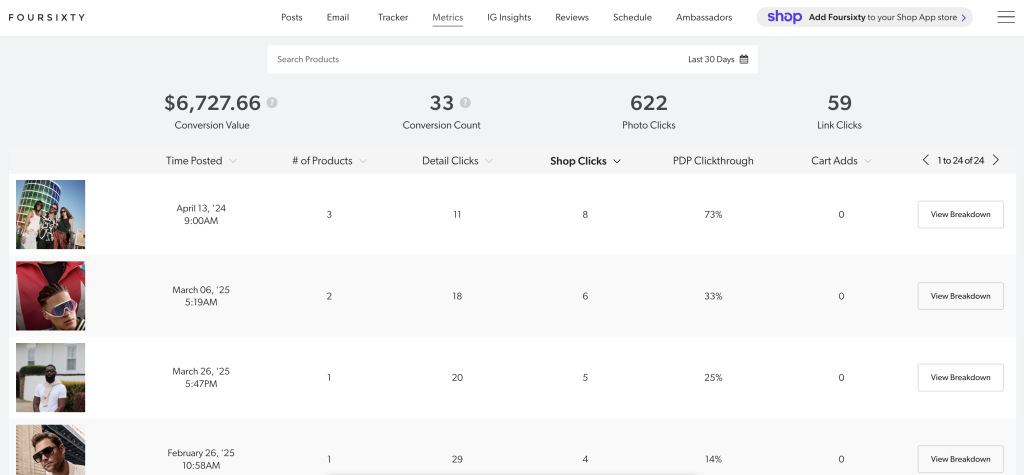
Social Commerce ROI is rarely captured through last-click attribution. Social commerce creates messy paths: a shopper discovers on TikTok, validates on Instagram, lands on your Shopify storefront, and returns later through email or a retargeting ad. That’s why Revenue Attribution needs to account for assisted influence, not just “the final click.” Conversion attribution modeling will never be perfect, but it should still be directionally honest.
The cleanest way to measure is to split metrics into three layers: interest, commerce, and system health.
- Interest metrics: engagement with shoppable content, clicks on product tags, time on shoppable galleries
- Commerce metrics: conversion rates by placement, checkout completion, assisted revenue, Average Order Value (AOV)
- System metrics: UGC moderation capacity, content velocity, attribution stability, platform dependency risk
If you only track engagement, you’ll fund content that looks good. If you only track last-click, you’ll underfund the content that builds trust. The brands that win measure the whole customer journey.
Common challenges: what breaks at scale (and why it matters)
Social commerce tends to break in predictable places. Moderation debt is the first: video-first UGC expands faster than teams can curate, and quality drops. Tagging governance is the second: when too many people can tag products without rules, errors multiply and shoppers lose confidence. Platform dependency is the third: if your entire strategy depends on one algorithm, your revenue becomes fragile.
Here are the operational realities teams have to design around:
- UGC Moderation at scale: you need review workflows, brand safety rules, and accuracy checks
- Platform Monetization Policies: incentives, claims, and formats are not universally allowed
- Attribution complexity: social-assisted paths won’t look clean in last-click reporting
- Storefront coherence: your ecommerce site must match the promise the content made
None of these are “nice to have” considerations. They’re the difference between a social commerce program that prints revenue and one that creates volatility.
Foursixty helps Shopify brands close the gap between inspiration and purchase by turning Instagram content and user-generated content into shoppable storefront experiences that build trust and boost sales. Download our highly rated app in the Shopify app store. Shopify integration can take less than 1 hour.
Book a strategy call with our sales leader
FAQs: social commerce, answered with operator-level clarity
What is the meaning of social commerce?
Social commerce is the use of social media platforms and social networks to enable online shopping through integrated shopping features like product tags, shoppable posts, and storefront experiences. It’s not just marketing; it’s a commerce flow where customers can discover, validate, and purchase products through content-driven experiences. Social commerce works best when the customer journey from product discovery to checkout is seamless and optimized for mobile devices.
Is TikTok a social commerce?
Yes, TikTok is widely considered a social commerce platform because TikTok Shop enables in-app buying experiences through commerce features like product tagging, storefront behavior, and live shopping. TikTok is also deeply algorithm-driven, which makes real-time content velocity a major factor in conversion outcomes. In practice, TikTok monetization works best when brands match formats to buyer behavior and avoid breaking the path to checkout.
What is an example of social commerce?
Instagram Shopping is a common example, where shoppers can tap product tags in reels or stories and move into a shop tab browsing experience. TikTok Shop is another example, especially through livestream commerce that connects entertainment to purchase products behavior. Off-platform examples include shoppable galleries embedded on a Shopify storefront that turn UGC into conversion-focused placements.
What is the difference between social commerce and ecommerce?
Ecommerce is the broader category of selling online through an ecommerce site, marketplace (like Amazon), or brand storefront. Social commerce is a subset of ecommerce that uses social interactions and content formats as the primary interface for discovery and persuasion. In ecommerce, the shopping journey often starts with intent; in social commerce, it starts with content and trust.
What is a social commerce person?
A “social commerce person” is someone who influences purchases through content—often influencers, creators, micro-influencers, live hosts, or community members. They shape purchasing decisions by showcasing products in a way that builds trust faster than traditional ads. For brands, the key is operationalizing partnerships and collaborations so that creator content connects cleanly to product pages and checkout.
Why is social media important for e-commerce?
Social media is important for e-commerce because it drives product discovery through algorithms, creators, and social proof. Social media users increasingly rely on UGC and testimonials to build trust before buying, especially in categories where real-world context matters. When brands connect that behavior to optimized product pages and checkout, conversion rates improve.
Is social commerce the same as social media marketing?
No. Social media marketing focuses on brand awareness, engagement, and reach, while social commerce requires commerce functionality and conversion mechanics. You can have a viral campaign that doesn’t drive sales if your storefront experience, product catalog, or PDP content is weak. Social commerce strategy is what connects marketing to measurable revenue.
What are the benefits of a social commerce strategy?
The benefits of social commerce include faster product discovery, stronger trust through social proof in eCommerce, and improved customer engagement across social channels. It can also become a durable sales channel that increases conversion rates and Average Order Value (AOV) when the system is optimized end to end. The best social commerce strategies create consistent experiences across platforms, formats, and touchpoints.
How do you manage and monitor UGC in a video world?
Monitoring UGC at scale requires more than “approving posts.” Brands need UGC moderation workflows that define what’s allowed, what requires review, and how accuracy is enforced for product tags and product descriptions. Video-first formats increase speed, but speed without curation creates brand risk and conversion drop-offs. The winning approach is to curate high-quality content that protects trust while still moving at social pace.
Where can businesses find billions of potential customers any day, any time?
Businesses can find billions of potential customers across social commerce platforms where active users spend hours daily—TikTok, Instagram, YouTube, and Meta ecosystems in particular. The real advantage isn’t just scale; it’s algorithmic discovery that can introduce new products to new audiences without linear increases in spend. Social commerce turns that reach into a repeatable buying system when the path to checkout is streamlined.
How chatbots are shaping the future of social commerce
Chatbots are shaping social commerce by reducing friction at the moment of hesitation. They answer questions about price, shipping, sizing, and product descriptions while customers are still engaged, which prevents drop-off during the shopping journey. They also help brands scale support during livestream events and product drops without compromising customer experience.
What can brands do to leverage social commerce effectively?
Brands can leverage social commerce by building a cohesive system: consistent formats, accurate product tagging, strong PDP optimization, and frictionless checkout. The goal is not just to get attention, but to build trust and streamline the experience from discovery to purchase. The biggest wins come from treating social content as conversion infrastructure, not just social media marketing.
How can businesses effectively use influencers in social commerce?
Influencers work best when their content is connected to shoppable experiences and the landing experience mirrors the story they told. The brand needs to tag products accurately, ensure product pages contain matching PDP content, and optimize checkout for mobile commerce. When those seams are engineered, influencer marketing becomes a predictable driver of social commerce sales—not just awareness.
How can small businesses benefit from social commerce?
Small businesses benefit from social commerce because it allows them to compete on trust and creativity instead of ad budgets. Micro-influencers and UGC can build brand awareness quickly and help potential buyers see the product in real life. With the right commerce features and a clean path to checkout, smaller brands can drive sales efficiently.
How can small businesses leverage social commerce to increase sales?
Small businesses should start with one platform and one repeatable format—like shoppable posts on Instagram or short shoppable videos on TikTok. Then they should streamline the landing experience by improving product pages, adding social proof, and ensuring checkout is fast on mobile devices. The goal is to optimize for consistency, not chase every social commerce trend at once.
How can brands effectively utilize social commerce to increase sales?
Brands increase sales by optimizing the full system: discovery formats, shoppable content placement, PDP optimization, and checkout performance. They measure Social Commerce ROI through assisted influence and revenue attribution—not just last-click conversions. And they scale responsibly through UGC moderation, platform compliance, and curated proof that keeps the customer journey frictionless.