For most ecommerce leaders, the first time social shopping “clicks” isn’t when they see a new feature announcement—it’s when they realize their best conversion assets aren’t product photos anymore. They’re real-time creator clips, customer try on videos, casual Instagram Stories, and the kind of social interactions that make a product feel obvious before anyone reads a spec sheet. The shift is subtle but permanent: online shopping is no longer primarily a search-and-compare behavior. It’s a discovery-first behavior happening across social media platforms, where product discovery is emotional, fast, and heavily shaped by social proof.
What makes this moment different from earlier waves of social commerce is the depth of integration. We’re not talking about a single “buy” button stapled onto content. Today’s social media shopping lives inside social networks as a set of shopping features designed to keep people scrolling, engaging, and purchasing—often in-app, on mobile devices, without feeling like they entered a traditional funnel. When you treat social shopping like a campaign, you miss what it really is: a structural change to the shopping journey that redefines how potential customers move from curiosity to checkout.
What Google (and Buyers) Actually Reward
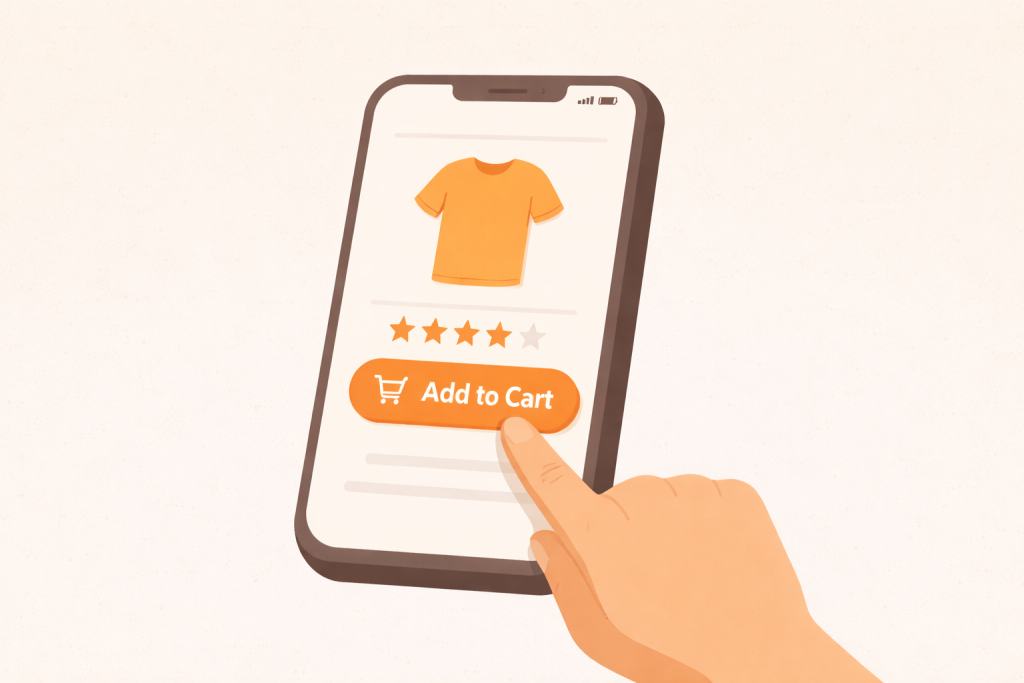
Because “social shopping” is a category-level term, most brands make the same mistake when they write about it: they define it like a dictionary entry and then paste in platform names. But what both Google and humans reward now is experience—proof you understand what breaks in execution. The real work isn’t in saying “UGC builds eCommerce trust,” it’s in showing how user-generated content gets moderated, where it should appear on product pages, which hashtags and creators convert, and how demographics affect the willingness to purchase products through a social shopping experience.
Expertise matters too, because these terms get confused constantly. Social shopping is not the same thing as influencer marketing, and it’s not identical to social commerce strategy either. Social shopping platforms can include live streaming experiences, product pins, and storefronts, but the consistent thread is that the customer experience is led by people and content, not by categories and navigation. If you use the terms interchangeably, your content loses credibility—and your internal stakeholders end up building the wrong functionality into the site.
Authoritativeness is about participation, not claims. In practice that means referencing recognizable retailers, referencing platform realities like TikTok Shop behavior, and acknowledging how social channels actually influence purchasing decisions across the path from discovery to conversion. And trustworthiness is what turns a good article into a page that converts: you don’t promise guaranteed boost sales outcomes, you explain tradeoffs, you talk about pricing constraints, and you’re honest about attribution complexity. That balance is exactly what makes the content feel high-quality rather than salesy.
Trust Strip: Why Authority Validation Still Matters in Social Shopping
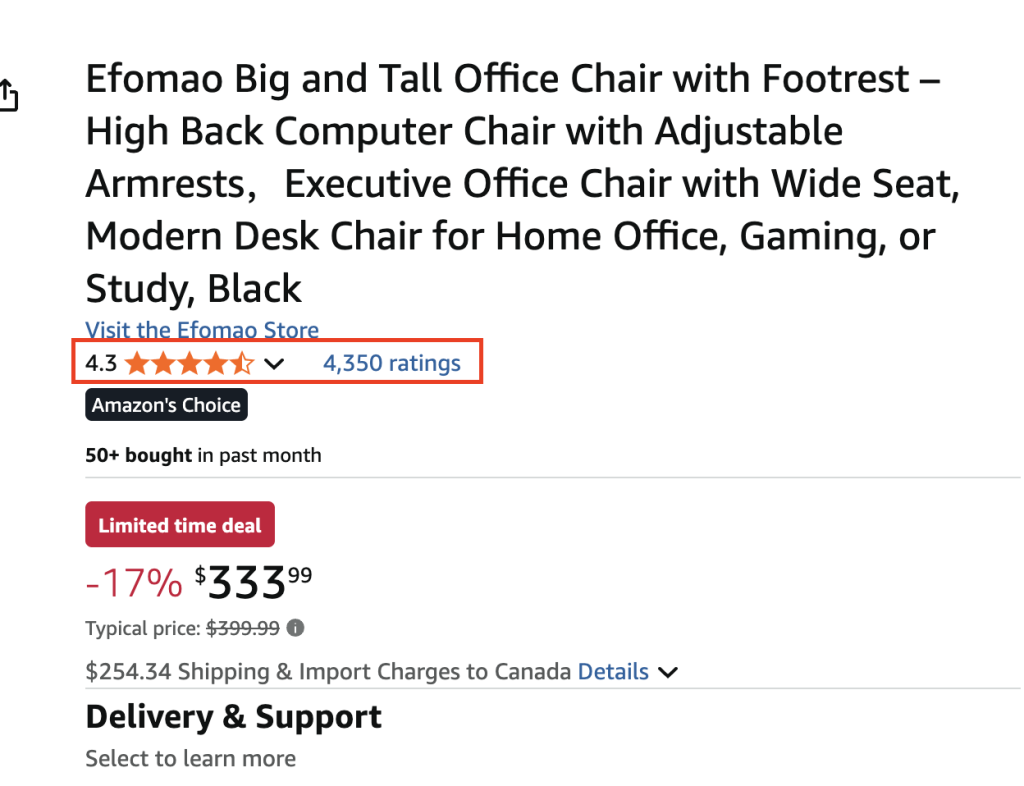
If social shopping is trust-led commerce, the trust strip isn’t a design detail—it’s the first proof point. The shopper who arrives from Instagram Shopping or a TikTok commerce strategy already has context, but not certainty. They’re asking a silent question: “Is this brand legit, and is this product worth it?” That’s why logos, testimonials, and recognizable partnerships do heavy lifting at the top of the funnel; they reduce cognitive load and help people decide faster.
The mistake is treating authority validation as generic social proof. The strongest credibility signals tie directly to how social shopping works. If your hero message promises a seamless shopping experience, but your page doesn’t show the product catalog connection, doesn’t show product tags, and doesn’t show the shopping features in action, trust collapses. In social-first commerce, confidence isn’t just emotional—it’s operational. People trust systems that look like they’ll work.
What Is Social Shopping? A Canonical Definition That Doesn’t Collapse into Buzzwords

Social shopping is the act of discovering, evaluating, and buying products through content-driven social interactions. It’s commerce shaped by social proof and community-driven commerce behaviors—where shoppers are influenced by creators, peers, and real-life context rather than product grids and filters. In practice, it means your customer is shopping through social media shopping experiences like shoppable posts, buyable content examples, live shopping events, and embedded shopping feeds that let them explore products in the same moment they’re feeling interest. This is why social purchasing experiences aren’t just “top of funnel”; they often compress the funnel into a single session.
It also helps to clarify what it is not. Social shopping isn’t simply social commerce, because social commerce includes many transactional models that don’t require content-led discovery. It isn’t purely influencer-powered commerce either, because influencer marketing can drive awareness without creating a streamlined path to checkout. And it’s not just affiliate links, which can create clicks but often break the shopping journey with too many redirects and too little product context. Social shopping is the integration layer—where content, product pages, and checkout align so buyers can act on intent without friction.
How Social Shopping Works: The Real Execution Layer (Not the Theory)

Social shopping typically starts with discovery on social networks—an influencer video, a UGC clip, a product demo, or even a giveaway that generates customer engagement. The customer sees someone they trust try on the product, show how it fits into real life, and explain why it matters. This is where social proof in eCommerce becomes more than a buzzword; it becomes a behavioral trigger powered by consumer decision psychology. If the customer can’t quickly find the specific product, the moment dies.
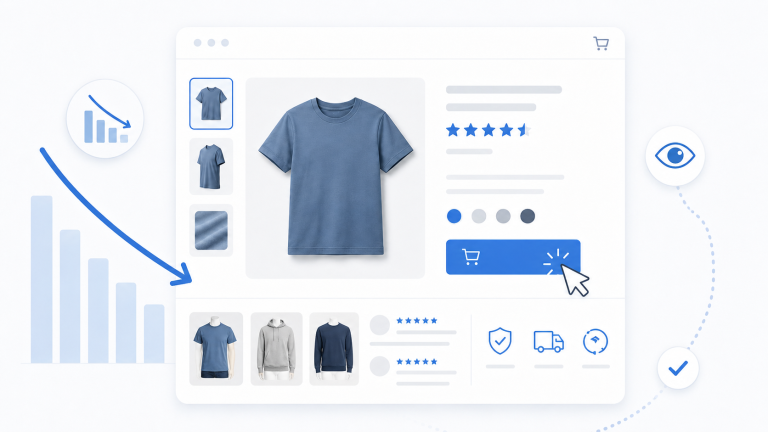
The next step is context: product details, variants, pricing, and assurance that the product will match expectations. This is why Product detail page optimization has become an extension of social strategy. When a shopper lands on a PDP from a shoppable TikTok, they don’t want a sterile product page storytelling experience—they want proof that the product looks good on real people, works in real scenarios, and holds up beyond a studio shoot. If this step is missing, conversion rates drop even when top-of-funnel engagement looks strong.
Finally comes the transaction moment: a seamless shopping experience through a fast checkout flow, increasingly optimized for mobile-first shopping. Depending on platform and strategy, this can happen in-app through TikTok in-app commerce, inside Meta storefronts like Facebook Shops, or on-site where the brand retains more control. Either way, the “how” is consistent: discovery → trust transfer → minimized friction → purchase products now. When the handoff between these steps is clunky, social shopping stops being commerce and turns back into content.
Social Shopping vs Related Terms: Where Strategy Gets Distorted
Most teams lose time because they don’t separate the terms properly. Social shopping is an experience layer: it’s how people shop through social-first commerce behaviors. Social commerce strategy is broader: it includes everything from platform-native shops to omnichannel commerce initiatives that connect in-store and digital. Influencer marketing is an acquisition lever: it can drive brand awareness, but it doesn’t guarantee a cohesive shopping journey. And affiliate links are distribution tactics that often lack the functionality required to keep the buyer in a coherent purchase flow.
This distinction matters because each approach breaks differently. If you treat social shopping like influencer marketing, you’ll invest heavily in collaborations and giveaways but fail to streamline the path to checkout. If you treat it like pure social commerce, you may over-prioritize platform storefronts and under-invest in product pages that actually convert. And if you treat it like affiliate, you may measure clicks instead of outcome metrics like assisted revenue, conversion attribution modeling, and order value growth. In social shopping platforms, success is rarely about a single lever—it’s about system-level alignment.
Why Social Shopping Works: The Behavioral Mechanics Behind the Conversion Lift

Social shopping works because it reduces uncertainty without demanding effort. Instead of asking buyers to interpret claims, it shows them high-quality proof in a format their brain already trusts: other humans using the product. That’s the core of behavioral trust mechanisms—when customers see multiple people validating a product in a natural setting, their risk perception drops. They don’t need more copy; they need reassurance that their outcome will match the story they’re seeing.
This is also why social interactions outperform traditional ecommerce browsing behavior on mobile devices. On a phone, navigation is tedious and attention is thin. But a short clip that showcases products with a quick try on moment and clear product tags is cognitively easy. It turns product discovery into a low-friction experience, and that’s the hidden driver behind higher conversion rates. When social shopping is done correctly, it feels less like “shopping” and more like continuing the scroll—until the customer realizes they’re already at checkout.
The flip side is that when social shopping is built poorly, it breaks trust fast. If product tags are inaccurate, if the product catalog isn’t synced, if storefronts show outdated variants, or if in-app flows lead to dead ends, customers assume the brand is disorganized. And disorganization is the silent killer of social commerce ROI, because it turns purchase intent into hesitation. The real competitive edge isn’t just having social shopping features—it’s executing them in a way that feels effortless.
Social Shopping in Practice: What Winning Brands Actually Do on Shopify
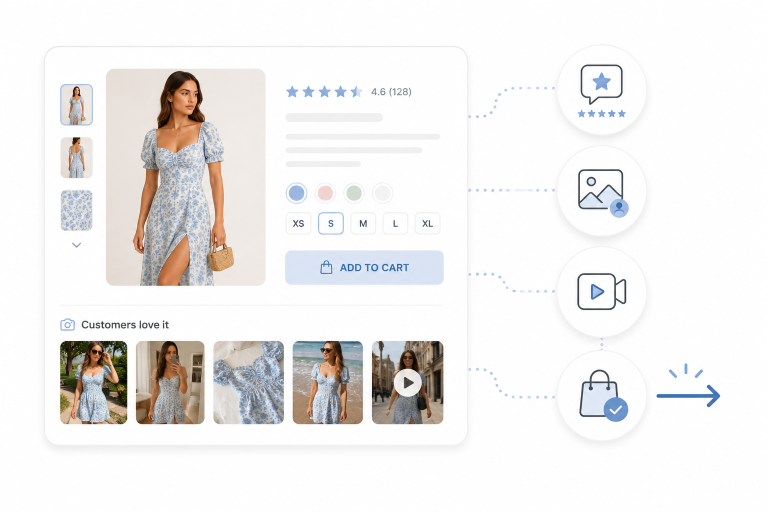
The most effective social shopping playbooks look simple on the surface: they take content that already performs, then place it where it creates the highest trust lift. For fashion, that often means shoppable posts and buyable TikTok videos that lead to product page storytelling modules with UGC at the decision point. For beauty, it often looks like embedded shopping feeds that demonstrate results, routines, and social proof layered into PDP content. For lifestyle categories like home decor, social shopping often wins when product pins and creator clips help shoppers imagine scale, context, and styling in a way studio photography can’t.
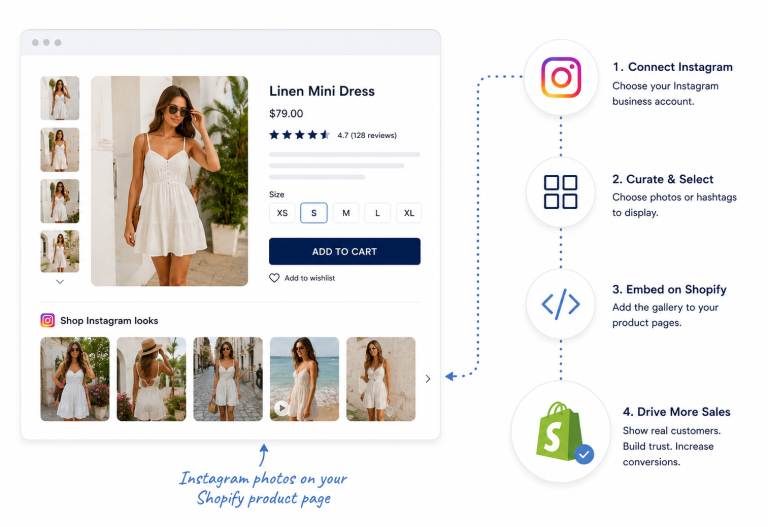
One of the most overlooked execution details is where content lives. Teams often think of social shopping as something that belongs on the homepage. But the reality is that product pages usually carry the conversion moment, which is why Product detail page optimization is where social content drives the biggest incremental lift. People may discover on Instagram Stories, but they decide on the PDP. When you treat that as a system—not a widget—you start to see compounding gains in customer engagement and sales.

This is also where tools like Foursixty tend to outperform DIY embeds, because they operationalize the workflow. In the Pura Vida case study, the brand needed a direct path to purchase from Instagram and a way to display shoppable galleries with both brand and user generated content across their site. They implemented multiple gallery types and reported outcomes like:
- 18.2% click through
- 17% of online revenue generated through Foursixty engagement
- +73% page views
- -34% bounce rate reduction
when visitors interacted with the experience. That’s not magic—it’s what happens when discovery-to-conversion journey mechanics are designed intentionally.

A second real-world example shows the longevity side of the strategy. Frankies Bikinis used Foursixty to harness Instagram content and #UGC by placing it in prominent locations to create an interactive social shopping experience that drives customers to the point of sale.
They reported:
- 23% of total revenue via Foursixty
- 19% of orders via Foursixty
And described using multiple gallery placements to discourage exits and pull shoppers deeper into the site. Again, the lesson isn’t “use this tool.” It’s that social shopping wins when you treat social content as a conversion asset, not just a marketing asset.
Measuring Social Shopping Impact: Metrics That Tell the Truth (and the Ones That Lie)
The easiest mistake in measuring social shopping is over-valuing surface-level metrics. Likes, comments, and hashtags performance can signal resonance, but they don’t prove that your social commerce strategy is driving revenue. The metrics that matter connect social behavior to business outcomes: click through to product pages, assisted conversions, conversion rates by content placement, and changes to average order value. If you want return on social commerce investment, you need measurement that explains what changed in the shopping experience—not just what got attention.
You also need to be honest about what attribution can and cannot do. Social shopping creates nonlinear paths, because customers bounce between social channels, in-store context, product pages, and even cross-device behavior. That makes conversion attribution modeling imperfect, especially for omnichannel commerce brands. But imperfect doesn’t mean useless. A thoughtful approach combines directional metrics with controlled tests: shift where UGC appears, compare engagement-to-purchase funnel performance, and watch how behavior changes over time.
When teams ignore these nuances, they optimize the wrong thing. They may over-invest in influencer marketing because it drives traffic, while under-investing in the on-site functionality that makes traffic convert. Or they might treat in-app purchasing as the only win, even if it limits customer data, merchandising control, or cross-sell opportunities. Social shopping works best when measurement supports decision-making, not when it simply validates the loudest channel.
Challenges and Considerations: The Credibility Section Most Brands Skip
The biggest operational challenge in social shopping is moderation and governance. User-generated commerce content is powerful, but not all UGC is usable, and not every creator collaboration aligns with your brand. Without control, you end up with inconsistent messaging, mismatched product tags, and social proof that actually decreases trust because it feels chaotic. High-performing retailers treat UGC like merchandising: curated, intentional, and aligned to the customer experience.
Platform dependency is another real constraint. TikTok Shop can generate explosive demand in the right demographics, especially during live streaming or live shopping events, but that doesn’t mean it fits every brand model. Some categories thrive in the energy of TikTok in-app commerce, while others need deeper education and longer-form storytelling that fits shoppable video commerce like YouTube Shopping. The platform should match the product’s decision cycle, not the other way around.
Then there’s pricing and margin reality. Social shopping can drive sales, but it can also drive discount expectations if the brand relies too heavily on giveaways, aggressive promotions, or creator-driven “limited time” mechanics. The long-term winners streamline the experience without training customers to wait for deals. Social shopping should amplify product confidence, not erode brand positioning.
How Foursixty Enables Social Shopping
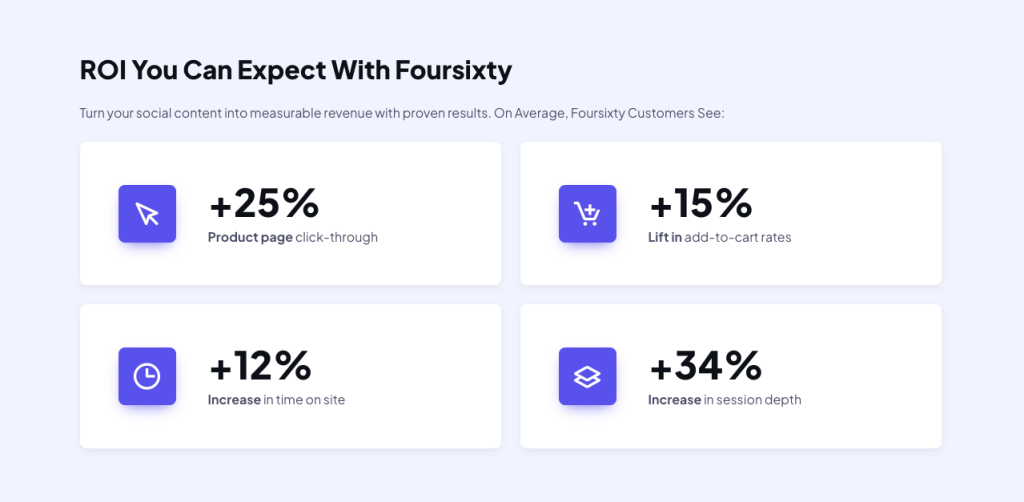
Social shopping doesn’t require one specific vendor—but it does require the right infrastructure. You need a way to collect and curate UGC, connect it cleanly to your product catalog, and deploy it where it increases conversion rates without creating performance or governance issues. You also need the measurement layer, because social commerce ROI isn’t persuasive unless revenue attribution is credible enough for leadership teams to invest.
That’s the role Foursixty plays when it’s implemented well: it helps ecommerce brands turn social media content into interactive commerce content that actually supports the purchase moment. It’s especially useful for teams that want to scale shoppable galleries, clickable media galleries, and product-tagged posts across PDP content modules without turning every iteration into a dev sprint. The brands that win here don’t just “add social.” They build social-first commerce into how the storefront works.
If you want a practical reference for what this looks like in production, the Pura Vida and Frankies case studies are good examples of how influencer content and UGC can be turned into an interactive, shoppable experience that drives customers to the point of sale—and how that can translate into measurable revenue contribution when executed across key product pages and placements.
Foursixty helps Shopify brands close the gap between inspiration and purchase by turning Instagram content and user-generated content into shoppable storefront experiences that build trust and boost sales. Download our highly rated app in the Shopify app store. Shopify integration can take less than 1 hour.
Book a strategy call with our sales leader
FAQs: Social Shopping, Answered Like an Operator
What is the meaning of social shopping?
Social shopping means customers discover and evaluate products through social interactions, then purchase in a way that feels native to the content experience. It’s not just people chatting about products—it’s social proof, creators, and communities directly influencing purchasing decisions. The defining feature is that the shopping journey stays connected to real people and real context, rather than feeling like a separate “store mode.”
How does social shopping work?
Social shopping works by turning content into product discovery and then shortening the path from interest to checkout. A shopper sees a product in a shoppable post, live shopping event, or influencer clip, then uses product tags or embedded shopping feeds to explore product details. When the experience is well-built, customers can purchase products quickly—whether in-app through Instagram Shopping or TikTok Shop, or on-site through optimized product pages.
What is an example of a social shopping network?
A common example of a social shopping network is Instagram, where Instagram Stories and Instagram Shopping features help customers discover and shop directly through content. TikTok is another, especially with TikTok Shop enabling product discovery and buying behaviors inside the platform. Pinterest also plays this role with its Buyable Pins ecosystem, where product pins function as discovery-based shopping entry points.
What is an example of live social shopping?
An example of live social shopping is a brand running live streaming sessions where a host showcases products, answers questions in real-time, and pushes viewers toward purchase. These live shopping events work especially well when the host can demonstrate fit, explain use cases, and reduce objections live. This model has become especially visible through TikTok Shop, but it also shows up across other social shopping platforms.
What is social shopping?
Social shopping is a social-first commerce approach where commerce happens through content, social interactions, and community validation. Instead of browsing categories, customers discover products from creators, UGC, and peer proof, then convert through a streamlined experience. The best social shopping experience makes buying feel like a natural continuation of consuming content.
What is Social Commerce?
Social commerce is the broader category of buying and selling through social media platforms and social networks. It includes in-app storefronts like Meta storefronts, Facebook Shops, and embedded shopping tools that allow checkout to happen closer to discovery. Social shopping is often a major part of social commerce, but social commerce can also include paid placements, partnerships, and platform-specific purchasing flows that don’t rely on social proof.
How is it a game changer for eCommerce?
It’s a game changer for ecommerce because it changes where conversion begins. Instead of starting with a search query, customers start with content, and they build trust before they ever see a product page. When brands connect that intent to a seamless shopping experience, social shopping can improve conversion rates, increase brand awareness, and reduce the friction that normally kills impulse or discovery-driven purchases.
What are the benefits of a social commerce strategy?
A strong social commerce strategy increases product discovery, builds trust through social proof, and creates more conversion opportunities across social channels. It also improves customer engagement by letting customers interact with products in formats they already enjoy, like video, creator posts, and live shopping events. The best strategies also improve revenue attribution clarity because brands can track how content influences purchasing decisions across the funnel.
What is the most popular platform for social media shopping?
The most popular platform for social media shopping depends on category and demographics, but Instagram Shopping and TikTok Shop are commonly at the center of most modern strategies. Instagram often performs well for visually-driven products and established influencers, while TikTok tends to drive discovery-led spikes through content velocity. Many retailers find that performance is strongest when they combine both, rather than betting on a single network.
Where can businesses find billions of potential customers any day, any time?
Businesses can find billions of potential customers any day, any time on social networks and major social media platforms where people spend hours consuming content. That includes social channels like Instagram, TikTok, YouTube, and Facebook, where discovery happens continuously. Social shopping features simply turn that attention into commerce pathways.
How is social shopping influencing consumer behavior?
Social shopping is influencing behavior by shifting trust away from brand-only messaging and toward peer validation, creator endorsement, and visible real-world use. Customers increasingly rely on UGC, testimonials, and social proof psychology to decide if something is worth buying. This also compresses the shopping journey, because when trust is built early, customers move faster from discovery to checkout.
How can brands leverage social shopping to increase sales?
Brands leverage social shopping by connecting influencer marketing and UGC to conversion-ready placements like product pages and storefronts. The key is to streamline the path to checkout through accurate product tags, high-quality content placement, and a mobile-first experience that keeps momentum intact. When brands optimize these touchpoints, they don’t just boost sales—they build a repeatable growth system driven by community and content.
How is social shopping transforming the retail industry?
Social shopping is transforming retail by blending in-store style influence with online shopping speed. Shoppers now expect to “see it on someone,” understand it instantly, and buy it without friction. Retailers that adopt social purchasing experiences effectively are redesigning merchandising around content, collaborations, and community—not just around product catalogs and category pages.