You can have the best product, the most creative ad campaigns, and beautifully designed landing pages, but none of it matters if shoppers don’t click “Add to Cart.”
The add-to-cart rate (ATC) is one of the most important ecommerce metrics — a real-time pulse check on how well your product pages turn website visitors into potential customers. And while many brands focus on conversion rate at checkout, improving add-to-cart behavior earlier in the customer journey often unlocks far bigger revenue gains.

Marketing strategist Rashel Hariri sums it up clearly:
“Remove friction. That could mean faster load times, clearer CTAs, surfacing social proof earlier, or simplifying the path to purchase. The job of the PDP is to make ‘yes’ feel obvious and easy.”
This guide breaks down everything you need to know to boost your add-to-cart conversion rate — from benchmarks and tracking to the UX tweaks and shoppable UGC integrations that deliver higher performance.
1. What Is Add-to-Cart Rate?

Your add-to-cart rate measures the percentage of sessions in which users add at least one product to their shopping cart. It’s a crucial KPI that reveals how well your product detail pages (PDPs) engage visitors and push them closer to checkout.
It’s typically calculated as:
Add-to-Cart Rate = (Total number of add-to-cart actions ÷ Total number of sessions) × 100
For example, if your online store sees 10,000 sessions in a month and 700 of them include an add-to-cart action, your ATC rate is 7%.
This metric is about more than button clicks — it’s about the strength of your user experience, the clarity of your product descriptions, and how well your content overcomes hesitation.
2. Why Add-to-Cart Rate Matters
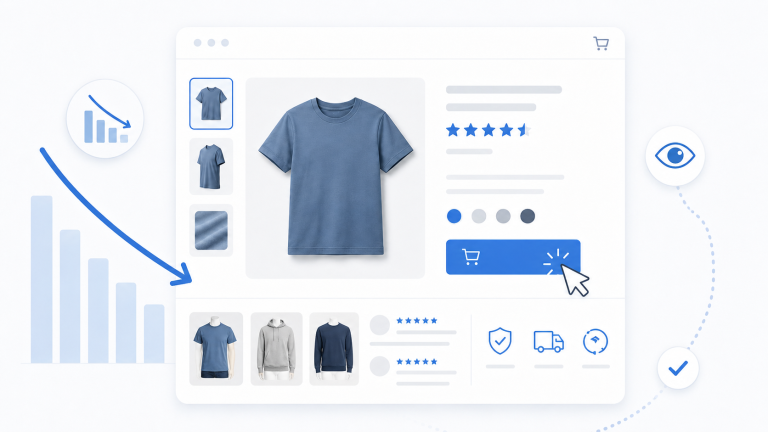
Your add-to-cart rate sits at the center of your conversion funnel. It’s the bridge between product discovery and the checkout process, and it influences key outcomes like:
- ROAS & marketing efficiency: If traffic doesn’t convert into carts, your paid spend isn’t returning value. This is especially important when you’re paying for social campaigns and want to turn your instagram traffic into conversions.
- Total revenue: More carts = more checkout opportunities = more sales.
- Funnel health: A strong ATC rate signals healthy PDP UX, strong social proof, and effective messaging.
- Cart abandonment rate: Optimizing ATC early often reduces abandoned carts downstream.
Hariri warns that if your PDP doesn’t convert, you’re wasting budget:
“You can pour money into ads and landing pages, but if the PDP doesn’t convert, you’re wasting budget. It’s the final stage of the buyer journey where intent turns into action.”
3. How to Track Add-to-Cart Rate
Tracking ATC performance accurately is essential for diagnosing where users drop off and where UX optimization will have the biggest impact.
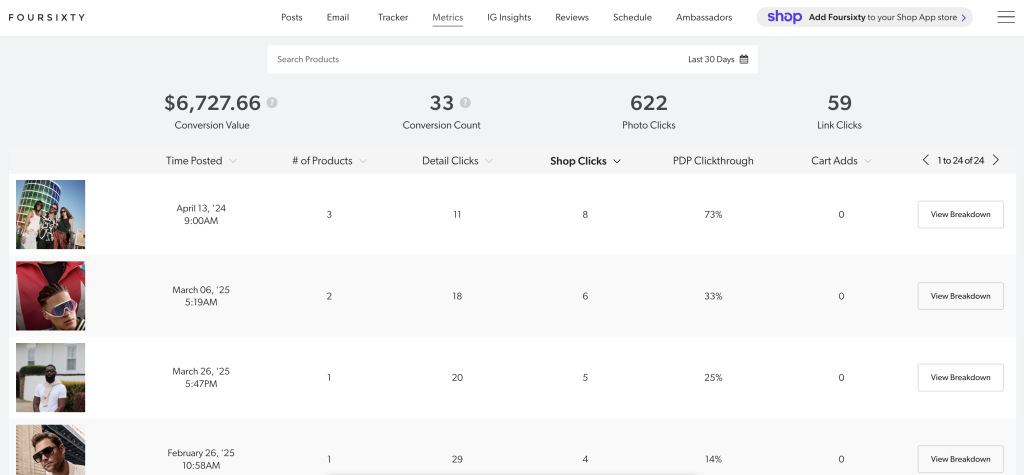
Here’s how to do it:
- Google Analytics 4 – Track ATC as an event and segment by source, device, or product to spot trends.
- Heatmaps & Session Recordings (Hotjar, FullStory) – Reveal where users stop scrolling, how far they get down the page, and where friction appears.
- Funnel Visualization Tools – See how many sessions drop between PDP view and add-to-cart.
- Shopify Analytics – If you run a Shopify store, track ATC at the product level to see how individual pages perform.
Pair this data with supporting metrics like scroll depth, time on page, and exit rate to get a fuller view of user engagement and PDP health.
4. Add-to-Cart Rate Benchmarks by Industry
Benchmarks vary widely depending on category, pricing, and buying behavior. Here’s how good add-to-cart rates break down by vertical:
| Industry | Avg. Add-to-cart rate |
| Food & Beverage | 10-11% |
| Beauty & Personal | 8-9% |
| Fashion & Apparel | 7-8% |
| Consumer Goods & Retail | ~6% |
| Home & Decor | 3-4% |
| Luxury & Jewelry | 2.5-3.5% |
| Consumer Electronics | 3-4% |
Across all industries, the average add-to-cart rate hovers around 6–7%, but Hariri emphasizes that “the real goal isn’t to obsess over the benchmark — it’s to beat your own baseline.”
If you’re below your vertical’s average, that’s a red flag that your PDP content, user experience, or call-to-action needs attention.
5. How to Improve Add-to-Cart Rate
Boosting ATC isn’t about a complete redesign — small, strategic changes can create double-digit lifts. Here’s where to focus:
Optimize PDP UX and Reduce Friction

Friction kills conversions. The most common causes of abandonment before “Add to Cart” include:
- Slow load times
- Confusing navigation
- Unclear pricing or hidden shipping costs
- Missing return policy or FAQs
- Vague product descriptions or low-quality product images
Every unnecessary click, question, or delay increases the odds of cart abandonment. Streamline the experience and keep the path to purchase clear.
Elevate Visuals and Social Proof

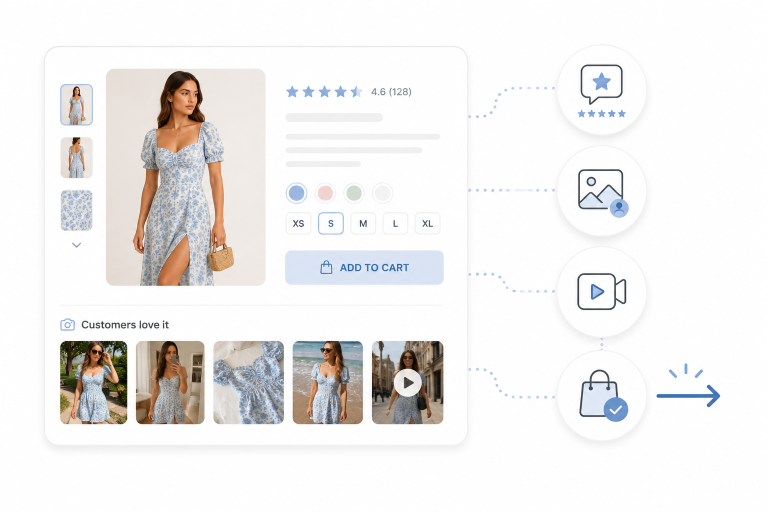
“Visuals are everything,” says Hariri. “Shoppable galleries and UGC close the gap between inspiration and purchase.”
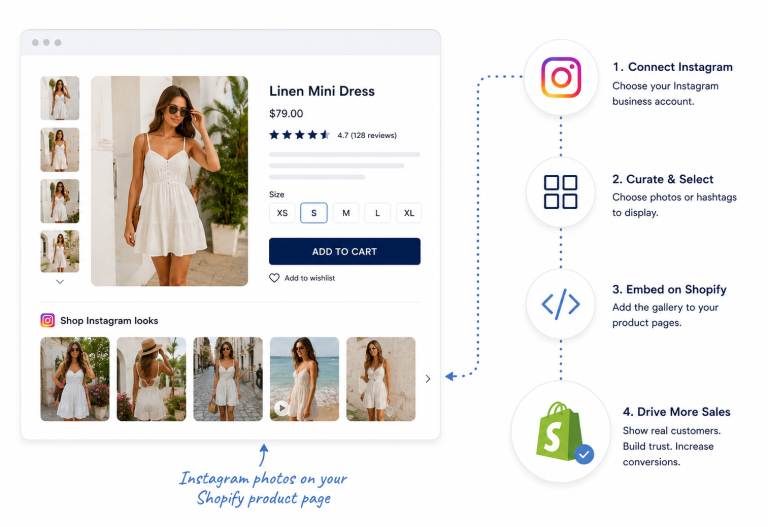
- Add shoppable UGC galleries to show products in real life, on different people, and in various contexts.
- Use zoomed-in images to highlight fabric, texture, and details.
- Incorporate lifestyle photography and vertical video for mobile devices.
- Move reviews and testimonials above the fold to instantly build trust.
Shoppers are more likely to click Add to Cart when they can visualize ownership. This is why social proof and real-world content consistently outperform brand-generated assets.
Improve Speed and Mobile Experience
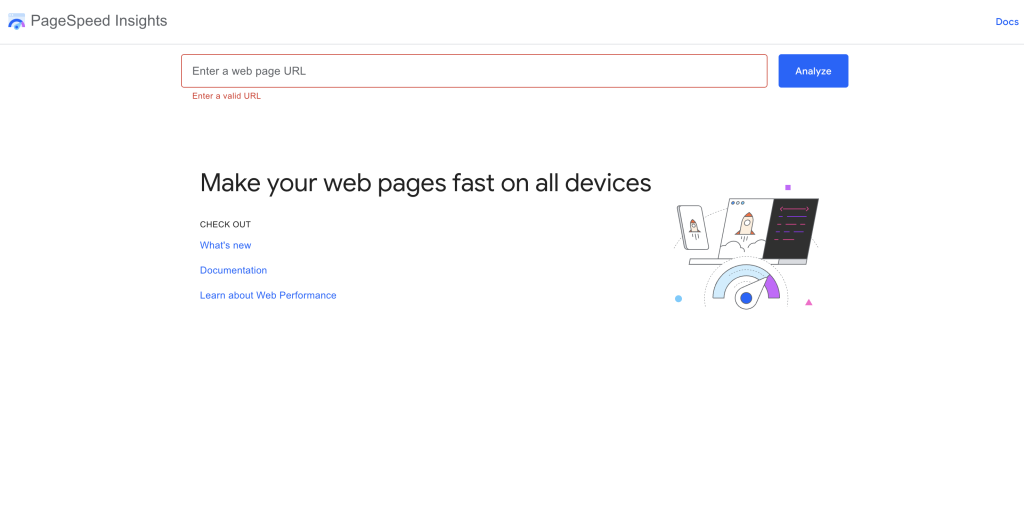
With the majority of ecommerce sessions happening on mobile, your site must be lightning-fast and mobile-first:
- Compress and lazy-load images.
- Use a sticky Add to Cart button so users never have to scroll back up.
- Keep content scannable with bullets and bold sub-headings.
- Avoid clutter and excessive pop-ups that distract users.
As Hariri notes, “If your PDP drags, mobile users are gone — usually back to Instagram or TikTok. Every second matters.”
Leverage Scarcity, Incentives, and One-Click Options
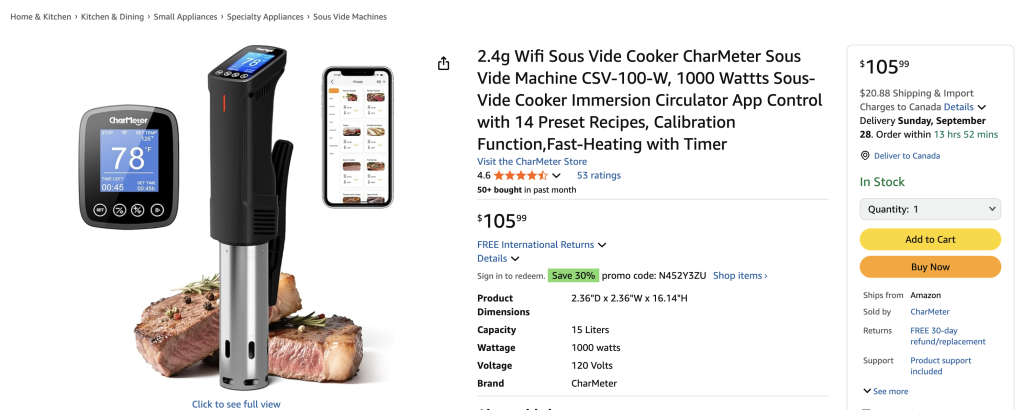
Subtle nudges can push hesitant shoppers over the line:
- Highlight low stock or limited-time offers for FOMO.
- Offer free shipping over a threshold.
- Add “Buy Now” buttons to streamline the path from PDP to checkout process.
- Include smart product recommendations to increase average order value.
Even small incentives can meaningfully lift the total number of add-to-cart actions.
🧪 Run A/B Tests for Continuous Improvement
Use A/B testing to validate changes before rolling them out site-wide. Test elements like:
- Button placement, color, and size
- UGC vs. brand photography
- Short vs. long descriptions
- Price display or pricing strategies
- Placement of trust signals
Iterate based on results and use tools like Google Analytics, heatmaps, and session recordings to understand behavior changes behind each lift.
6. Case Study: How Foursixty Drove +23% Revenue Through UGC-Driven PDPs
A powerful example of improving add-to-cart performance comes from Frankies Bikinis. By integrating Foursixty’s shoppable UGC galleries into their product pages, they turned static PDPs into dynamic, trust-driven sales tools.
- 23% of total revenue was influenced by Foursixty.
- 19% of all orders came directly from UGC-driven PDP content.
This wasn’t achieved through a massive redesign — just by embedding authentic social proof and shoppable content directly into the PDP.
Other Foursixty success stories include:
- MICHI: 51× ROI within 30 days from UGC integrations.
- Pura Vida Bracelets: Transformed social engagement into conversions by surfacing influencer content on PDPs.
The takeaway? Real-world visuals shorten the distance between browsing and buying — and they’re one of the fastest ways to achieve a higher add-to-cart conversion rate.
7. CTA: Use Foursixty to Boost Your Add-to-Cart Rate
Your add-to-cart rate isn’t just a number — it’s a reflection of how well your ecommerce site captures intent and turns it into revenue. Every element — from visuals and social proof to CTA placement and page speed — plays a role in whether users buy or bounce.
If you’re ready to turn “I like it” into “I bought it,” Foursixty is your fastest path to results. By integrating shoppable user-generated content, real-time social proof, and influencer galleries directly into your PDPs, Foursixty helps Shopify stores and leading ecommerce businesses achieve significantly higher add-to-cart rates.
Book a demo with Foursixty today and discover how UGC-driven product pages can streamline your path to purchase and supercharge conversions.
Final Takeaway
Improving your add-to-cart rate is about more than button color or copy tweaks — it’s about removing friction, building trust, and creating a user-friendly, mobile-optimized PDP experience that makes “yes” feel easy.
When ecommerce stores invest in optimizing the add-to-cart journey — with fast load times, strong social proof, smart incentives, and shoppable content — they see fewer abandoned carts, more engaged visitors, and a healthier funnel from first click to checkout.