The Shopify App Store is crowded with affiliate marketing apps, referral tools, and all-in-one solutions promising to drive sales with minimal effort. The problem is not a lack of options, it’s that most ecommerce brands select an app based on surface features rather than how it fits their customer journey.
Affiliate marketing works exceptionally well for ecommerce because it aligns incentives. Influencers, creators, and partners promote products they already believe in, earning payouts or store credit when referral sales occur. But the moment tracking breaks, attribution becomes unclear, or payouts feel unreliable, trust erodes, for affiliates and customers alike.
The goal of this article is not to crown a single “best” web or mobile app in isolation. Instead, you’ll walk away understanding which affiliate marketing program fits your Shopify store, your pricing tolerance, your onboarding capacity, and your broader retention and UGC strategy.
What Actually Matters in a Shopify Affiliate Marketing App
Before comparing tools, it’s worth reframing how affiliate software should be evaluated. An affiliate marketing app is not just a tracking layer; it’s a relationship system that sits between your brand, your affiliate partners, and your checkout.
Ease of setup matters because friction delays momentum. Commission structures matter because overly complex logic discourages new affiliates. A clean affiliate dashboard and affiliate portal matter because affiliates need to see real-time performance to stay motivated. Fraud prevention matters because coupon abuse, MLM-style exploitation, or self-referrals can quietly destroy margins.
Just as important are payout mechanics, whether you support PayPal payouts, store credit, or automated payments, and how well the app integrates with Shopify checkout, coupon codes, subscriptions, and attribution models. Transparent pricing, responsive customer support, and a reliable support team are not “nice to have”; they are the difference between a program that scales and one that quietly fails.
Best Shopify Affiliate Marketing Apps (With Reviews & Source Transparency)
1. UpPromote Affiliate Marketing
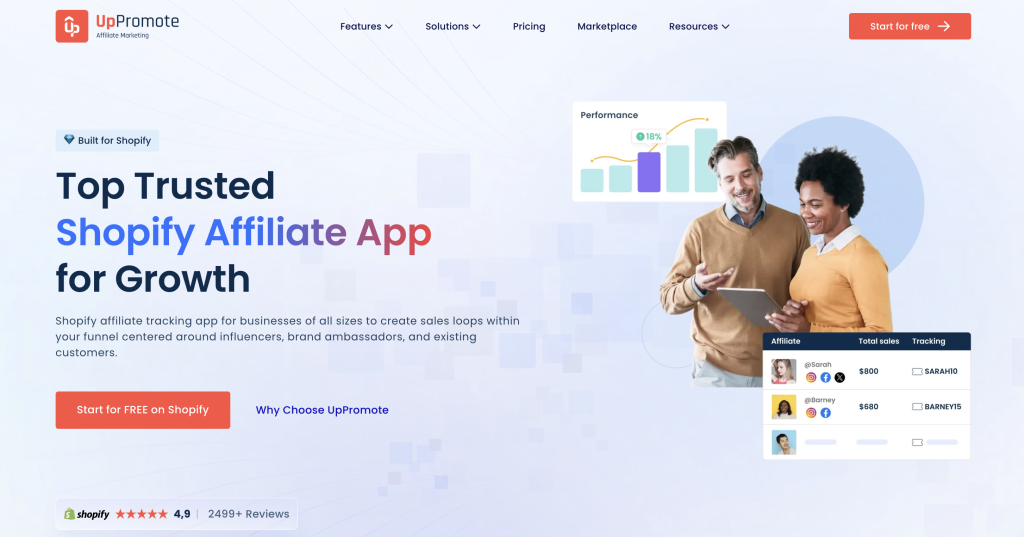
Best for: Most Shopify stores, from beginner programs to scaling brands
UpPromote has become one of the most frequently recommended Shopify affiliate apps because it balances breadth of functionality with ease of use. From onboarding new affiliates to managing flexible commission structures, the app is designed to reduce friction for both merchants and partners. Its affiliate dashboard and affiliate portal are intuitive enough for beginners while still offering advanced features like custom commission, coupon codes, referral links, and limited multi-level marketing logic.
Across Reddit discussions, UpPromote is often cited as a “safe default” for merchants who want to avoid overengineering their affiliate marketing program. Merchants frequently mention reliable affiliate tracking, solid real-time reporting, and a responsive support team. On G2-style comparison pages, UpPromote typically scores higher than older tools like LeadDyno for user experience and customer support responsiveness, especially when managing payouts and attribution.
Pros
- Easy onboarding for new affiliates
- Flexible commission structures (custom commission, tiered payouts)
- User-friendly affiliate dashboard and portal
- Strong customer support reputation
- Reliable real-time tracking and attribution
Cons
- Advanced automation features require higher pricing tiers
- Free plan limits advanced functionality
Final recommendation:
UpPromote is the best overall choice for most Shopify stores that want an all-in-one affiliate marketing app that can grow with them, from first referral sales to more structured affiliate programs.
Sources & URLs to Verify
- https://www.reddit.com/r/ecommerce/comments/s0rz2k/recommended_affiliate_program_for_shopify_site/
- https://www.g2.com/compare/leaddyno-vs-uppromote-affiliate-referral
2. Refersion
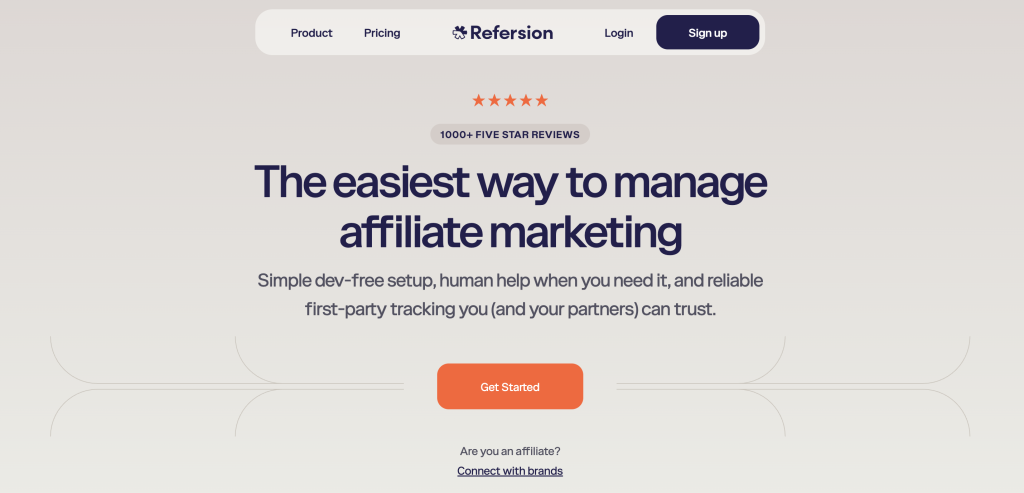
Best for: Scaling brands and influencer-heavy affiliate programs
Refersion is widely viewed as an enterprise-leaning affiliate marketing platform, especially well suited for brands that run influencer marketing and brand deals on Instagram at scale. Its reporting depth, attribution controls, and affiliate performance visibility appeal to ecommerce teams managing large volumes of referral sales and multiple affiliate partners.
Reddit threads frequently mention Refersion when discussing influencer-led affiliate programs, particularly for brands that want access to an affiliate network rather than building everything from scratch. Reviews across comparison blogs and G2-like platforms note that Refersion’s dashboard is robust but comes with a steeper learning curve and higher pricing, making it less ideal for small or early-stage Shopify stores.
Pros
- Advanced reporting and attribution controls
- Strong influencer marketing and affiliate network integrations
- Scales well with large affiliate partner programs
- Reliable real-time analytics
Cons
- Higher pricing compared to other Shopify affiliate apps
- Less beginner-friendly onboarding
- Requires more setup time
Final recommendation:
Refersion is best for mid-market and enterprise Shopify brands that already invest in influencer marketing and want advanced affiliate tracking with strong reporting.
Sources & URLs to Verify
3. Affiliatly
Best for: Budget-conscious stores and simple affiliate programs
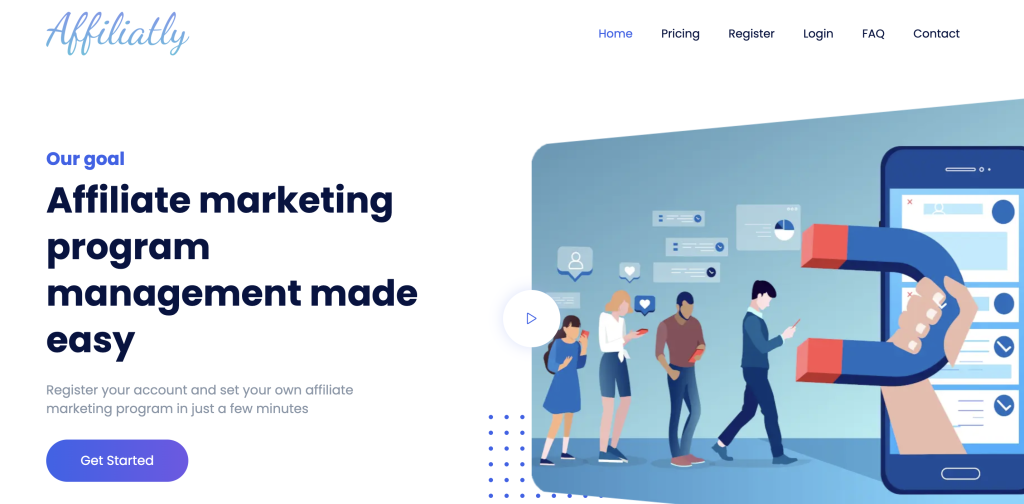
Affiliatly focuses on delivering core affiliate marketing functionality without unnecessary complexity. It supports essential features such as referral links, coupon codes, basic commission structures, and straightforward affiliate tracking. For merchants who want to test referral marketing without committing to premium pricing, Affiliatly can be a practical entry point.
In comparisons and review roundups, Affiliatly is often positioned as a simpler alternative to more feature-rich tools like GoAffPro or UpPromote. While the app does its job, many reviewers note that its UI is less polished and that it lacks deeper automation or analytics, tradeoffs that matter more as a program grows.
Pros
- Affordable pricing tiers
- Simple setup and onboarding
- Basic commission and referral tracking
Cons
- Less polished interface
- Limited automation and analytics
- Not ideal for scaling programs
Final recommendation:
Affiliatly is best for small Shopify stores that want a low-cost way to experiment with affiliate marketing before investing in more advanced tools.
Sources & URLs to Verify
4. LeadDyno
Best for: Established Shopify stores with consistent traffic
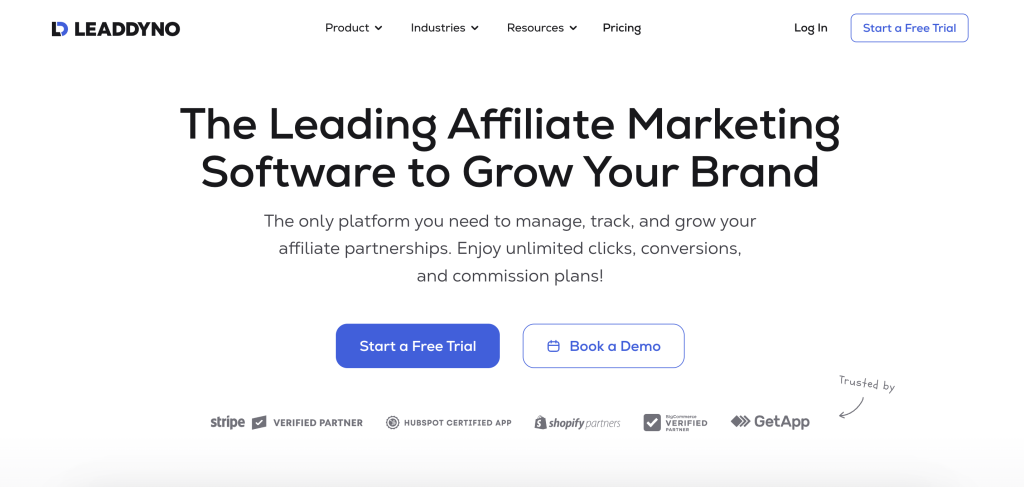
LeadDyno is one of the longer-standing affiliate marketing apps in the Shopify ecosystem. Its strength lies in automation, particularly onboarding emails, affiliate communications, and campaign tracking. Many ecommerce businesses appreciate that LeadDyno doesn’t just track referral links but also supports structured affiliate engagement.
However, reviews from merchants and comparison blogs suggest that LeadDyno’s interface feels dated compared to newer platforms. Pricing concerns also appear frequently, especially as traffic scales and visitor-based billing kicks in. These factors make LeadDyno a better fit for stores that already have predictable revenue and operational maturity.
Pros
- Mature affiliate tracking system
- Built-in onboarding and email automation
- Suitable for higher-volume programs
Cons
- Dated UI compared to newer apps
- Less beginner-friendly
- Pricing can escalate with traffic
Final recommendation:
LeadDyno is best for established Shopify stores that already generate steady traffic and want a structured affiliate system with automation baked in.
Sources & URLs to Verify
5. GoAffPro
Best for: Startups and new Shopify stores
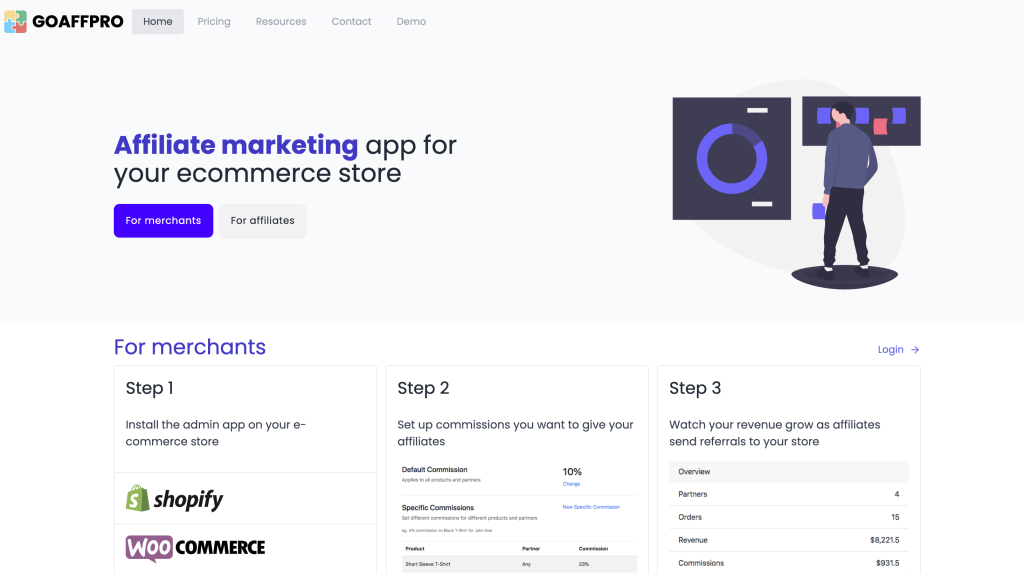
GoAffPro has gained traction largely due to its generous free plan and support for unlimited affiliates. This makes it especially attractive to startups and early-stage Shopify stores that want to launch an affiliate marketing program quickly without committing to upfront costs.
Comparative reviews often highlight GoAffPro’s flexibility around commission structures, including multi-level marketing-style logic, as well as its customizable affiliate portal. That said, some users report a steeper learning curve when navigating advanced settings, especially without prior affiliate marketing experience.
Pros
- Free plan with unlimited affiliates
- Flexible and custom commission structures
- Real-time affiliate tracking and reporting
- Customizable affiliate portal
Cons
- Interface can feel complex for beginners
- Advanced features require configuration
Final recommendation:
GoAffPro is best for new Shopify stores and startups that want to experiment with referral sales early and scale without immediate software costs.
Sources & URLs to Verify
- https://blog.goaffpro.com/the-complete-affiliate-marketing-platform-comparison-2025/
- https://blog.goaffpro.com/goaffpro-vs-affiliatly/
Comparison Table (Decision Support)
| Feature | UpPromote | Refersion | Affiliatly | LeadDyno | GoAffPro | Notes |
| **Price** | Free → Premium plan | Paid | Low-cost | Paid | Free plan available | Various pricing models |
| **Best For** | Most stores | Scaling brands | Budget stores | Established traffic | New stores | Target audience for each app |
| **Commission Types** | Custom / Flexible | Advanced | Simple | Advanced | Basic | Flexibility in setting commissions |
| **Ease of Use** | High | Medium | Medium | Low–Medium | High | User experience rating |
| **Shopify Rating** | High | High | Medium | Medium | High | App store rating |
Final Recommendation: Picking the Right Fit
The affiliate marketing landscape on Shopify is broad, and each app fits a different stage of growth and strategy:
- For most Shopify stores: UpPromote strikes the best balance of onboarding ease, dashboard quality, flexible commission structures, and support. Its combination of referral and affiliate marketing functionality makes it a long-term choice.
- For scaling with influencers: Refersion is ideal when you already invest in influencer marketing or plan to go heavy on creator and brand deals.
- For budget or simple setups: Affiliatly is a straightforward choice that gets you started without heavy tooling.
- For established traffic and automation: LeadDyno fits stores with existing scale and workflows that need deeper onboarding automation.
- For new stores or unlimited affiliates: GoAffPro provides huge affiliate potential early, especially when paired with social proof ecommerce tactics like UGC and shoppable posts.
Remember, the affiliate app you choose is the engine, but conversion psychology, referral link visibility, and how you support affiliates with marketing assets and incentives will determine whether referral sales truly drive growth.
Common Mistakes That Break Affiliate Programs
Most affiliate marketing programs don’t fail because of technology, they fail because of execution. Brands skip onboarding and assume affiliates will “figure it out.” They create overly complex commission structures that confuse partners. They neglect fraud prevention, allowing coupon abuse or self-referrals.
Perhaps most damaging is poor communication. Affiliates are partners, not traffic sources. When reporting lags, payouts are unclear, or support goes silent, programs collapse quietly.
Affiliate Marketing Best Practices That Actually Scale
Successful programs balance generosity with discipline. Commission benchmarks should be competitive but sustainable. Recruiting affiliates requires proactive outreach, not passive signup pages. Managing payouts through automated dashboards reduces friction and builds trust.
Legal disclosures, especially FTC compliance, are non-negotiable. Measuring affiliate ROI requires tying referral links and coupon codes back to real conversion metrics, not vanity clicks.
Where Foursixty Fits: Affiliate-Adjacent, Not Redundant
This is where many brands miss a critical layer.
Affiliate marketing brings traffic. Foursixty converts it.
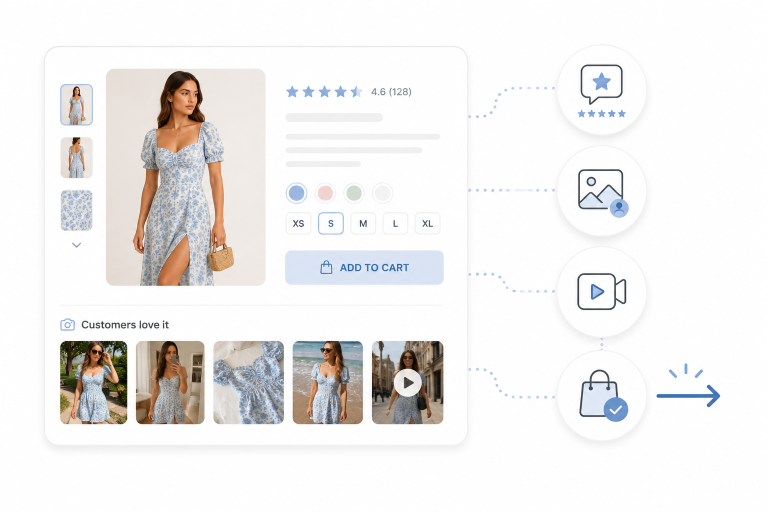
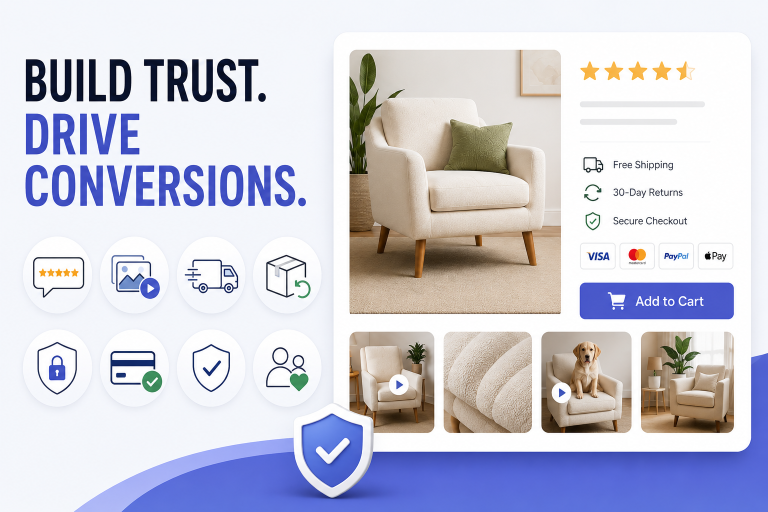
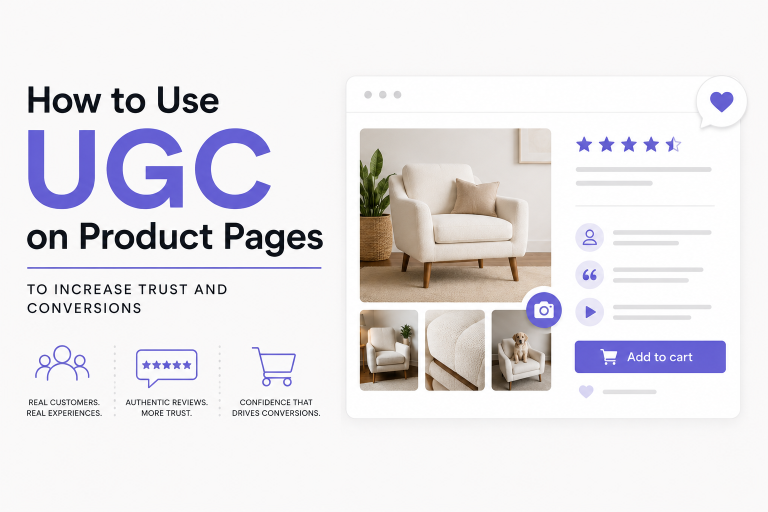
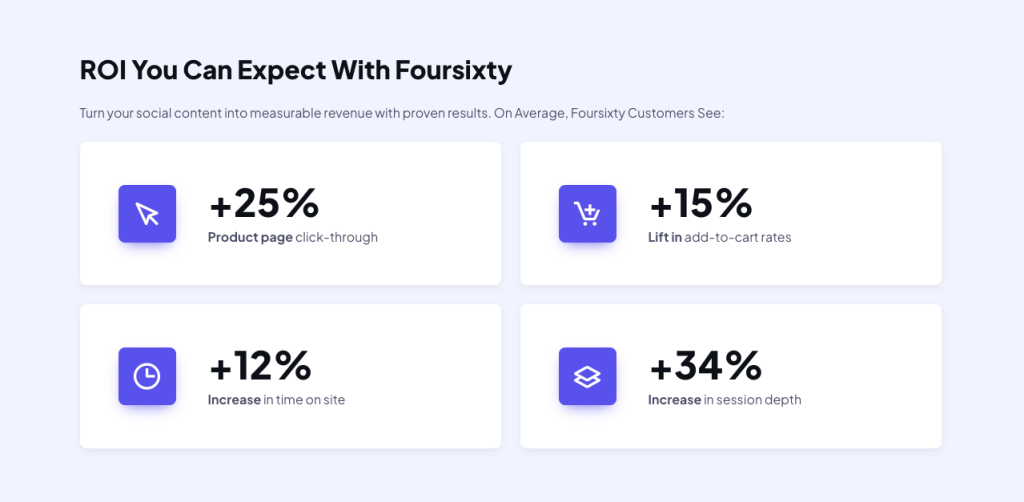
Brands that use UGC and shoppable galleries consistently outperform those that rely on traditional product pages. When influencer or affiliate traffic lands on PDPs enriched with shoppable content examples, UGC marketing, and social proof ecommerce elements, add-to-cart rate and conversion rate increase meaningfully.
Case studies from Pura Vida, Frankies Bikinis, and MICHI show that pairing referral traffic with shoppable social experiences turns affiliate programs from “traffic experiments” into predictable revenue systems. This is customer journey optimization in practice.
A Clear Recommendation
Affiliate marketing works when trust, tracking, and conversion are aligned.
For most Shopify stores, UpPromote is the best overall starting point. GoAffPro is ideal for beginners. Refersion is best for scaling, influencer-led brands. But no affiliate marketing app succeeds in isolation.
If you want referral traffic to actually drive sales, you must pair affiliate programs with strong on-site conversion, and that’s where Foursixty becomes the multiplier, turning influencer and referral traffic into revenue through shoppable galleries, UGC strategy, and social proof.
Try Foursixty to amplify your Shopify conversions
Frequently Asked Questions (FAQs)
What is the best Shopify affiliate app?
There is no universal best app, the right choice depends on your store size, budget, and growth model. UpPromote is often the best all-around choice, while Refersion excels for influencer-heavy programs. Many stores start with a free plan and upgrade as affiliate performance proves ROI.
Can you make $100 a day with affiliate marketing?
Yes, but only with the right combination of traffic, attribution, and conversion optimization. Affiliate marketing alone does not guarantee revenue; the Shopify store experience, PDP optimization, and social proof matter just as much. Brands that pair affiliate traffic with UGC and shoppable content convert far more efficiently.
How to make $10,000 per month with affiliate marketing?
At that level, affiliate marketing becomes a system, not a tactic. You need multiple affiliate partners, automated payouts, clear commission structures, and strong post-purchase retention. Conversion rate and average order value matter more than raw traffic.
Is there an affiliate program for Shopify?
Shopify itself offers a Shopify Affiliate Program for partners promoting Shopify, but store owners need separate affiliate marketing apps to run their own programs. These apps handle referral links, payouts, and tracking.
Is Shopify good for affiliate marketing?
Yes. Shopify’s ecosystem, checkout flexibility, and app integrations make it one of the best platforms for affiliate marketing, referral marketing, and influencer-led commerce.