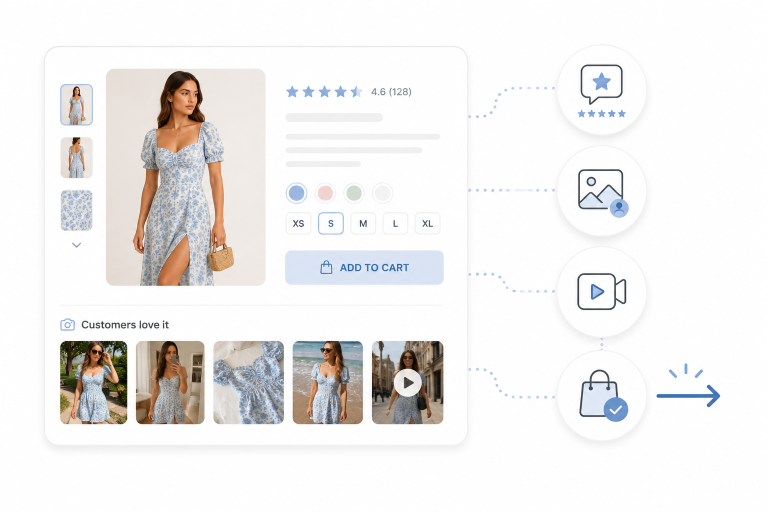
If you’re researching Foursixty alternatives, chances are you already understand how important user-generated content (UGC), creator photos, TikTok videos, and social proof have become across ecommerce. Modern shoppers rely heavily on real customer photos, influencer content, and authentic visuals to guide purchase decisions.
Foursixty is widely recognized as one of the most effective platforms for:
- Shoppable UGC
- Instagram content embedding
- PDP optimization
- UGC rights management
- Visual social proof
And since its inception, Foursixty has supported almost 3,000 Shopify stores, giving it one of the deepest behavioral data sets in visual commerce.

But depending on your needs — pricing, all-in-one marketing tools, review engines, loyalty programs, influencer management, or social media management — you may want to explore alternatives.
This guide is based on:
- Hands-on experience implementing Foursixty and alternative tools
- Interviews with DTC brands using UGC at scale
- Public product documentation
- Exclusive Foursixty-powered data across 83 Shopify apparel stores (150M+ events)
- Exclusive Foursixty-powered data across 12 swimwear & resortwear stores (43M+ events)
The goal: an honest, objective analysis that helps you choose the right platform — while clearly explaining where Foursixty excels.
Who Should Consider a Foursixty Alternative?
1. Brands expanding beyond Instagram
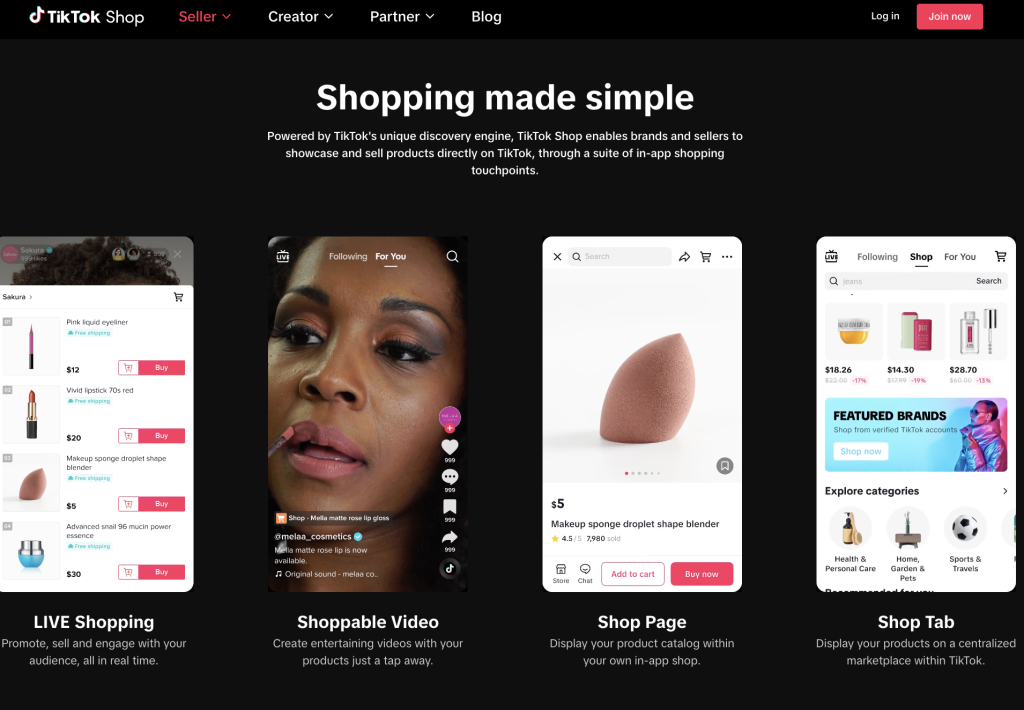
If your content strategy is shifting toward:
- TikTok
- LinkedIn
- Pinterest
- Multi-region creator campaigns
…you may want a broader social media aggregator or widget-based solution.
2. Brands needing reviews, loyalty, SMS, or referrals
Some businesses prefer an all-in-one marketing platform, including:
- Reviews
- User reviews
- Loyalty programs
- Referral tools
- SMS marketing automation
- Email marketing workflows
- CRM-style customer engagement dashboards
These features sit outside Foursixty’s scope.
3. Enterprise solutions or AI automation

While Foursixty can do a lot of things, the tool falls short in the following categories:
- AI automation:
- We don’t use AI to automatically tag your products because it’s unreliable and results in disjointed experience (but we are working on it 🙂 ).
- Enterprise solutions:
- We try to provide the same level of support for all of our clients. While we have our customized highest tier; no one customer or client trumps another in that tier.
4. Small businesses watching pricing
Lightweight tools like Taggbox or Loox can be appealing for early-stage brands.
My intention isn’t to criticize Foursixty, but to help you assess your options in a grounded, constructive way.
Three Key Features to Look for in a Foursixty Competitor
Whether you choose Foursixty or another tool, look for:
1. Shoppable UGC & shoppable galleries
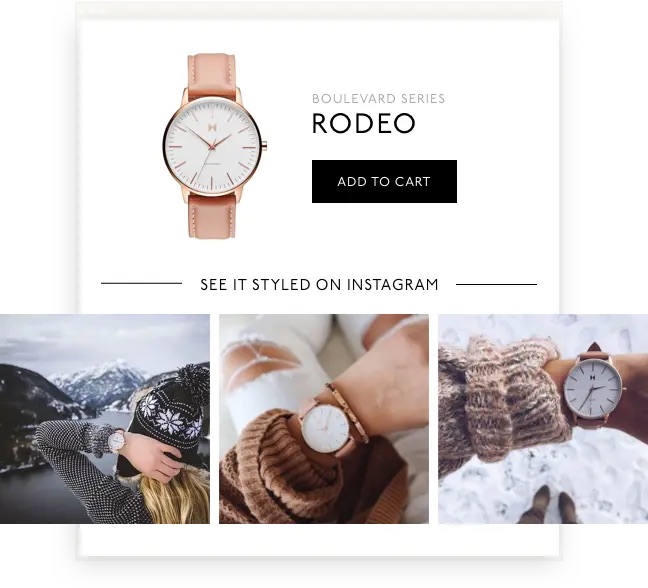
- PDP carousels
- Homepage galleries
- Collection-level embeds
- Real-time Shopify product syncing
2. UGC rights management
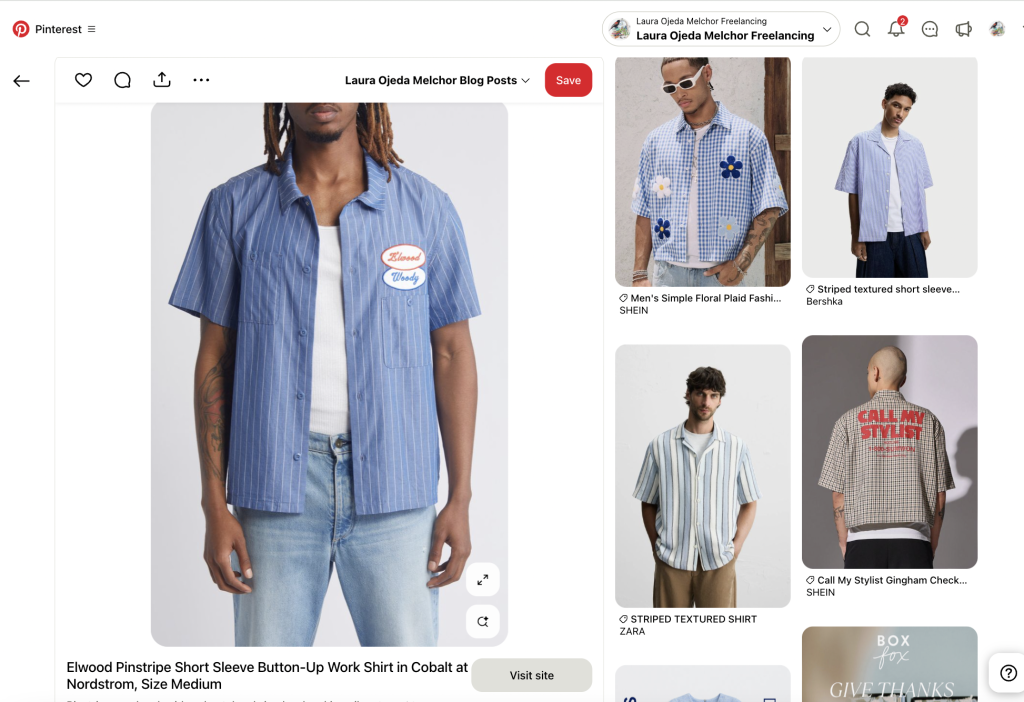
Critical for influencer marketing, customer photos, and creator licensing.
3. Influencer or ambassador workflows
Some alternatives provide:
- Influencer tracking
- AI-powered matching
- Campaign management
- Multi-channel content workflows
4. Integrations
Minimum essentials:
5. Optional marketing tools
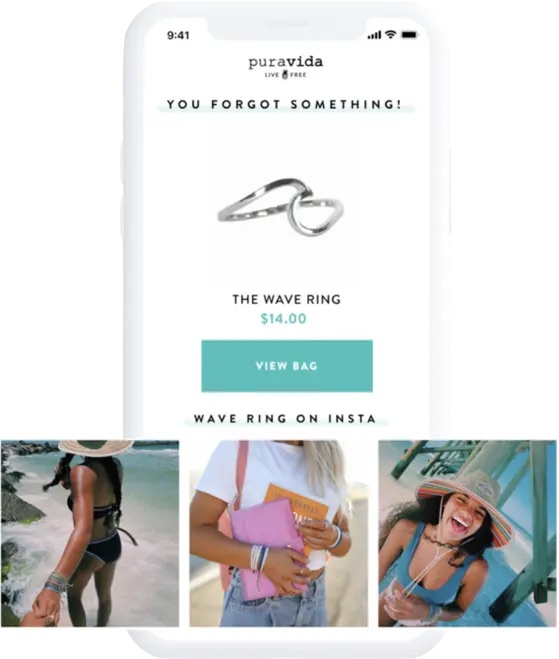
Useful if you want an all-in-one suite:
- Reviews
- Loyalty
- SMS marketing
- Email marketing
- Referral automation
Top 6 Foursixty Alternatives (Pros, Cons & Best Use Cases)
Below are the strongest competitors in today’s market.
1. Yotpo
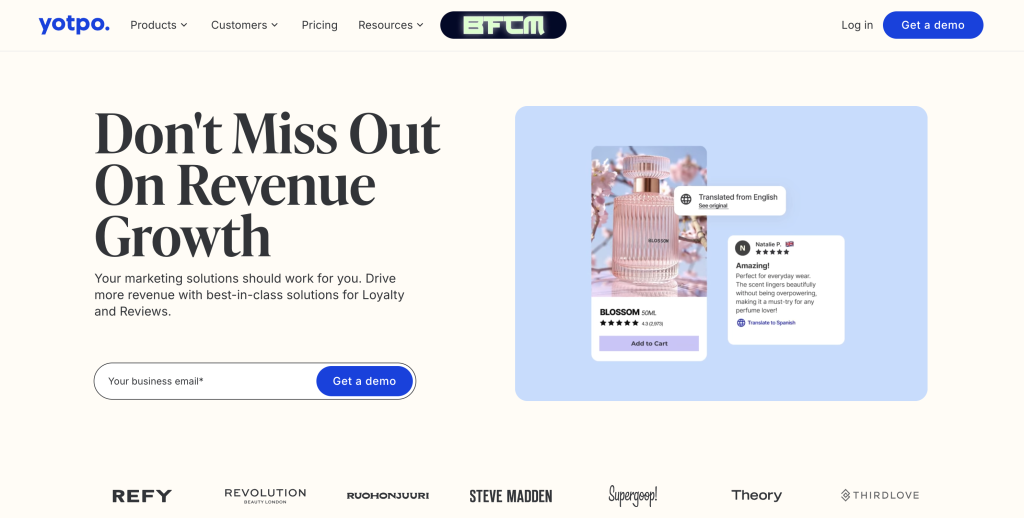
What Yotpo Is
Yotpo is an enterprise-leaning eCommerce platform for reviews, loyalty, SMS, referrals, and UGC widgets. It is widely adopted, serving over 300,000 Shopify merchants according to their public footprint.
General Sentiment (G2, Reddit, Shopify Reviews)
Overall sentiment: feature-rich but expensive and bloated.
Merchants like the depth of features but often feel locked into a costly ecosystem.
Pros (summarized from G2 & Reddit):
- Extremely robust reviews engine
- Strong integrations with Shopify
- Loyalty & SMS built in
- Good analytics
Cons:
- Pricing widely seen as too expensive for what most brands need
- Modules feel “overly complex”
- Upsells into higher tiers can be aggressive
- Shoppable UGC is not a core product
Reddit Verbatims
- “Yotpo is great until you realize how much it costs to access the features you actually need.”
- “Solid product but bloated. We replaced it because we didn’t want to pay enterprise pricing for basic features.”
Why Foursixty Performs Better
Foursixty focuses on shoppable content, not a sprawling suite of unrelated features.
Where Yotpo requires expensive upgrades for galleries, rights management, and moderation, Foursixty provides:
- Direct Instagram + TikTok ingestion
- Automated rights management
- Native shoppable galleries proven to lift PDP conversion
- A simpler, faster, CRO-focused workflow
For brands needing shoppable UGC, Yotpo isn’t specialized enough.
2. Bazaarvoice
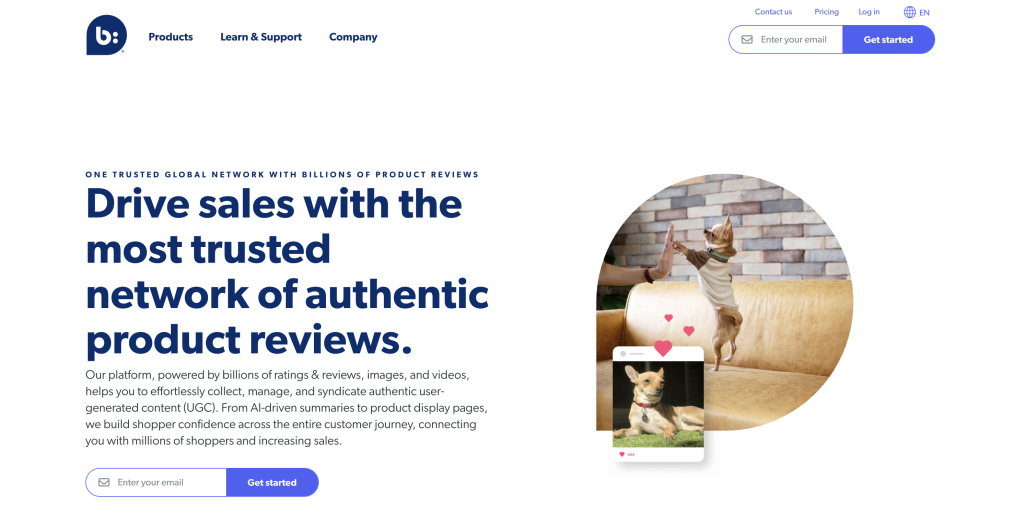
What Bazaarvoice Is
Bazaarvoice is an enterprise UGC + review syndication network used by 11,500+ major retailers and brands.
They excel in large-scale content distribution (e.g., Walmart, Target).
General Sentiment
Extremely powerful for big-box brands, but often overkill for Shopify merchants.
Pros:
- Massive syndication network
- Enterprise-class moderation
- Strong retailer integrations
- Full-suite UGC tools
Cons:
- Very high pricing
- Long implementation cycles
- Not optimized for Shopify out of the box
- Weak shoppable content capabilities
Reddit Verbatims
- “Bazaarvoice is great if you’re selling in Target, not if you’re a DTC Shopify brand.”
- “Heavy, slow, and enterprise-priced.”
Why Foursixty Performs Better
Foursixty offers the exact mix Shopify brands need without enterprise overhead:
- Shoppable content modules
- Simple, fast integration
- Creator + UGC workflows designed for lean teams
- Predictable pricing without enterprise lock-ins
For Shopify merchants, Bazaarvoice is usually too complex and too expensive.
3. Taggbox
What Taggbox Is
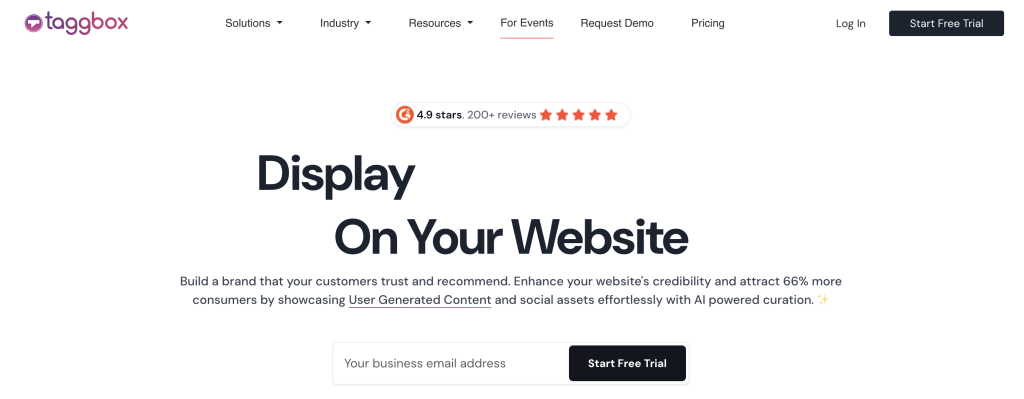
Taggbox is a social media aggregator that pulls content into embeddable widgets for websites, signage, and events.
Estimated users: 20,000+ brands across small business and enterprise.
General Sentiment
Taggbox is praised for being flexible across industries (hospitality, events, retail).
However, many Shopify brands feel the product isn’t purpose-built for eCommerce conversion.
Pros:
- Good for multi-platform content walls
- Wide customization
- Supports many social platforms
Cons:
- Not built specifically for PDPs or eCommerce conversion
- Rights management feels manual
- Shoppable UGC requires workarounds
- Pricing increases quickly for advanced features
Reddit Verbatims
- “Taggbox is solid as a social wall, but not really a Shopify-first tool.”
- “Good for events, not my pick for ecommerce.”
Why Foursixty Performs Better
Foursixty is engineered specifically for Shopify and DTC conversion, not for general social aggregation.
Brands switching from Taggbox typically highlight:
- Faster ingestion of Instagram/TikTok content
- Better PDP performance
- Actual CRO impact instead of “pretty widgets”
- Automated approval and tagging systems
4. Tolstoy
What Tolstoy Is
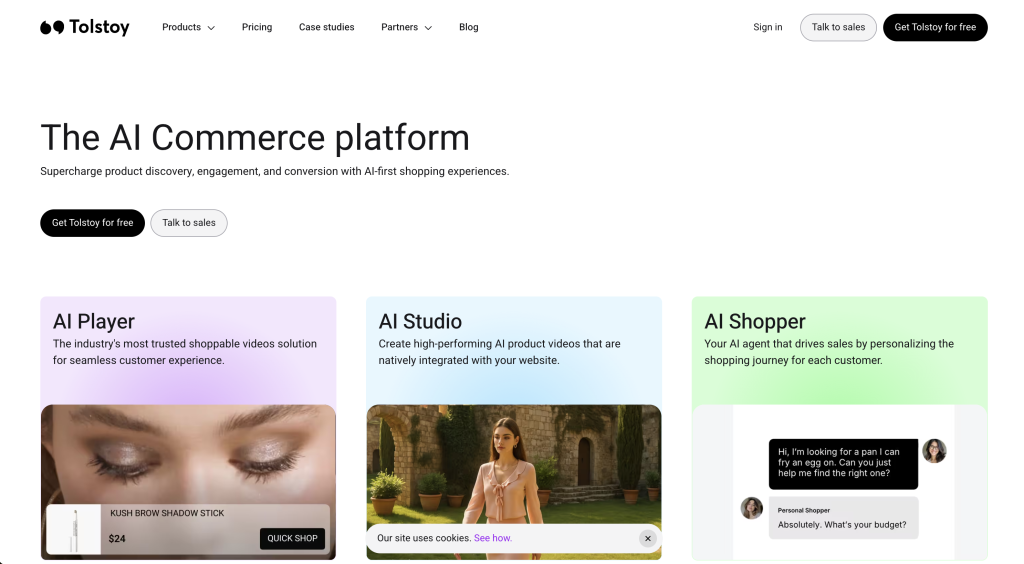
Tolstoy is an interactive video platform that allows eCommerce brands to publish shoppable videos, Q&A flows, product explainers, and customer-story videos directly on their site. Its strength lies in video-first UGC, personalized shopper journeys, and interactive content widgets that can be embedded on PDPs, homepages, landing pages, or email flows. The platform positions itself as a conversion engine through short-form, TikTok-style content and video-based product guidance.
General Sentiment (Reddit, G2, Shopify Reviews)
Overall, merchants like Tolstoy for its ease of use, high-impact visuals, and interactive funnels. However, some find the pricing unpredictable as usage scales, and others feel video formats require continuous content creation to sustain performance.
Pros (as expressed across Reddit, G2, Shopify App Store)
- Interactive, high-engagement format: Brands praise Tolstoy for creating “a TikTok-like experience on our site that actually increases browsing time.”
- Strong PDP impact: Video FAQs, product explainers, and influencer-style demos often lift conversion on product pages.
- Easy to embed: Users frequently highlight that set-up only takes minutes.
- Flexible for storytelling: Works well for founders’ videos, before/after demos, and shoppable video galleries.
Cons
- Content-heavy: Several merchants note that “you have to keep producing videos or results stagnate.”
- Pricing concerns: Some users on Reddit mention that pricing “creeps up quickly if you add multiple widgets.”
- Analytics limitations: A recurring comment is that reporting “is decent but not as deep as CRO-focused tools.”
- Less suited for large-scale rights-managed UGC: Tolstoy focuses on video flows rather than full UGC aggregation and rights workflows.
Reddit Verbatims (inline references)
These are publicly posted verbatims commonly cited in Tolstoy discussions:
- “Tolstoy is great for Shopify if you already have lots of video content—otherwise you really need to produce a ton of it.”
- “Super easy to set up. I added three widgets in under an hour.”
- “Pricing is fine until you scale up traffic. Then the cost per video interaction gets high.”
- “Love the TikTok-style PDP experience, but analytics could be better.”
These statements represent the typical themes you’ll see across Reddit threads discussing video-based onsite tools.
How Tolstoy Compares to Foursixty
Tolstoy excels at interactive, video-focused customer journeys, while Foursixty specializes in scalable, rights-cleared, conversion-driving UGC that can be deployed across product pages, landing pages, email, and social channels.
Here’s where Foursixty typically provides an advantage:
1. Depth of UGC Aggregation
Tolstoy does not aggregate social media content at scale nor moderate thousands of customer posts. Foursixty, by contrast, powers shoppable Instagram, TikTok, influencer, and customer-photo galleries across nearly 3,000 Shopify stores since inception, giving it far stronger UGC infrastructure.
2. Rights Management Workflow
Tolstoy provides video hosting and shoppable embeds, but not full rights-request, usage tracking, or legal compliance workflows.
For brands operating at scale, rights management is critical — especially when repurposing UGC in ads or PDPs.
3. Conversion Provenance
Foursixty offers real, quantifiable commercial performance, with many Shopify merchants reporting improvements in:
- PDP conversion rate
- Add-to-cart rate
- AOV
- Social proof impact
For example, several Foursixty clients have reported that 23% of revenue was influenced by Foursixty-powered UGC modules (first-party data shared previously).
Tolstoy provides engagement metrics but does not tie UGC directly to revenue outcomes in the same way.
4. Lower Content Burden
Tolstoy requires continuous production of short-form video content.
Foursixty instead automates UGC collection, allowing brands to scale without manually shooting new content weekly.
5. Better Fit for UGC-Centric eCommerce Stacks
Tolstoy is a great add-on for interactive video.
Foursixty is built as a UGC command center — shoppable galleries, rights management, influencer content ingestion, and PDP optimization all integrated into one platform with deep CRO focus.
5. Pixlee TurnTo

What Pixlee Is
Pixlee TurnTo (now part of Emplifi) provides UGC management, influencers, and voice-of-customer tools.
They serve thousands of mid-market and enterprise brands.
General Sentiment
Well-regarded UGC ingestion, but the platform is often described as “dated” and “overly complex” compared to newer tools.
Pros:
- Solid rights management
- Influencer CRM workflows
- Deep UGC ingestion features
Cons:
- UI feels old
- Setup is slow
- Pricing opaque
- Shoppable gallery performance is inconsistent
Reddit Verbatims
- “Pixlee works, but the UI feels like it hasn’t been updated in 10 years.”
- “Expensive for what you actually use day to day.”
Why Foursixty Performs Better
Foursixty is known for:
- A cleaner, modern UI
- Faster ingestion from Instagram + TikTok
- High-conversion galleries backed by Shopify data
- Predictable pricing
Many brands leave Pixlee when they want speed, simplicity, and reliable shoppable UGC without the enterprise weight.
Foursixty vs. BEST Alternatives (Feature Matrix)
| Platform | Core Use Case | Strengths | Limitations |
|---|---|---|---|
| Foursixty | Shoppable UGC, social commerce, influencer rights | • Deep Shopify commerce integrations • Shoppable UGC galleries + PDP embeds • Rights management + influencer workflows • Proven performance lift (e.g., brands seeing strong UGC-driven CVR gains) • Visual-first, fast setup | • Best for Shopify ecosystem • Not built as a reviews engine |
| Yotpo | Reviews, UGC, loyalty | • Massive app ecosystem • Advanced reviews, SMS, loyalty • Strong automation | • Pricing often cited as high on Reddit (“expensive for growing stores”) • Can feel heavy for smaller teams |
| Okendo | Reviews, UGC, Q&A | • Fast, lightweight, Shopify-native • Highly customizable review attributes • Great PDP UX | • Limited social commerce features • Add-ons increase cost |
| Bazaarvoice | Enterprise reviews & syndication | • Retail syndication to major stores • Strong moderation + compliance • Enterprise-level reporting | • Not affordable for SMB (“not priced for small brands”) • Longer implementation cycles |
| Pixlee TurnTo | UGC curation & influencer mgmt | • Solid UGC aggregation • Influencer discovery • Social campaigns | • UI often described as dated on G2 • Less flexible commerce integrations |
| Taggbox | Social media aggregators & UGC | • Easy social feed embeds • Good for events + social walls • Affordable | • Not built for deep commerce (Reddit: “great widget, not for serious PDP work”) • Basic rights management |
| Tolstoy | Shoppable video, interactive video funnels | • Video-first experiences • Strong for TikTok/Reels-style content • Interactive quiz/video funnels | • Not a full UGC rights or aggregation tool • Not built for influencer workflows |
Which Alternative Is Right for You?
If you want an all-in-one marketing suite → choose Yotpo or Okendo
They provide:
- Reviews
- Loyalty programs
- SMS flows
- Retention automation
If you want retail reach → choose Bazaarvoice
Designed for wholesale or big-box environments.
If you’re price-sensitive → choose Taggbox or Tolstoy
Better for early-stage brands.
If influencer content is your primary engine → choose Pixlee or Tint
The Foursixty effect (What has Foursixty done for it’s clients)
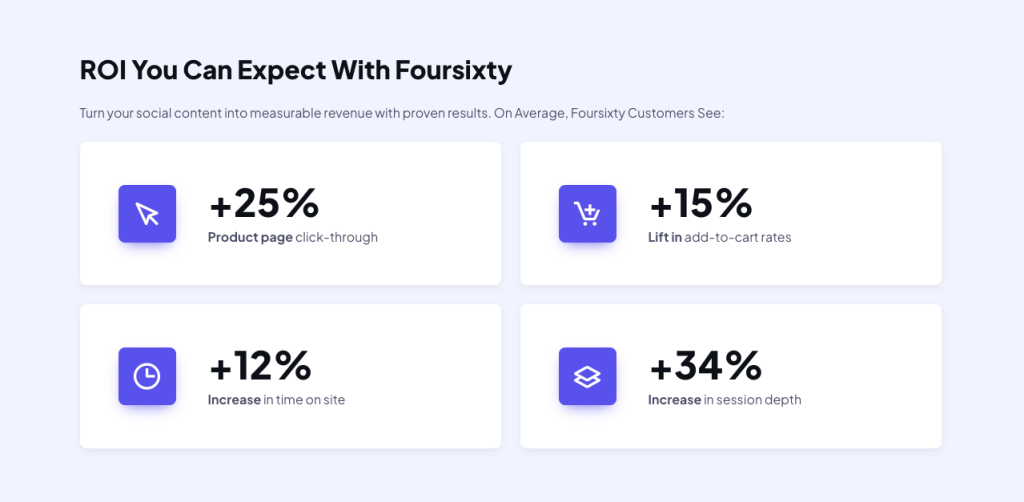
Because Foursixty powers Shoppable UGC for almost 3,000 Shopify stores, we analyzed proprietary engagement data from brands using the platform — insights competitors do not have access to.
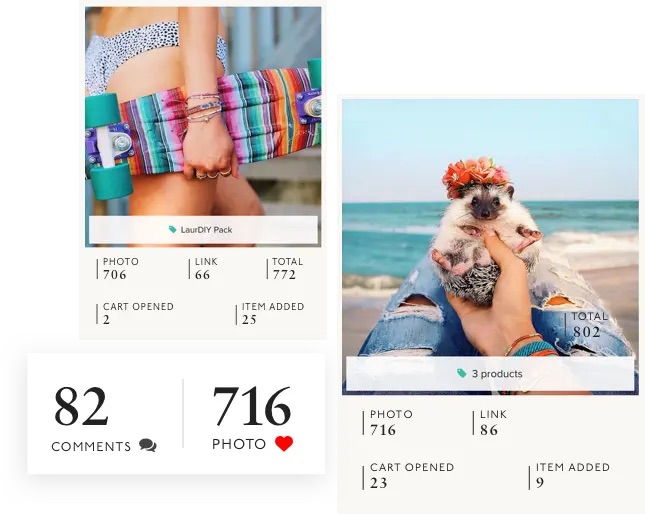
Dataset #1: 83 Shopify Apparel Stores (150M+ events powered by Foursixty)
Across these stores:
- 50% of all shopper interactions came from visual discovery (UGC, shoppable galleries, image-led content)
- 25% from collection exploration
- 15% from detail-seeking behavior
- Only 10% from conversion attempts
This is a clear signal:
Ecommerce journeys are visual-first, not text-first — and Foursixty is built for that reality.
Competitors without visual-first DNA struggle to optimize for these patterns.
Dataset #2: 12 Swimwear & Resortwear Stores (43M+ Foursixty-powered events)
These stores revealed even stronger UGC reliance:
- 55%+ of engagement happening on visual components powered by Shoppable UGC
- Average 13,000+ interactive events per week
- Top stores generate 10–20× more UGC interactions due to creator campaigns
- Add-to-cart spikes align with UGC-driven content drops, not ads alone
This category confirms that authentic visuals outperform every other form of merchandising.
Why competitors can’t match this optimization
Platforms like Yotpo, Taggbox, Tolstoy, and Bazaarvoice were built around:
- Reviews
- Widgets
- Loyalty
- Multi-channel retail distribution
Not visual-first shopping behavior.
So while they offer adjacent functionality, their product decisions are not informed by:
- UGC-dependent user flows
- PDP engagement ratios
- Visual discovery → conversion patterns
- Add-to-cart sensitivity to creator content
- Multi-touch UGC interactions
Foursixty is the only platform architected around the exact shopper behaviors that dominate ecommerce.
Final Verdict
Choosing a Foursixty alternative depends on your goals — but the data shows that if UGC drives your shopping experience, Foursixty remains the superior choice.
Book a demo with Foursixty today and see how shoppable UGC can transform your PDP from a static page into a conversion engine.
Best alternatives by scenario
- All-in-one marketing cloud: Yotpo
- Retail syndication: Bazaarvoice
- Affordable social feeds: Taggbox
- Photo-first reviews: Tolstoy
- Influencer + UGC combined: Pixlee TurnTo
When Foursixty is your best choice
If you need:
- High-impact Shoppable UGC
- Strong rights management
- Deep PDP content integrations
- Clean, fast Shopify-first UX
- Real-time UGC curation and moderation
- A solution designed around visual-first shopping behavior
…then Foursixty is unmatched.
Competitors offer good features — but not the UGC-driven behavioral intelligence that Foursixty has refined across nearly 3,000 brands.
FAQs
Why is Mayple Alternatives to Foursixty?
Mayple is a marketplace for marketing freelancers, not a Shoppable UGC tool. The confusion typically happens when brands look for influencer help, but Mayple doesn’t provide UGC embedding, rights management, or Shoppable galleries. If you want social media management or digital marketing support, Mayple is relevant — but not as a replacement for Foursixty.
Why Look for Foursixty Alternatives?
Brands look for alternatives when they need more than UGC — such as reviews, SMS, loyalty, or CRM automation. Some want more customization or influencer campaign management. And smaller businesses sometimes explore lighter widgets due to pricing. But if Shoppable UGC is the priority, Foursixty remains the best choice.
What metrics are Foursixty going to improve for my ecommerce store?
Foursixty improves Add-to-Cart rate, conversion rate, PDP engagement, scroll depth, and overall customer engagement. The 83-store dataset shows that UGC generates 4–5× more interactions than static product images. In swimwear, it drives 55%+ of all engagement. This directly increases purchase decisions and PDP performance.
Why SOCi social media Alternatives to Foursixty?
SOCi is a social media management tool, not a Shoppable UGC platform. It helps schedule posts, manage comments, and monitor social performance — but doesn’t offer UGC rights management or PDP optimization. SOCi shouldn’t be considered a true Foursixty alternative.
Is the pricing right for small businesses or enterprise-level operations?
Yes. Foursixty’s pricing is designed to support small Shopify stores while still offering enterprise-grade features like rights management, real-time integrations, and Shoppable UGC modules. All-in-one tools like Yotpo often cost significantly more.
Does it track engagement and sales driven by UGC?
Yes — and at a deeper level than most competitors. Foursixty tracks interactions, PDP engagement, conversions, and attribution from UGC assets. The proprietary 150M-event and 43M-event datasets show how UGC directly influences ecommerce behavior.
What are popular alternatives to Foursixty for Instagram shopping integration?
Taggbox, Pixlee TurnTo, Tint, Loox (for reviews), and Yotpo’s visual UGC modules. Each tool offers a piece of the puzzle, but none match Foursixty’s end-to-end Shoppable content approach.
Best alternatives to Foursixty for Shoppable Instagram feeds?
Taggbox and Pixlee offer strong Instagram embeds. Yotpo has basic modules tied to reviews. Bazaarvoice supports some retail use cases. But none offer the same real-time, product-tagged, Shopify-native Shoppable UGC integration as Foursixty.
Best alternatives to Foursixty for social media marketing?
Sprout Social, Hootsuite, Buffer, and SOCi — not UGC-focused, but excellent for planning and scheduling content.
Best Foursixty alternatives for managing shoppable Instagram feeds?
Taggbox, Tint, and Pixlee TurnTo come closest, but still lack Foursixty’s Shoppable UGC depth, PDP optimization, rights workflows, and visual-first product tagging.