Instagram has become a serious revenue channel across social media, blending storytelling, commerce, and creator tools into a single ecosystem. Today, earning money on the platform requires more than audience growth — it requires understanding Instagram monetization policies and building systems that comply with them over time.
This guide explains how instagram monetization actually works in 2025, how to stay compliant with Meta’s rules, and how creators and brands can monetize sustainably using diversified strategies grounded in real ecommerce performance data.
Summary: How to Monetize Instagram Without Breaking the Rules
Instagram monetization rewards accounts that demonstrate consistency, buyer intent, and trust. While eligibility unlocks access to monetization tools, long-term income depends on how creators and brands structure their revenue mix and audience strategy.
From our work with ecommerce brands using UGC and shoppable galleries at scale, the strongest performers share three traits:
- A clearly defined niche
- Multiple monetization streams
- Audiences built for conversion, not just reach
Accounts that rely on a single revenue source — especially brand deals alone — are more vulnerable to policy changes, advertiser budget shifts, and algorithm volatility.
What Instagram Monetization Includes Today

Instagram monetization refers to all the ways creators and businesses can earn directly or indirectly through the platform’s monetization features, including:
- instagram reels
- instagram subscriptions and recurring subscribers
- sponsored content and Brand deals on instagram
- affiliate marketing on instagram
- instagram live badges
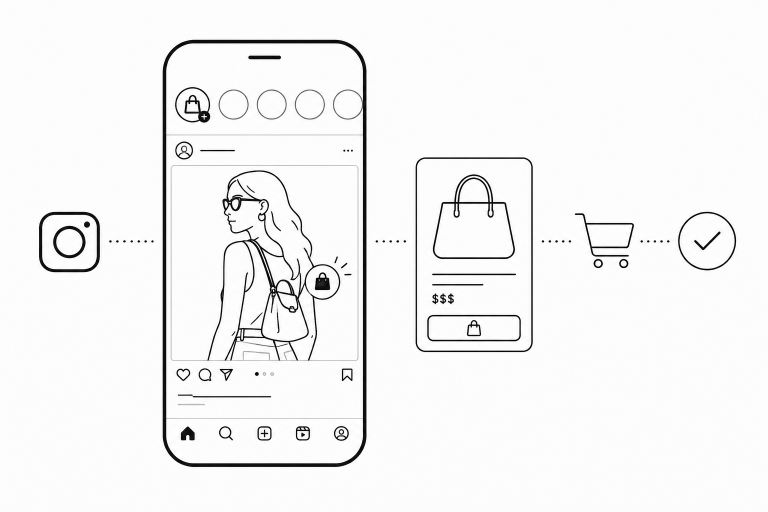
- Commerce surfaces like instagram shop, Shoppable posts, and Shoppable content
- Creator payouts surfaced in the professional dashboard
For brands, monetization increasingly happens through Instagram shopping integrations, UGC-powered PDPs, and seamless checkout experiences connected to shopify.
The Policy Foundations That Govern Monetization
Instagram monetization sits on top of several overlapping policy layers enforced by meta.
Partner Monetization Policies (Who Can Monetize)

Partner monetization policies — also referred to as Instagram’s partner monetization policies — define who can earn on the platform. They apply to every instagram account, whether it’s a creator account, professional account, or instagram business.
These rules evaluate:
- Account integrity
- Authentic engagement
- Geographic access from an eligible country
- Overall monetization status
Content Monetization Policies (What Can Be Monetized)
The content monetization policies, also known as instagram content monetization policies, determine which posts are eligible for revenue. Content may be restricted if it includes misinformation, sexual activity, graphic imagery involving bodily fluids, or repeated low-value formats such as spammy static image posts.
Community Guidelines & Standards
All monetized content must comply with community guidelines and broader community standards. Monetization eligibility can be revoked even if violations occur outside sponsored posts.
Commerce & Branded Content Rules
Commerce monetization requires compliance with Instagram Shopping rules, while branded content must be properly disclosed in all partnerships and brand partnerships.
Working Within Instagram Monetization Rules
Many creators follow the rules but still struggle to earn consistently. These issues don’t always cause policy violations, but they weaken monetization outcomes.
Common Monetization Mistakes
- No clear niche
Unfocused content makes it harder for brands and advertisers to assess conversion potential. - Too much viral content
Viral reach often attracts non-buying audiences, reducing CPMs and long-term value. - Over-reliance on brand deals
Single-stream income leads to instability. - No off-platform assets
Without owned channels, creators lose long-term leverage.
Monetization Risk Table
| Issue | Impact | Revenue Risk |
| Unclear niche | Weak buyer signals | Fewer deals |
| Viral-only focus | Low intent traffic | Poor conversion |
| One income stream | Budget dependency | Volatility |
| No owned audience | Platform dependency | Long-term loss |
Instagram Monetization Decision Tree
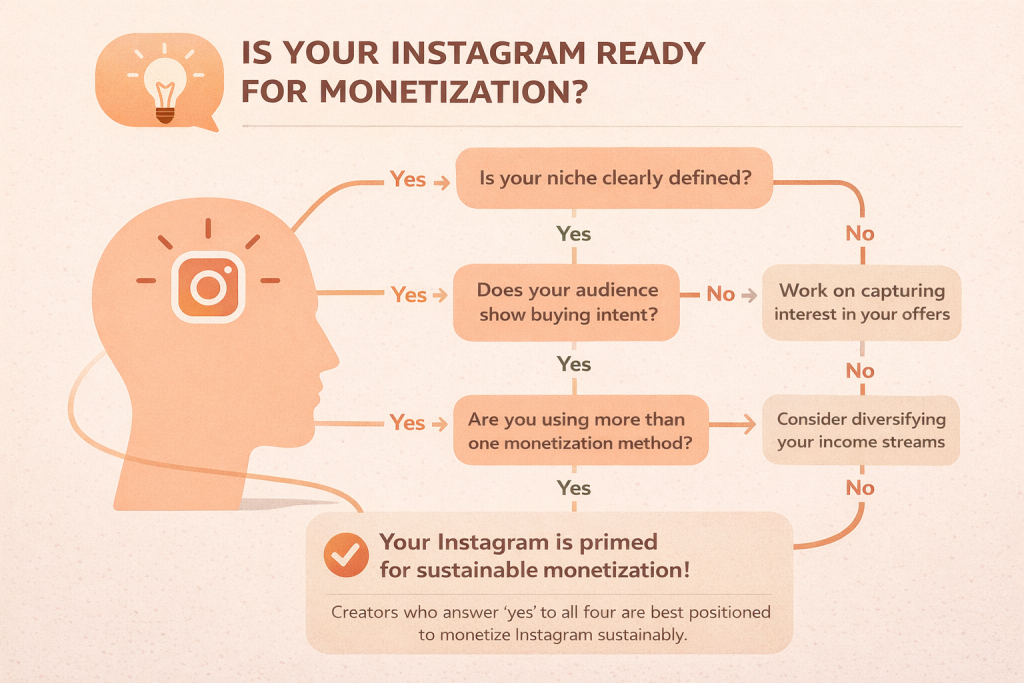
- Is your niche clearly defined?
- Does your audience show buying intent?
- Are you using more than one monetization method?
- Do you own any off-platform audience?
Creators who answer “yes” to all four are best positioned to monetize instagram sustainably.
Why the Hybrid Monetization Stack Wins
Top creators rarely rely on one income source. Instead, they combine:
- Brand deals
- Affiliate links
- Digital products
- Subscriptions
This approach compounds earnings without increasing follower count and aligns with instagram monetization requirements.
Why Niche Content Commands Higher CPMs
Brands consistently pay more in niches like finance, beauty, and tech because purchase intent is clearer. Broad entertainment pages may attract reach, but niche creators deliver better ROI — which the algorithm rewards.
What This Means for Creators
Creators should:
- Focus on high-quality content over volume
- Follow best practices instagram
- Maintain clean disclosure habits
- Diversify monetization early
- Understand How instagram algorithm works
This applies equally to micro vs macro influencers.
What This Means for Brands & Ecommerce Teams
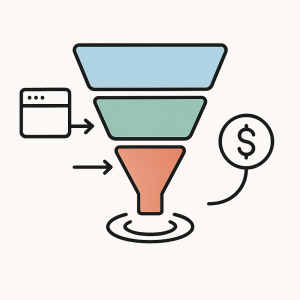
Brands should treat Instagram as a revenue channel, not just awareness. High-performing teams:
- Use UGC strategy and user generated content instagram examples
- Improve PDP optimization, PDP content, and AI in PDPs
- Track outcomes using a CRO checklist
- Leverage Social proof, Conversion content, and Add-to-cart rate metrics
- Prepare for peak moments like Black Friday
Foursixty case studies show that brands engaging UGC see higher UX conversion rate and stronger results across Brands that use UGC.
Final Takeaway
The Future of instagram monetization favors creators and brands that are compliant, diversified, and commerce-driven. Success will come from pairing creativity with structure, not shortcuts — especially as instagram vs tiktok monetization and Tiktok Monetization competition intensifies.
Ready to stop leaving revenue on the table?
Book a demo with Foursixty today and see how shoppable UGC can transform your PDP from a static page into a conversion engine.
FAQs: Instagram Monetization Policies Explained
How much does IG pay for 1000 followers?
Instagram does not pay per follower. Earnings depend on engagement, niche, and monetization method, not follower count alone.
How to fix monetization policy violation on Instagram?
Review the specific violation, remove or edit affected content, appeal through the professional dashboard, and avoid repeat offenses.
Do Instagram accounts get monetized?
Yes, if they meet eligibility standards and comply with monetization rules.
What are the monetization options on Instagram?
Options include subscriptions, brand deals, affiliate revenue, live badges, and commerce tools.
What are the rules for Instagram monetization?
Rules are defined by instagram monetization criteria / policies, content rules, commerce standards, and disclosure requirements.
How do you become monetized on Instagram?
Switch to a professional or creator account, meet eligibility thresholds, and maintain policy compliance.
Do you mean how many content monetization policy violations?
Repeated violations can lead to demonetization or feature removal.
What Are Instagram Partner Monetization Policies?
They define who can earn and under what conditions.
What are the Instagram monetization requirements?
Requirements include account integrity, region eligibility, content quality, and compliance.
How many followers do I need to monetize Instagram?
There is no universal minimum; engagement and niche matter more.
What is the best time to post Reels?
Performance varies by audience, but evenings often show higher engagement.
What Is The Best Aspect Ratio For TikTok?
The standard vertical 9:16 format performs best.
How can I earn money through Instagram monetization features?
Use subscriptions, affiliate tools, brand deals, commerce integrations, and UGC.
How can I check my eligibility for Instagram monetization?
Check monetization status in your professional dashboard.
How do Instagram’s monetization policies affect content creators?
They determine access to features, payouts, and long-term income stability.
What types of content are eligible for monetization on Instagram?
Reels, lives, educational posts, product demos, and compliant sponsored content.