Quick summary:
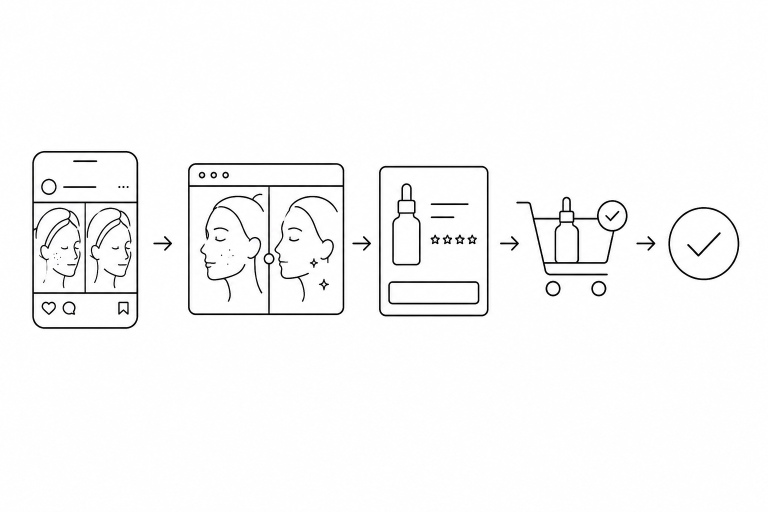
If you’re asking what the best user generated content platform is for an ecommerce brand that wants a shoppable Instagram feed and TikTok-powered storefront, the answer depends on one thing: are you optimizing for engagement or revenue? Platforms like Foursixty consistently stand out because they connect ugc, product tags, and real checkout conversions into a single system—turning social content into measurable sales, not just inspiration.
The smartest ecommerce brands aren’t trying to pull users away from that behavior—they’re embedding it directly into their storefront.
Open any high-performing Shopify store today and you’ll see it immediately: instagram posts, reels, and tiktok content integrated into product pages, category pages, and even the homepage. It doesn’t feel like a marketing layer anymore—it feels like the shopping experience itself. This shift is what’s driving the rise of social commerce, where discovery, trust, and conversion happen in the same moment.
The implication is simple but important: if your product catalog lives in one place and your best social proof lives somewhere else, you’re forcing customers to do the work of connecting them. Most won’t.
What Is a Shoppable Instagram Feed?
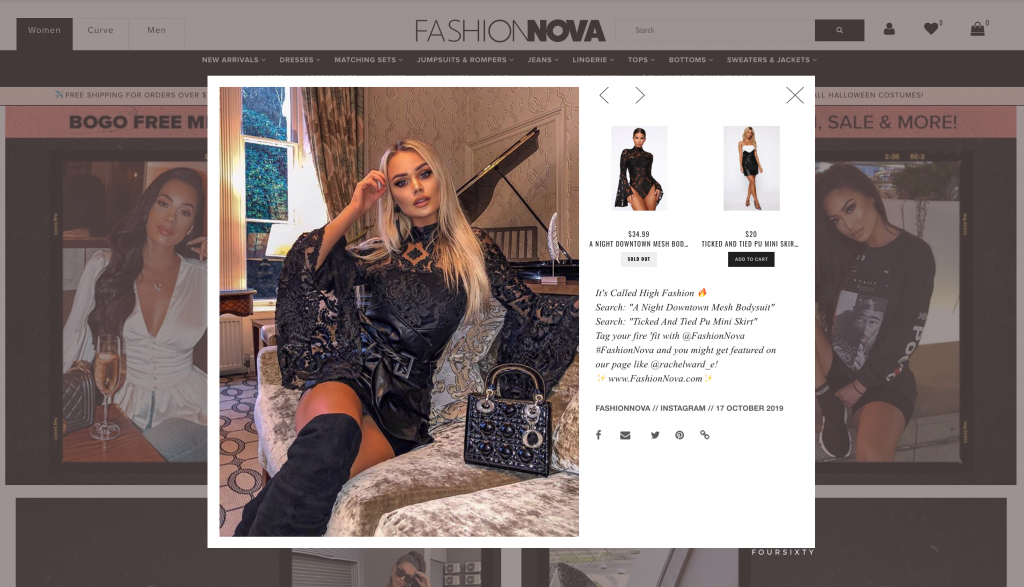
A shoppable Instagram feed is a curated collection of instagram posts, stories, or shoppable videos embedded directly into your site, where each piece of content is linked to a specific product in your catalog.
At a high level, there are two different systems that often get confused:
Native Instagram Shopping
This is what happens inside your instagram account—users tap product tags on posts and are redirected to product detail views or checkout flows. It’s powerful for in-app browsing but limited when it comes to controlling your on-site customer experiences.
On-site shoppable feeds
This is where platforms like Foursixty, Taggbox, or Yotpo come in. They allow you to embed a widget on your shopify store from instagram, pulling in user-generated content from your instagram profile, applying product tagging, and connecting it directly to your checkout flow.
The difference matters because one is optimized for Instagram’s ecosystem, while the other is optimized for your revenue.
Why Shoppable Instagram Feeds Work (Behavior + Data)
At a behavioral level, this works because it aligns with how people already shop today.
Customers don’t start with product specs—they start with context. They want to see how something looks in real life, on real people, across different scenarios. That’s what ugc delivers at scale. According Nosto, UGC can significantly improve trust and conversion rates because it reduces perceived risk during the buyer journey.
But the real shift happens when you connect that trust directly to shoppable posts.
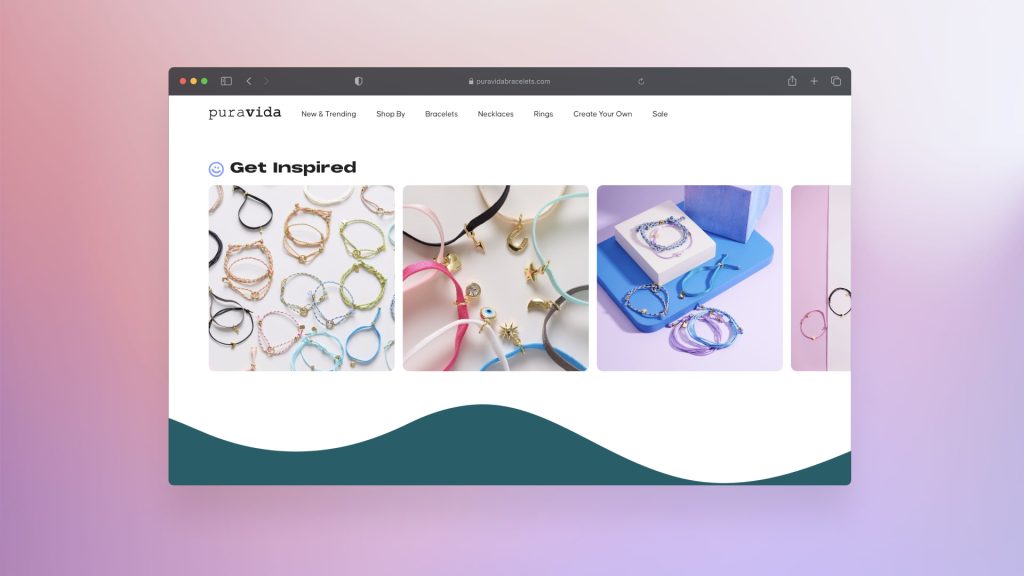
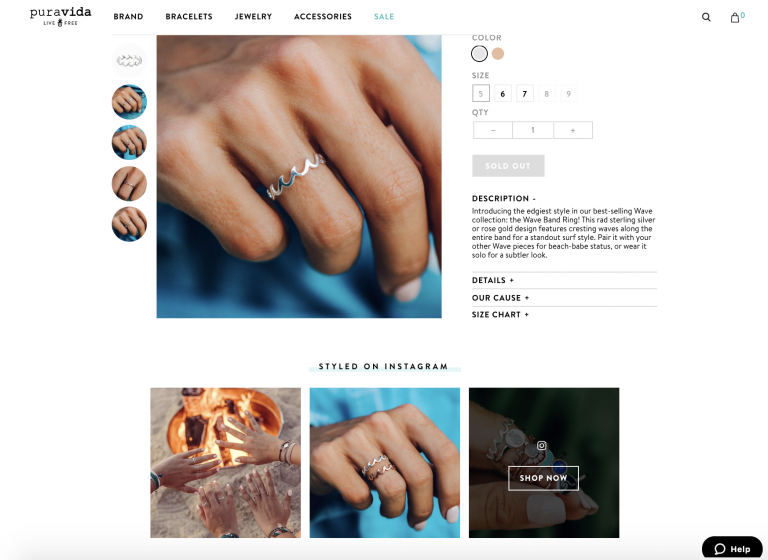
Take Pura Vida. After implementing Foursixty:
- 18.2% of users interacting with PDP content clicked through to purchase
- +73% increase in page views
- -34% drop in bounce rate
- 17% of total online revenue tied to UGC engagement
This isn’t incremental optimization—it’s a structural change in how users browse.
Frankies Bikinis saw a similar effect, with 19% of total orders and 23%+ of revenue driven by shoppable Instagram integrations. These aren’t vanity metrics. They’re proof that when social proof is embedded into the path to purchase, it doesn’t just inspire—it drives conversions.
Types of Shoppable Instagram Solutions
Once you understand the “why,” the next step is choosing the right system.
1. Native Instagram Shopping
This is built directly into Instagram via Instagram Shopping.
It’s seamless for users scrolling instagram stories or reels, and it works well for brands heavily invested in social media discovery. But the limitations show up quickly: weak attribution, limited customization, and no control over the on-site checkout experience.
2. UGC & Shoppable Feed Platforms

This is where most serious ugc ecommerce brands land.
Platforms like Foursixty, Taggbox, Yotpo, and Bazaarvoice allow you to:
- Aggregate content from instagram posts, tiktok, and even your facebook page
- Apply product tags across multiple SKUs
- Embed dynamic galleries into your storefront
- Track conversion rates tied to specific content
This is the difference between content that looks good and content that drives sales.
3. Custom-Built Experiences
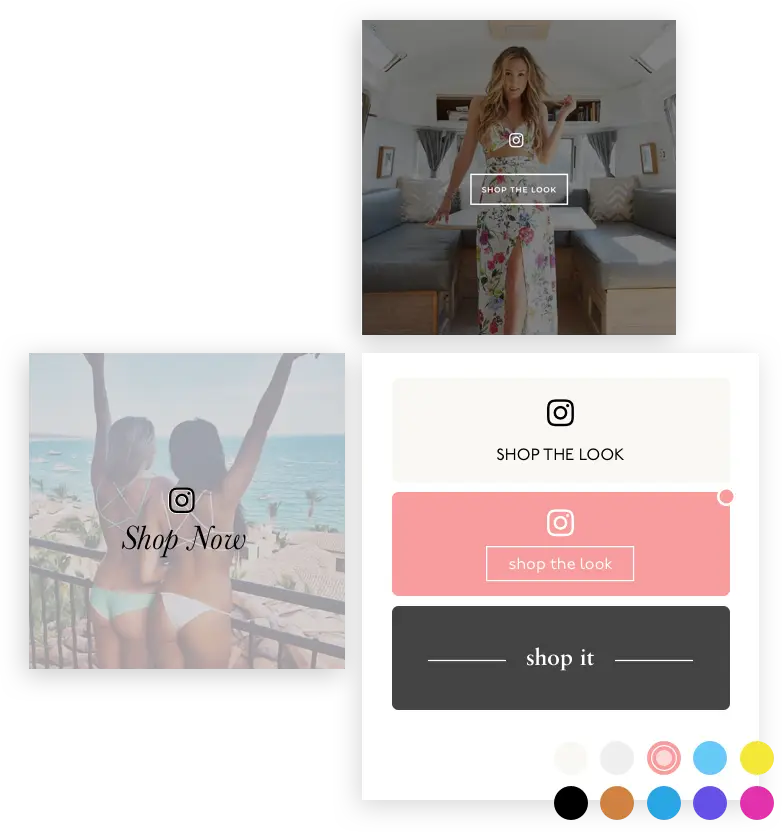
Some enterprise retailers build this internally.
You get full control over design and functionality, but you pay for it in speed, cost, and agility. Most teams underestimate how much ongoing effort it takes to curate, moderate, and maintain a real-time content engine.
Unless you have a dedicated team, this approach tends to break under scale.
Best Shoppable Instagram Feed Tools for Ecommerce
Foursixty
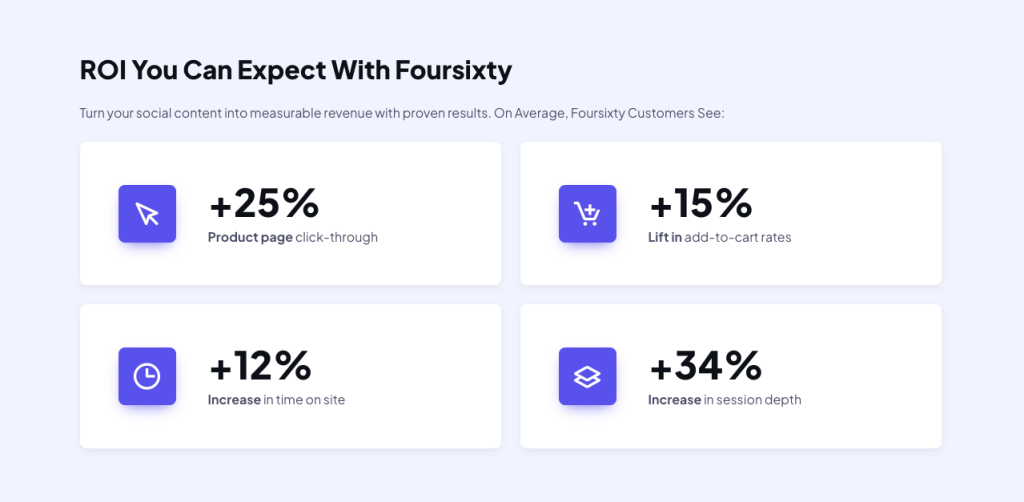
Foursixty is built specifically for ecommerce teams who care about performance, not just aesthetics.
It integrates deeply with Shopify, allowing brands to map user-generated content directly to their product catalog, track revenue attribution, and optimize placements across the site. MICHI implemented it in half a day and saw a 51x ROI within 30 days, replacing a competing platform that couldn’t tie content to revenue.
What stands out isn’t just the pricing or ease of setup—it’s the ability to turn every carousel, reel, or influencer post into a measurable asset.
Taggbox
Taggbox is strong on aggregation and ease of use.
It’s useful for brands that want to pull content from multiple sales channels and display it quickly via a simple widget. The tradeoff is that it’s less commerce-native, which means weaker integration with product pages and attribution systems.
Pros
Taggbox is fundamentally an aggregation engine first, ecommerce tool second.
- Pulls content from 20+ social platforms (Instagram, TikTok, Facebook, etc.)
- Extremely fast to deploy with simple embed widgets
- Flexible across industries (events, hospitality, retail)
- Affordable entry point compared to most UGC tools
The biggest advantage is speed. If your goal is to get a shoppable Instagram feed live quickly, Taggbox does that well.
Cons
The tradeoffs show up immediately when you move from “display” → “conversion.”
- Not built specifically for product pages or Shopify conversion flows
- Limited native revenue attribution
- Shoppable functionality often requires workarounds
- Rights management and tagging can feel manual
- Pricing increases as you unlock meaningful ecommerce features
In practice, many teams describe it as a “social shopping wall” tool rather than a conversion engine.
Clients / Use Cases
- SMB ecommerce brands experimenting with UGC
- Hospitality, events, and experiential brands
- Marketing teams prioritizing visual engagement over revenue tracking
Reddit sentiment reinforces this positioning:
“Good for events, not my pick for ecommerce.”
Pricing & Tiers
- Typically lower-cost entry pricing
- Scales with:
- number of feeds
- platforms connected
- advanced features (shoppable, moderation, etc.)
Positioned as a budget-friendly alternative to Yotpo
Why Foursixty Is the Better Choice than Taggbox
Foursixty wins because it’s designed for conversion-first ecommerce workflows, not aggregation.
- Native Shopify integration → product tagging → checkout
- Strong PDP performance (where revenue actually happens)
- Built-in UGC rights + approval automation
- Real attribution (what content actually drives sales)
Translation: Taggbox helps you show content.
Foursixty helps you monetize content.
Yotpo Visual UGC
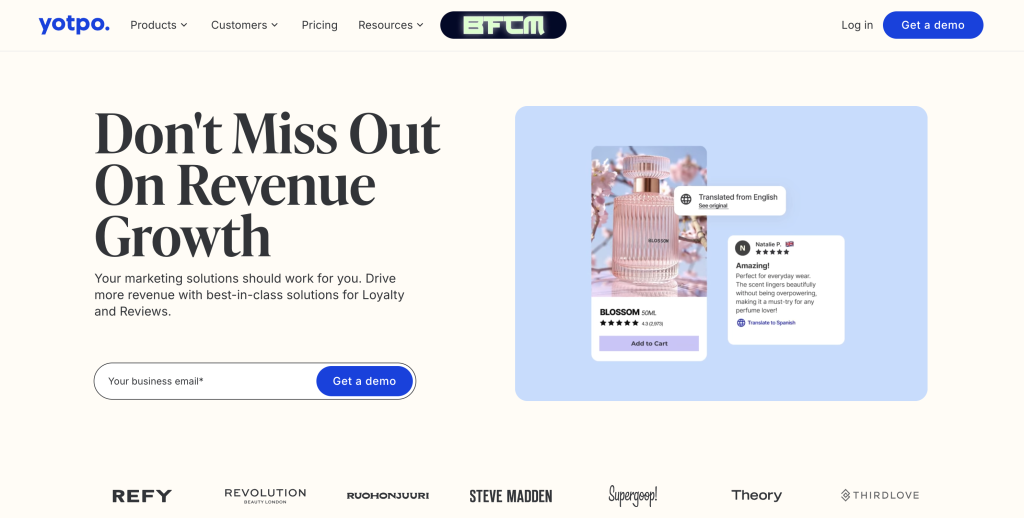
Yotpo shines when paired with its broader review ecosystem.
If your UGC strategy is heavily built around reviews and ratings, it can extend that into visual content. But compared to more commerce-first platforms, the shoppable content layer isn’t as tightly optimized for conversion.
Pros
Yotpo is an ecosystem play—not just a UGC tool.
- Deep integration with reviews, loyalty, SMS, and email
- Strong review + visual UGC combination
- AI-assisted tagging and content curation in higher tiers
- Can create shoppable galleries with add-to-cart functionality
Its biggest strength is consolidation—everything lives in one platform.
Cons
That same “all-in-one” positioning creates friction.
- Social UGC is not the core product (reviews are)
- Many advanced features locked behind premium tiers
- Shoppable Instagram functionality often feels secondary
- Higher total cost as you adopt more modules
- Less flexible if you only want UGC + social commerce
From a strategic standpoint, you’re buying a marketing suite, not a focused shoppable content engine.
Clients / Use Cases
- Mid-market to enterprise brands
- Teams already using Yotpo for:
- reviews
- loyalty programs
- SMS marketing
Yotpo itself claims 30,000+ brands use the platform globally
Pricing & Tiers
- Entry-level plans start low (historically ~$9/month for basic UGC)
- Real functionality requires:
- Growth / Premium / Enterprise tiers
- Example:
- ~$169/month for shoppable gallery capabilities in some tiers
Key insight: pricing looks cheap at entry, but true cost = ecosystem adoption
Why Foursixty Is the Better Choice Yotpo
Foursixty wins when your goal is shoppable Instagram → revenue, not marketing consolidation.
- Purpose-built for social commerce platform (Instagram + TikTok)
- Faster deployment (no ecosystem setup required)
- Cleaner UX for content → product → checkout flow
- Better for teams that don’t want to pay for reviews/SMS layers
Translation:
Yotpo is a marketing platform with UGC
Foursixty is a UGC platform built for conversions
Bazaarvoice
Bazaarvoice operates at enterprise scale.
It’s powerful, especially for large retailers with complex needs. But with that power comes complexity—longer implementation timelines, heavier integrations, and less agility for teams that want to move fast.
Bazaarvoice is the most powerful platform in this category—but only for a specific type of company.
- Massive UGC syndication network across retailers
- Enterprise-grade:
- moderation
- analytics
- review distribution
- Used by major brands like Walmart, Target, Microsoft
- Strong for multi-retailer and omnichannel strategies
If your business depends on selling through retail partners, this is extremely valuable.
Cons
The downside is exactly what you’d expect from enterprise software.
- Very high pricing
- Long implementation timelines
- Heavy integrations and onboarding
- Overkill for most Shopify or DTC brands
- Weak focus on on-site shoppable Instagram experiences
The platform is optimized for distribution, not conversion.
Clients / Use Cases
- Large enterprise retailers
- Brands selling through:
- Walmart
- Target
- major marketplaces
Best for companies managing multi-channel retail ecosystems, not DTC storefronts.
Pricing & Tiers
- Fully enterprise pricing (custom quotes only)
- Typically includes:
- licensing fees
- implementation costs
- ongoing service/support
Consistently described as expensive and complex
Why Foursixty Is the Better Choice Baazarvoice
For most ecommerce brands, Bazaarvoice is solving the wrong problem.
- It optimizes for retail syndication
- Foursixty optimizes for on-site conversion
Foursixty wins because:
- Built for Shopify + DTC flows
- Fast to launch (hours/days vs months)
- Focused on shoppable content (Instagram + TikTok)
- No enterprise overhead
Translation:
Bazaarvoice helps you distribute content across retailers
Foursixty helps you convert traffic on your own storefront
How to Choose the Right Platform
The decision comes down to how you define success.
If your goal is inspiration, almost any platform will work. But if your goal is to drive conversions, the criteria change:
- Can you track revenue tied to specific instagram posts?
- Can you map content to multiple SKUs in your product catalog?
- Can you deploy and iterate without a full dev cycle?
Most brands realize quickly that without attribution, they’re flying blind. And without speed, they’re falling behind.
Where to Add a Shoppable Instagram Feed for Maximum ROI
Placement is where strategy turns into ROI.
On the homepage, a shoppable feed sets the tone. It shows real customers, real usage, and immediately begins to build trust. On product pages, it removes friction by answering the question: “What does this look like in real life?”
Category pages are often overlooked, but they’re where discovery happens. Embedding a feed here turns passive browsing into interactive exploration.
Brands like Babyboo have leaned into “shop the look” experiences—essentially turning outfits into carousel-based bundles—and saw increases in average order value. This works because it mirrors how customers think, not how catalogs are structured.
Best Practices From High-Performing Brands
The brands that win with shoppable Instagram feeds don’t treat them as decoration.
They treat them as part of the checkout funnel.
They prioritize ugc over polished brand content because authenticity converts. They tag multiple products per post to reflect real-world usage. They continuously refresh content so the experience feels real-time, not static.
Most importantly, they think in systems—not campaigns. Every piece of content is an asset that should compound over time.
Common Mistakes to Avoid
The biggest mistake is treating this like a visual add-on.
If your feed isn’t connected to your product details, if it doesn’t drive conversions, or if you’re not measuring performance, you’re leaving value on the table.
Another common issue is poor moderation. Not all user-generated content is equal. Without curation, you dilute your brand and reduce trust instead of building it.
Why Brands Ultimately Choose Foursixty
At some point, most ecommerce teams hit the same realization.
Engagement metrics aren’t enough.
They need to know what’s actually driving sales.
Foursixty consistently wins here because it connects the entire system:
- Instagram profile → UGC → Product tagging → Checkout → Revenue attribution
It’s not just a shoppable Instagram feed. It’s a conversion engine built on social proof.
And when you look at results like Pura Vida’s 17% revenue contribution or MICHI’s 51x ROI, it becomes clear why teams prioritize it.
FAQs
What is a shoppable post on Instagram?
A shoppable post on Instagram is a piece of content—like a photo, carousel, or reel—that includes product tags linked to items in your catalog. When users tap these tags, they can view product details and move toward checkout either within Instagram or on your shopify store. It turns passive scrolling into active shopping, which is why it’s central to modern social commerce strategies.
What is the 5-3-1 rule for Instagram?
The 5-3-1 rule is a content framework often used by brands and influencers to balance value and promotion. For every 9 posts, 5 are curated or shared content, 3 are original educational or engaging posts, and 1 is promotional. In the context of shoppable content, this ensures your instagram posts don’t feel overly sales-driven while still supporting your buyer journey.
How to set up shoppable posts on Instagram?
To set up instagram shopping, you need a business account, a connected facebook page, and a synced product catalog (often via Shopify or platforms like Square). Once approved, you can start tagging products in instagram posts, stories, and reels. Many brands follow a step-by-step onboarding process via https://business.instagram.com/shopping to enable full functionality.
What is the 4 1 1 rule on Instagram?
The 4-1-1 rule is another content balance model: 4 educational or entertaining posts, 1 soft promotion, and 1 direct promotion. For ecommerce brands using a shoppable Instagram feed, this ensures your content remains engaging while still driving conversions. It’s especially useful when blending ugc with branded content.
What is a shoppable?
“Shoppable” refers to any piece of content that allows users to directly interact with and purchase products. This can include shoppable videos, instagram stories, or embedded widgets on your storefront. The goal is to reduce friction between discovery and purchase.
Is it shoppable or shoppable?
The correct term is “shoppable.” It’s widely used across ecommerce and social media to describe content that enables direct purchasing. You’ll see it in phrases like shoppable posts, shoppable display, and shoppable Instagram feed.
What is the meaning of shoppability?
Shoppability refers to how easily a user can move from discovering a product to purchasing it. High shoppability means fewer steps, clearer product tags, and seamless integration with your checkout. It’s a core factor in improving conversion rates.
What is a shoppable display?
A shoppable display is a visual interface—like a gallery, carousel, or pop-up—that showcases products and allows users to click through to purchase. These are often powered by ugc platforms and embedded into product pages or landing pages to enhance customer experiences.
Why Add a Shoppable Instagram Feed to Shopify?
Adding a shoppable Instagram feed to a shopify store bridges the gap between social media and ecommerce. It allows brands to embed real customer content directly into their storefront, increasing trust and drive conversions. As seen with brands like Pura Vida, this can significantly impact revenue.
What is an Instagram shoppable post?
An Instagram shoppable post is simply an instagram post that includes product tags. Users can tap these tags to see product details and purchase. It’s one of the foundational elements of instagram shopping.
Do I need coding skills to add a shoppable Instagram feed to Shopify?
No, most modern platforms like Foursixty or Taggbox are designed to be plug-and-play. You can typically install them via the Shopify app store and configure them without coding. The functionality is designed for marketers, not developers.
How to get product info from Square and tag on Instagram posts?
You can sync your Square product catalog with Facebook Commerce Manager, which then connects to Instagram. Once synced, you can tag products in your instagram posts. More details can be found here: https://squareup.com/help.
What is Instagram Shop in Bio and How Does It Work?
“Shop in Bio” tools allow you to create a mini storefront linked from your instagram profile. Instead of sending users to a single page, you can guide them through curated collections or shoppable posts, improving navigation and drive sales.
How to Embed Instagram Feed on Wix Without Coding / What is Instagram Shop in Bio?
On platforms like Wix, you can use third-party apps or widgets to embed your instagram feed without coding. These tools pull content in real-time and allow you to add product tags for a seamless shopping experience.
How can I create a shoppable Instagram feed for my business?
Start by choosing a platform that integrates with your ecommerce stack—especially if you’re on Shopify. Connect your instagram account, sync your product catalog, and begin tagging products in your content. From there, curate your best-performing ugc, embed it across your storefront, and continuously optimize based on performance data.